Iran targets US air base in Kuwait and launches fresh attacks on Bahrain
Tensions in the Persian Gulf escalated as Iran launched drone and missile attacks against targets in Kuwait and Bahrain, directly hitting a U.S. air base.
Iran targets US air base in Kuwait and launches fresh attacks on Bahrain
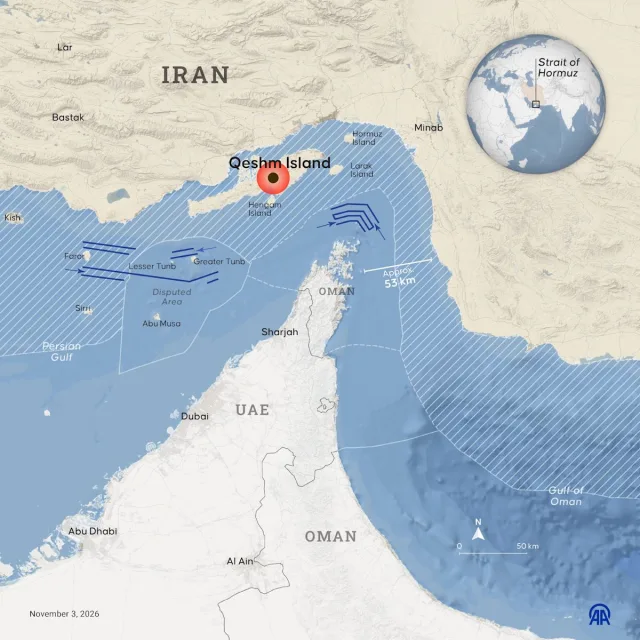
Tensions across the Persian Gulf spiked as Iran launched a series of drone and missile strikes against targets in Kuwait and Bahrain, directly hitting a U.S. air base in Kuwait and widening the scope of the regional conflict. The attacks, which occurred in the early morning hours, follow a U.S. fighter jet strike on an Iranian Revolutionary Guard missile site on Qeshm Island in the Strait of Hormuz on Tuesday. The uptick in fighting and tit-for-tat attacks comes as the commander of the U.S. military’s Central Command, Adm. Brad Cooper, met Wednesday in Tel Aviv with Israel’s military chief of staff, Lt. Gen. Eyal Zamir, and the director of Israel’s intelligence agency Mossad, Roman Gofman.
For civilians and personnel in the region, the escalation has triggered immediate security measures. In Bahrain, the Ministry of the Interior issued urgent shelter-in-place alerts during the early morning hours, while the U.S. Embassy in Manama issued a new security alert Wednesday warning Americans to exercise heightened vigilance due to an increased threat of armed attacks.
Chronology of the latest escalation
- Friday, November 13: Iran launches attacks on U.S. facilities in Bahrain.
- Sunday, November 15: Iran conducts further strikes against U.S. facilities in Bahrain.
- Tuesday, November 17: Iran strikes an American radar installation in Bahrain. In response, U.S. fighter jets bomb an IRGC missile launch site on Qeshm Island.
- Wednesday, November 18: Iran targets the Ali Al Salem air base in Kuwait and carries out multiple attacks on Bahrain.
Targets and military response
The Iranian state broadcaster IRIB claimed that Wednesday’s operation specifically targeted Patriot air defense systems and drone and missile launch platforms at Ali Al Salem Air Base in Kuwait. While the Kuwaiti Army reported that its air defenses successfully intercepted the incoming drones, it did not confirm reports of damage. The Kuwaiti Foreign Ministry condemned the repeated Iranian attacks as criminal, saying that they threatened the country’s security and stability. Historically, the Ali Al Salem base has been a frequent target; during the broader war, it has been hit at least 30 times, resulting in the destruction or damage of at least 15 aircraft hangars, several warehouses, and 10 buildings near a residential area, according to an Associated Press report.
In Bahrain, the Ministry of the Interior eventually signaled an all clear following their early morning emergency alerts. While the Bahraini military confirmed it intercepted several attacks, officials provided no specific details regarding damage or casualties.
The violence extends beyond fixed installations. An ADNOC tanker crew member remains missing following an attack in the Strait of Hormuz on Tuesday, with 11 others injured and receiving medical care. Meanwhile, in Saudi Arabia, the Saudi-led coalition intercepted two cruise missiles fired by Iran-backed Houthi rebels in Yemen, which targeted Riyadh. This came alongside a major Saudi air offensive in Yemen on Tuesday that coalition spokesman Major General Turki al-Malki said destroyed 60 legitimate military targets and aimed to weaken the Houthis' missile and drone capabilities. Houthi-aligned health officials reported that the strikes killed at least 17 people. The strikes followed the withdrawal of Saudi-backed forces from areas around the Bab el-Mandeb Strait, a setback for the anti-Houthi camp that consolidated the Houthis' grip on the strategic waterway.
A pattern of calibrated escalation
Experts say that the recent attacks suggest Tehran may be growing weary of the status quo as its economy suffers under a U.S. naval blockade and American military escorts help restore the passage of oil tankers. Danny Citrinowicz, a researcher at Israel’s Institute for National Security Studies and a former Iran specialist in Israel's military and intelligence services, described an increasingly clear pattern of attacks by Iran on shipping and U.S. facilities in the Gulf region. According to Citrinowicz, writing in an analysis on X, the objective is not necessarily to trigger an all-out war, but to steadily increase the military, economic, and political costs of maintaining the blockade. He noted that Washington faces a dilemma where a limited response may encourage Iran to push further, while a stronger response risks accelerating the escalation the U.S. is trying to avoid. As long as the U.S. naval blockade remains in place and no agreement is reached, further escalation will become increasingly difficult to avoid, Citrinowicz wrote, adding that there are two clear paths to de-escalation: a negotiated agreement or a U.S. decision to lift the blockade. Hamidreza Azizi, a senior Iran analyst at the International Crisis Group, warned in an analysis posted to X that the current accumulation of incidents across multiple fronts increases the risk of miscalculation and escalation beyond what either side originally intended.
Regional and diplomatic fallout
Despite these developments, diplomatic efforts remain stalled, complicating negotiations for a diplomatic solution.
On the U.S. side, President Donald Trump has offered conflicting signals, describing new strikes as highly unlikely while simultaneously sending a third aircraft carrier and thousands more troops to the Middle East.
The next major focal point for observers is the upcoming U.S. and Israeli strategic coordination following the Wednesday meetings in Tel Aviv between Lt. Gen. Eyal Zamir, Adm. Brad Cooper, and Roman Gofman to discuss shared security challenges and enhance joint readiness.
Updated 2 times since publication; last update 19 November 2026, 15:56.