Florida pastor found guilty over role in assassination of Haitian president
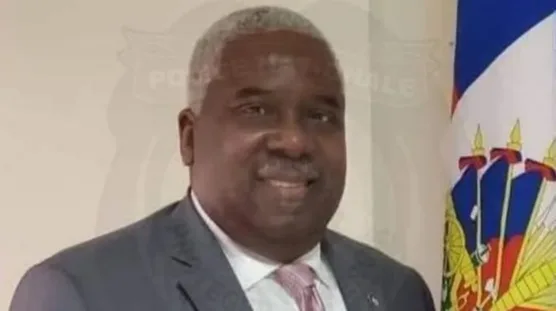
Florida pastor Christian Emmanuel Sanon was convicted by a federal jury on eight charges for his role in the 2021 assassination of Haitian President Jovenel Moïse.
Neither the constitutional qualifications nor the popular support
to become Haiti's president: this was the assessment conspirators made of Christian Emmanuel Sanon in June 2021, months before the assassination of President Jovenel Moïse. On Wednesday, a federal jury in Miami convicted the 67-year-old pastor on all eight charges brought against him, including conspiracy to kill or kidnap a person outside the United States. The verdict concludes an eight-week trial that explored how South Florida became a central hub for financing and planning a coup that fundamentally destabilized the Caribbean nation.
Sanon, a dual US-Haitian national, now faces a potential life sentence, with a formal sentencing date set for February 10. While he acknowledged in court that he had been in communication with individuals seeking to replace the Haitian president, he maintained his innocence regarding the lethal nature of the plot. His legal team has indicated that they intend to appeal the verdict.
How did a Florida pastor become central to a coup?
According to federal investigators, the scheme coalesced in April 2021 during meetings held in South Florida. Sanon, who worked with churches in Haitian immigrant communities across the United States, was initially positioned as the primary candidate to succeed Moïse. Prosecutors established that the plot was driven by commercial interests as much as political ones. If successful, Sanon intended to award government contracts for infrastructure, security, and military equipment to two Florida-based companies: Counter Terrorist Unit Federal Academy and Counter Terrorist Unit Security, collectively referred to as CTU.
The operation involved complex logistics, including the recruitment of approximately two dozen former Colombian soldiers with military training. Court records show that the funding for these mercenaries was partially sourced from US government programs intended to provide Covid-19 pandemic relief to businesses. The conspirators also coordinated the shipment of weapons, body armor, and other tactical supplies to Haiti, while attempting to build strategic alliances with local gangs.
What changed between the initial plan and the assassination?
The conspirators’ objectives shifted significantly by June 2021. Upon realizing that Sanon lacked both the constitutional standing and the public backing necessary to serve as president, the group abandoned him as their figurehead. They redirected their support toward Wendelle Coq Thélot, a former Haitian Supreme Court justice who remained a fugitive until his death in January 2025. Following this pivot, investigators found that the group’s focus moved from a forced removal of Moïse to a direct assassination.
The progression of the conspiracy is documented by federal authorities through the following timeline of key events:
| Date | Event |
|---|---|
| April 2021 | Sanon meets with conspirators in South Florida to devise a coup plan. |
| June 2021 | Group shifts presidential candidate support from Sanon to Wendelle Coq Thélot. |
| July 7, 2021 | Assassination of Jovenel Moïse at his residence. |
| May 2026 | Four co-conspirators convicted by a federal jury. |
| Nov. 18, 2026 | Christian Emmanuel Sanon convicted on eight counts. |
What has been the lasting impact on Haiti?
The assassination of Moïse, who was riddled
with bullets during the raid on his home according to his wife, Martine Moïse, left the nation without an elected leader for five years. This power vacuum has significantly exacerbated the security crisis in the country, which remains the poorest in the Americas. Recent data from the United Nations confirms the human cost of this ongoing volatility:
- Deployment of a multinational force to combat gang dominance.
- More than 5,700 people killed or injured in the year ending September 11.
- Postponement of general elections until July 18, 2027.
- Martine Moïse, injured in the 2021 attack, has officially announced her intent to stand in the upcoming election.
The legal fallout has been extensive. More than 40 people have been charged by US prosecutors in connection with the assassination, with at least a dozen individuals now convicted. Four men—Arcangel Pretel Ortiz, Antonio Intriago, Walter Veintemilla, and James Solages—were convicted in May 2026 on charges including providing material support to the operation and organizing an illegal military expedition.
Sanon, who had been scheduled for trial alongside these four men, saw his case severed and delayed for health reasons. While the US Department of Justice continues to secure convictions related to the planning and financing of the murder, the political landscape in Haiti remains fraught. Sanon’s lawyer continues to assert his client's lack of knowledge regarding the final assassination plot, even as the government prepares for sentencing on February 10.