Bahrain thwarts drone attack targeting US radar system
Emergency alerts echoed across Manama as Bahrain's armed forces worked to repel incoming aerial assaults following an Iranian drone attack.
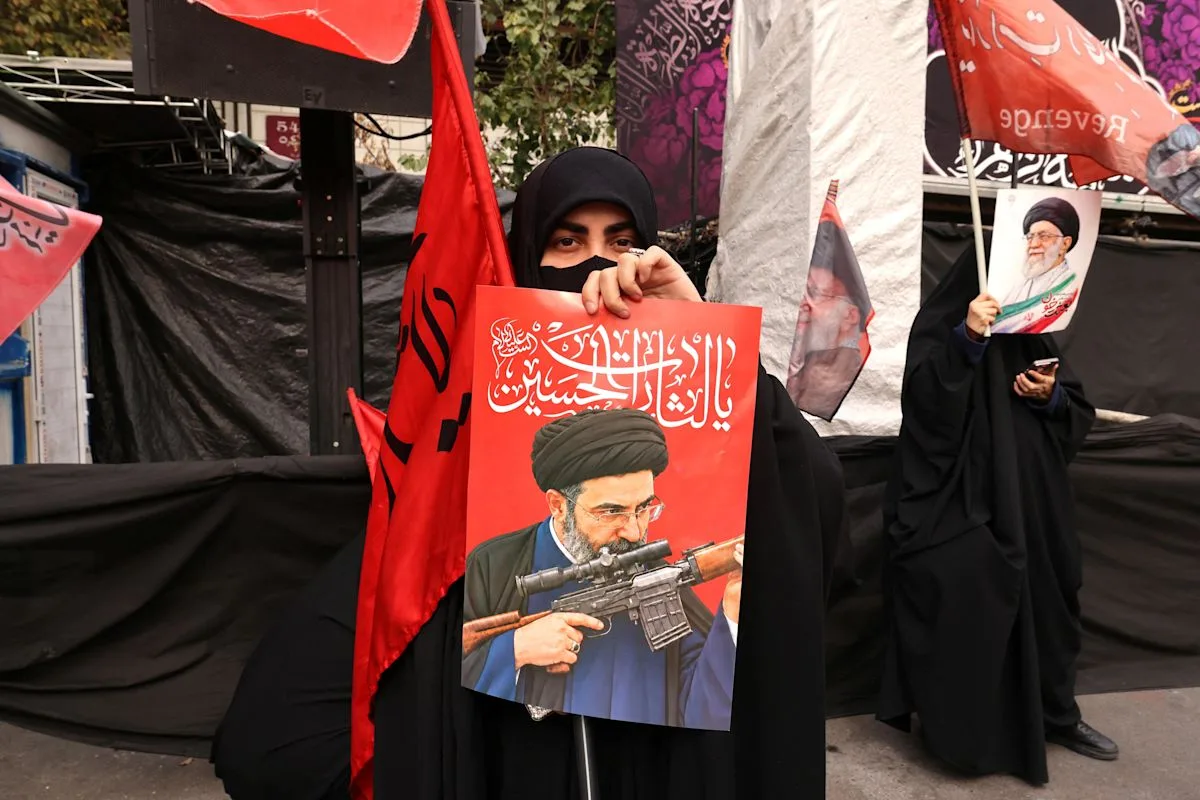
Residents across Bahrain woke on Tuesday to the sudden wail of emergency alerts on their mobile phones, urging them to seek shelter immediately as explosions echoed over the capital of Manama. Ordinary citizens found themselves ducking for cover while the kingdom's armed forces worked to repel incoming aerial assaults from across the Gulf.
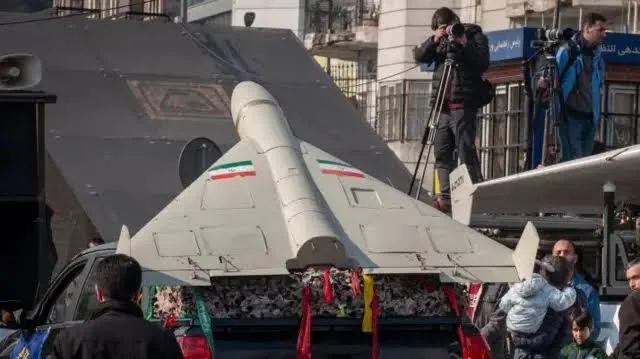
That sudden flash of terror marked the third time in five days that Iran's Islamic Revolutionary Guard Corps targeted American military infrastructure in the island nation. Behind the sirens lies a direct escalation in the ongoing regional conflict, as Tehran claims responsibility for launching combat drones at a vital U.S.-operated radar installation at the Sheikh Isa Air Base.
That leaves the regional security architecture under severe strain, with air defenses forced into active engagement while diplomats scramble to prevent a wider conflagration.
Who acts, who is hit, and who benefits in Manama and beyond?
The shifting dynamics on the ground pit the Iranian military apparatus directly against United States forces stationed throughout the Gulf. The Islamic Revolutionary Guard Corps insisted through its Sepah news portal that Tuesday's precision operation hit a radar system at the Sheikh Isa Air Base in response to what it termed repeated violations of Iranian airspace by U.S. military drones.
That justification marks a distinct pivot from earlier weeks, moving away from maritime disputes and toward direct retaliation for aerial incursions.
For its part, Bahrain finds itself caught directly in the crossfire. Home to the United States Navy's Fifth Fleet, the island nation experienced weeks of relative quiet following a heavier bombardment earlier in the war, which began in late February when U.S. and Israeli forces launched military action against Iran. That brief calm shattered on Friday when the IRGC targeted a U.S. early-warning radar system, followed by a six-drone strike on Sunday aimed at a radar site at the Riffa helicopter base. Bahrain's armed forces stated that their air defense systems successfully intercepted the incoming weapons before they could reach their targets, though no confirmed report has yet been released detailing the extent of any damage at the Sheikh Isa facility.
The wider stakeholder map extends far beyond the immediate Manama skyline. While the U.S. military maintains a robust presence bolstered by the arrival of the USS Theodore Roosevelt joining the USS George H.W. Bush and the USS George Washington in the region, regional capitals are actively seeking off-ramps. Qatari foreign ministry spokesman Majed Al Ansari issued a blunt warning from Doha, stating, We call on all parties to exercise restraint during this period and to avoid any escalation that could undermine negotiation efforts,
and cautioning of an extremely serious threat to ongoing peace talks.
How are regional mediators attempting to contain the crisis?
Diplomatic channels are spinning furiously even as drones take flight. Iranian Foreign Minister Abbas Araghchi traveled to Muscat on Tuesday to hold high-level talks with his Omani counterpart, Badr Albusaidi, focusing on safeguarding shipping lanes and exploring diplomatic options to contain tensions. Araghchi also met in Islamabad with Pakistan's army chief, Gen. Asim Munir, reviewing regional threats and security challenges alongside international developments.
Those diplomatic tracks intersect with a complex web of mutual defense commitments and proposed ceasefires. Araghchi announced during a meeting of the Economic Cooperation Organization in Islamabad that a ten-nation regional bloc backed Tehran's proposed two-day plan to reopen the Strait of Hormuz under an initial ceasefire with Washington. That proposal requires the U.S. to release frozen Iranian financial assets, ease sanctions, and lift its naval blockade of Iranian ports — conditions that the Trump administration has repeatedly dismissed as unacceptable.
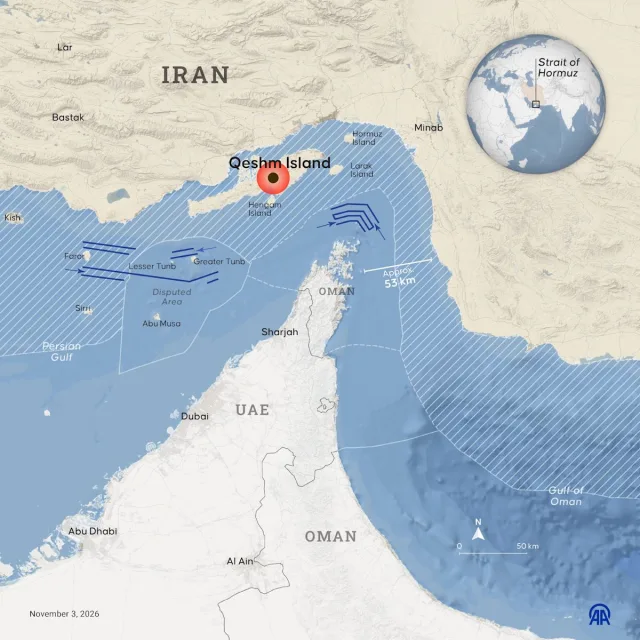
At the same time, the maritime choke point remains a theater of active economic and military friction. Iranian state media claimed that another oil tanker struck a sea mine east of the Strait of Hormuz on Tuesday and caught fire after navigating within a restricted zone with its navigation systems switched off. The United Kingdom Maritime Trade Operations similarly reported a separate attack on a tanker north of Khasab, Oman, which disabled the vessel and sparked an engine room fire. While independent monitors note frequent explosions caused by unknown projectiles, U.S. Central Command chief Adm. Brad Cooper reiterated that Iran's navy is all at the bottom of the sea
and insisted that primary transit routes remain de-mined and safe.
What does the timeline of the current escalation reveal?
- Late February: The U.S. and Israel initiate the military campaign against Iran, shifting regional security dynamics.
- August: Pakistan, Saudi Arabia, and Turkey sign the trilateral Mecca Joint Defense Agreement to provide mutual defense in the event of an attack.
- October 11: Major grocery store chains in France suffer severe cyberattacks targeting refrigeration units, which French and Belgian authorities subsequently attribute to Iranian security forces.
- Late October: U.S. Central Command chief Adm. Brad Cooper declares that primary transit routes in the Strait of Hormuz are cleared of Iranian sea mines.
- Friday: The IRGC launches a drone attack targeting a U.S. early-warning radar system in Bahrain, marking the first Iranian strike against a Gulf country since early September.
- Sunday: The IRGC launches six drones at a U.S. radar site at Bahrain's Riffa helicopter base; the U.S. Embassy in Manama issues a heightened vigilance warning.
- Monday: Vice President JD Vance tells Fox News that the administration will not allow the conflict to become a multi-year commitment; Houthi health authorities report 37 casualties from Saudi strikes in Yemen; Iranian Foreign Minister Araghchi meets with Pakistani officials in Islamabad.
- Tuesday: The IRGC launches a pre-dawn drone attack targeting the Sheikh Isa Air Base in Bahrain, prompting public shelter alerts in Manama as air defenses engage incoming threats.
Why are Western capitals pushing back on multiple fronts?
The confrontation in the Gulf is inextricably linked to broader geopolitical friction across the Middle East and Europe. In Lebanon, U.S. Ambassador to the United Nations Mike Waltz called on Iran-backed Hezbollah to voluntarily disarm and hand its weapons over to state authorities during a visit on Monday, declaring that No country can have two armies.
That demand directly touches upon stalled ceasefire negotiations, as Iran and Hezbollah have conditioned any final agreement on a total halt to fighting and the full withdrawal of Israeli forces from southern Lebanon.
Meanwhile, European capitals are moving to penalize Tehran over hybrid warfare tactics. French Foreign Minister Jean-Noel Barrot announced in Brussels that he is confident EU foreign ministers will agree in December to impose new sanctions within one month against individuals linked to the October cyberattacks that spoiled food and triggered fires at grocery store refrigeration units in France and Belgium. Iranian officials have denied responsibility for those digital incursions.
Against this volatile backdrop, domestic economic pressures in the United States show mixed signals. International benchmark Brent crude declined 0.5% to $95.34 per barrel on Monday, while U.S. benchmark crude fell 0.3% to $88.31 a barrel. Consumer pain at the pump has eased slightly, with the average price of a gallon of diesel in the U.S. dropping below $6 on Monday for the first time since September, yet prices remain significantly elevated compared to pre-war baselines.
What comes next for the fractured alliances of the Gulf?
The immediate trajectory of the conflict hinges on whether diplomatic mediation in Muscat and Islamabad can bridge the vast gulf between Washington's rejection of Iran's preliminary terms and Tehran's insistence on establishing deterrence. Vice President JD Vance sought to reassure domestic audiences in a Monday interview by stating that the administration has already achieved its primary objectives of dismantling Iran's nuclear program and conventional military, asserting that We are not going to allow this to become a 10- or 15-year commitment or, frankly, even a two-year commitment.
Yet that desire for a swift exit runs headlong into the daily reality of intercepted drones over Manama, burning tankers near Oman, and entrenched proxy conflicts stretching from Iraq to Yemen. While White House officials continue to downplay external threat assessments — including reports regarding potential homeland risks, the operational tempo of the IRGC indicates that Tehran intends to exact a high price for continued American military positioning in the Gulf. As regional defense committees prepare to convene later this month in Islamabad under the trilateral defense pact, the burden rests squarely on local commanders and foreign envoys to determine whether the recent flurry of drone strikes represents a peak in hostilities or merely the opening salvo of a more entrenched war.
Bahrain's Interior Ministry urged citizens and residents to remain calm, proceed to the nearest safe location, and follow news through official channels as precautionary measures remain fully in place across the kingdom.