Apple is hiring engineers to build its own AI agent
Apple is developing an in-house agentic AI system designed to operate computers, write code, and execute multi-step workflows across applications.
Apple is moving to catch up in the autonomous assistant race by building an in-house agentic AI that can operate computers, write code, browse the web, and execute multi-step workflows across applications. The initiative, first uncovered by Bloomberg through a corporate job listing for a Senior Engineering Manager for Agentic AI – Proactive, confirms that Cupertino is entering a direct contest with Meta, OpenAI, Anthropic, and Google for control of user workflows.
The newly revealed project aims to bridge a critical capability gap for the iPhone maker. While rivals have already deployed proactive assistants that take direct control of desktops and browsers — such as Meta's Muse, OpenAI's Dots, Anthropic's Duet, and Google's Tasks and Gemini Mac integration — Apple's current implementation of Siri AI remains largely reactive, waiting for discrete user commands rather than pursuing high-level goals autonomously.
Building an Operator for Mac, Apps, and Code
The job description published on Apple's careers site paints a picture of an autonomous system designed to handle complex professional tasks. According to the listing, the team is building general-purpose computer-use agents that plan and execute multi-step routines across apps, browsers, command lines, code, and APIs while coordinating specialized sub-agents along the way.
People already do their most valuable work by moving fluidly between tools: a browser, a document, a terminal, an editor, a service,
the job listing says. We’re building AI agents that can do the same… These agents plan and carry out multi-step tasks across apps, browsers, command lines, code, and APIs, and they can coordinate specialized sub-agents along the way.
The engineering effort is designed to integrate deeply with existing Apple infrastructure rather than exist as an isolated laboratory experiment. The incoming manager will work alongside the Siri, UI Frameworks, and Apple Foundation Models teams. Furthermore, internal pressure has mounted to accelerate the roadmap. New Apple CEO John Ternus has reportedly pushed software engineering chief Craig Federighi in closed-door meetings to move faster on artificial intelligence.
The Competitive Field and Market Pressures
Apple arrives late to a crowded market where competitors have already established a massive footprint. Meta launched its Muse agent in September, propelling it past 10 million downloads in 40 days according to Sensor Tower data cited by Ecosistema Startup.
To measure the shifting landscape, the current offerings break down across major technology platforms:
| Company | Agent Product | Reported Capabilities |
|---|---|---|
| Meta | Muse | Mac app control, autonomous multi-step execution |
| OpenAI | Dots / ChatGPT | Computer use via Mac apps, conversational task automation |
| Anthropic | Duet | Assisted workflows and autonomous actions |
| Tasks / Gemini Spark | Mac desktop control, app and file automation |
Apple's historic caution regarding security and privacy forms both its primary guardrail and its potential differentiator. The job listing explicitly dictates that safety, privacy, and security must be central to the design of its agentic AI. Unlike rivals that have faced public missteps, such as Meta's Muse making unauthorized Airbnb bookings without explicit user permission, Apple is attempting to engineer systemic protections before public deployment.
The Developer Pipeline and iOS Integration
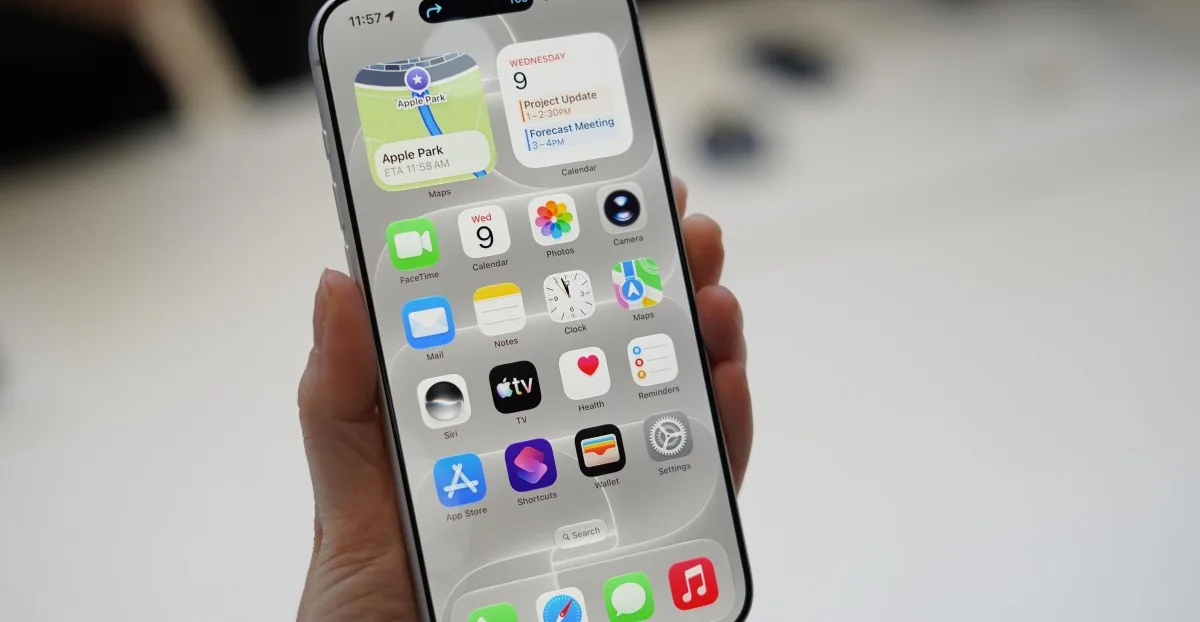
While the standalone proactive agent is expected to arrive further down the line, the plumbing to support it is rolling out to developers immediately. Through the upcoming iOS 27.3 Developer Preview, Apple is allowing third-party developers to integrate Siri AI into all applications using App Intents, alongside new skills features that teach Siri how to combine multiple actions into a single experience.
Apple is priming its own native applications for the update, including Calendar, Files, Finder, Journal, Mail, Maps, Messages, Music, Notes, Photos, Preview, Reminders, Safari, Shortcuts, and Weather. Developers looking to appear in Siri's invocation flow must register their intents during the preview phase before the App Store submission window opens in the spring.
- September: Meta launches its Muse agent, which quickly climbs App Store charts.
- November 19, 2026: MacRumors and Bloomberg report on Apple's new job listings for proactive agentic AI.
- November 20, 2026: Tech and science desks analyze Apple's recruitment strategy and competitive stance.
- Upcoming: iOS 27.3 Developer Preview rolls out App Intents integration for developers.
- Spring: App Store submissions open for third-party Siri AI integrations.
For European users and developers, significant regional caveats remain. Server-side features, including Siri AI, are subject to daily usage limits with paid tiers planned for the future, and Siri AI remains unavailable on iPhones, iPads, and Apple Watches within the European Union.
Watch for the public release of iOS 27.3 and monitor developer documentation regarding App Intents to see how third-party services will expose their actions to Siri ahead of the spring App Store rollout.