Fiona the hippo dies 11 days after swallowing visitor’s hat
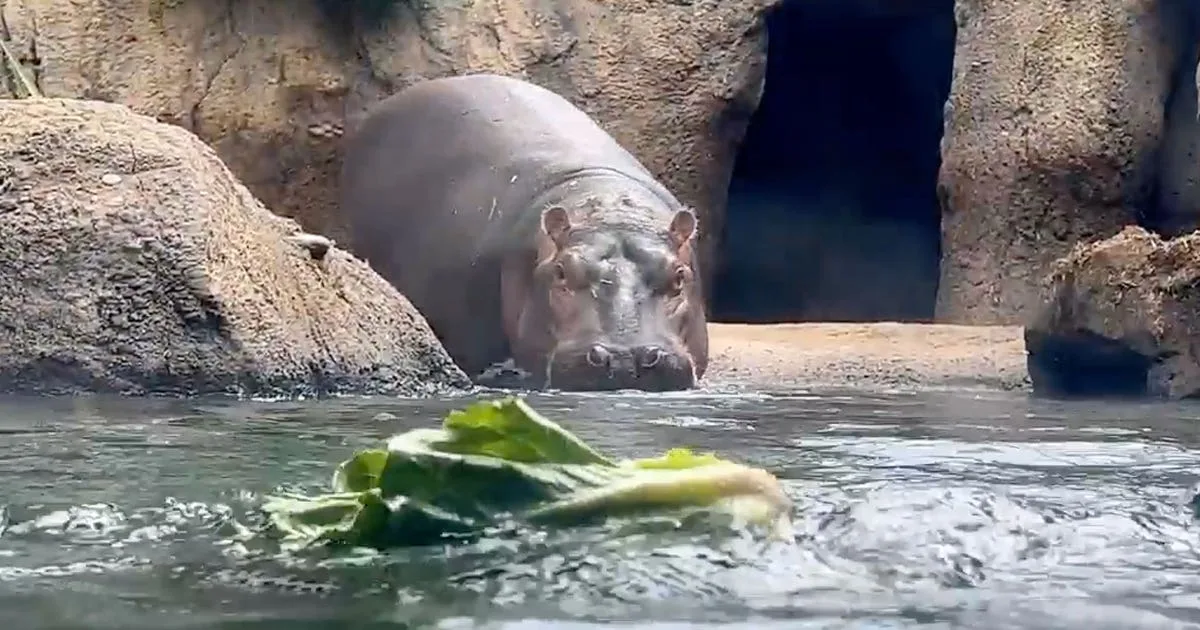
Fiona, the beloved Nile hippopotamus whose premature birth and survival captured global affection, has died at the Cincinnati Zoo at age 9 after swallowing a visitor's hat.
Fiona the hippo dies at 9 after swallowing visitor's hat
Fiona, the world-famous Nile hippopotamus whose survival against extreme odds captured international affection, has died at the Cincinnati Zoo and Botanical Garden just days after swallowing a knitted hat that slipped into her enclosure. She was 9 years old.
The Cincinnati Zoo in Ohio announced Thursday afternoon that Fiona did not make it after multiple attempts from our amazing vets and keeper team to help her through what ended up being a medical emergency,
noting that the animal care staff tried everything they could to help her but it was ultimately too much to overcome.
The tragedy marks a devastating turn for an institution that watched the animal grow from a fragile, record-breaking newborn into a global symbol of resilience. Visitors and fans responded to the news by leaving flowers and cards by the statue outside the zoo entrance on Thursday, just as the institution's Festival of Lights opened for the evening to offer extended hours.
How a ceiling fan launched a visitor's hat into Hippo Cove
The incident began in an accidental sequence of events at the zoo's Hippo Cove exhibit about 10 days before her death was announced. Zoo spokesperson Michelle Curley explained that a visitor tossed a knit hat into the air in front of Fiona's enclosure. The cap caught on a ceiling fan, which then launched it upward, sending it through a small opening above the viewing windows and directly into the habitat. Curley noted that We probably couldn't make [it] happen again if we tried.
While Fiona initially seemed fine after swallowing the hat more than a week ago, her appetite started to decrease a few days later, setting off an intensive medical struggle that mobilized veterinary specialists and transfixed her global fanbase. Caregivers monitored her movement around the clock, kept her hydrated, offered her special treats, and even gave her a sniff of coffee — a scent she historically liked — eliciting a positive response from the hippo during her care.
Why veterinarians could not operate
As days passed without the hippo expelling the obstruction, followers and animal care staff pinned their hopes on unconventional remedies. Caregivers borrowed a vibration plate platform from a local horse farm, encouraging Fiona to stand on the device multiple times daily in hopes that the mechanical motion would help shake the knit cap through her digestive tract.
Mike Wenninger, the zoo's director of animal health, noted that veterinarians sedated Fiona twice to monitor her condition. An ultrasound before her death showed the hat passing through Fiona's small intestine, and an earlier scan revealed intestinal bunching indicating her body was attempting to move the blockage, though an examination with a 9-foot endoscope failed to locate the item.
A zookeeper explained that surgery was not an option for full-grown hippos and that our best chance for success with Fiona would be if she could pass this on her own.
Jack Kottwitz, assistant professor at Michigan State University’s College of Veterinary Medicine, detailed the biological hurdles that prevent surgical intervention in the species before the hippo's death was announced.
They have a multichambered stomach for digesting plants — sort of like a cow — but they don’t regurgitate and chew cud like a cow does. Those multiple chambers, tissue folds, fluid, and digesting food easily ‘hide’ the hat, making removal with an endoscope from the stomach chambers very difficult.
Jack Kottwitz, assistant professor at Michigan State University’s College of Veterinary Medicine
Kottwitz further explained that finding the hat would require multiple incisions during a very long surgery. Hippos are notoriously difficult to anesthetize, possess skin over 2 inches thick in places, and require access to water, meaning Fiona would have needed to stay out of the water for several days post-surgery to allow any incisions to heal.
| Intervention Type | Method Used | Result |
|---|---|---|
| Mechanical motion | Vibration plate platform borrowed from a local horse farm | Stood on multiple times daily to encourage digestion |
| Diagnostic imaging | Ultrasound and 9-foot endoscope | Showed intestinal bunching; scope failed to locate item |
| Supportive care | Sedation twice, medications, fluids, and special treats | Temporary response, but body could not clear obstruction |
From tiny preemie to social media star
Fiona's cultural footprint in Cincinnati and across the digital world began on Jan. 24, 2017, when she was born six weeks premature to mother Bibi and father Tucker. She was the first Nile hippo born at the Cincinnati Zoo in 53 years and the first of her species to be scanned in utero via ultrasound.
At birth, she weighed 13 kg (29 lbs), which the zoo said was about half the previous lowest recorded birth weight for her species. She reached 1,000 lbs in 2018. Because she could not stand or nurse, zookeepers bottle-fed her with a milk and formula mixture, hand-milked her mother, and called in clinicians from Cincinnati Children's Hospital's vascular access team to administer intravenous fluids when she became dehydrated. Her survival brought an uplifting turn for the Cincinnati Zoo after months of backlash over the shooting of Harambe, the gorilla who became a pop culture phenomenon after he was killed in 2016 because a child got into his enclosure.
That underdog story spawned children's books such as A Very Fiona Christmas and You've Got This, Fiona, a mural in downtown Cincinnati, a beer line, an ice cream flavor, a character in Cincinnati's ballet, a bobblehead, and an annual Super Bowl prediction tradition. Hippos normally live up to 50 years in human care, according to the zoo, making her death at age 9 very premature. She is survived by her mother Bibi, father Tucker, and younger half-brother Fritz, who was born in 2022.
We are in shock at the moment. We did not expect this outcome. She fought until she couldn’t anymore,
Cincinnati Zoo director Dave Jenike said in a statement.
Cincinnati Zoo Executive Chair of the Board Thane Maynard reflected on the animal's impact by stating, I have never known an animal so beloved in all my life. From the day she was born, she was like lightning in a bottle. And, she will be remembered and beloved many years from now.
Dr. Amy Acton described her on social media as one of Cincinnati's most beloved icons whose story brought joy, hope, and a little extra magic to our state. Cincinnati Mayor Aftab Pureval wrote on X that Fiona was a symbol of perseverance and joy
and added, She brought smiles to so many faces, from kids to parents to visitors from around the world. Our city is heartbroken, but we couldn't be more grateful that she was part of our lives and our community as a whole.
Community response and tributes
Zoo administration and animal care staff have requested privacy as they process the loss. Members of the public wishing to pay their respects or support the institution are encouraged by zoo leadership to keep Fiona's zookeepers and veterinary team in their thoughts as they navigate the sudden bereavement.
Visitors to the Cincinnati Zoo and Botanical Garden can also look to local tributes, including public memorials and community gatherings organized across the Queen City. Fans can also visit the holiday-themed Fiona statue just outside the entrance or browse the gift shop's hippo-themed wall.
Updated 2 times since publication; last update 20 November 2026, 01:22.