Iran drone attack on US radar facility in Bahrain intercepted by air def…
Bahrain's military intercepted an Iranian drone assault targeting a US radar facility at the Al-Riffa base, marking the second such attack in three days amid deadlocked peace talks.
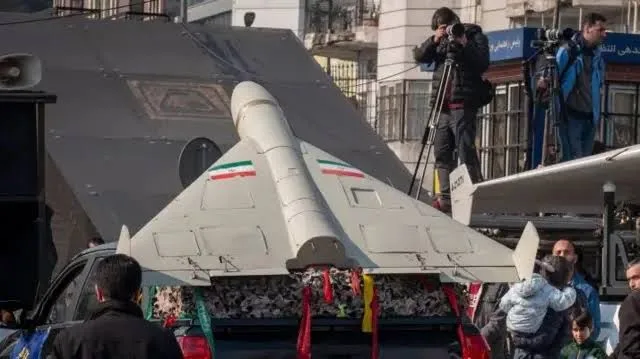
Residents in Bahrain sought shelter on Sunday as air raid sirens wailed across the kingdom following a coordinated drone assault directed at a United States military installation. The aerial bombardment, launched by Iran’s Islamic Revolutionary Guard Corps, marked the second time in three days that Tehran targeted the island nation, driving regional tensions to a new high as peace negotiations remain entirely deadlocked.
The IRGC Aerospace Force targeted the US air defence radar facility at the Al-Riffa helicopter base using six drones, according to a statement carried by Iran’s state broadcaster. Bahrain’s military confirmed that its air defence systems intercepted and destroyed several incoming threats before they reached their targets. Sirens echoed across the country on Sunday, prompting the interior ministry to issue two separate alerts urging citizens and residents to head to their nearest safe location. It was the first time Bahrain issued such shelter alerts since September.
Did Al-Riffa air base suffer any damage in the Sunday attack?
Neither Bahrain nor the US military immediately confirmed whether the Al-Riffa radar facility sustained any hits during the six-drone barrage. The US command did not immediately comment on the claim, mirroring a similar standoff on Friday when the IRGC claimed it struck a US early warning radar system in the kingdom. On that occasion, the US military stated it had intercepted two incoming one-way attack drones and reported no injuries or damage.
The foreign ministry of Bahrain condemned the assault in unsparing terms. The Kingdom of Bahrain condemns in the strongest terms the continued brutal Iranian attacks on its territory and holds Iran fully responsible for their consequences,
the ministry said in a statement.
Why are US-Iran tensions escalating in the Gulf right now?
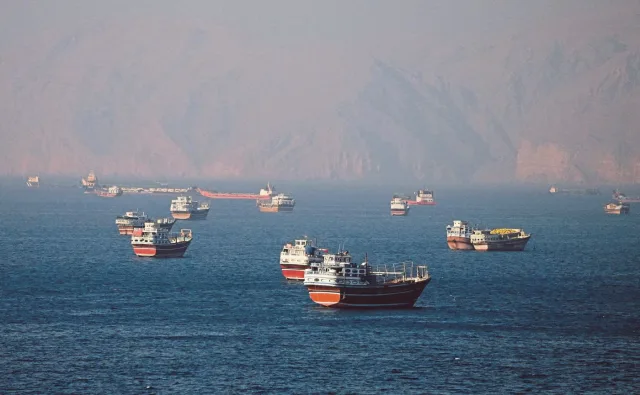
The fresh drone strikes are rooted in a fierce dispute over the Strait of Hormuz, a critical waterway through which roughly a fifth of the world’s oil and gas supply normally flows. Shipping through the strait has faced severe restrictions since the outbreak of war in February. Iran insists it should control the passage and has targeted what it brands as unauthorized traffic, while the US military escorts oil tankers to keep exports moving for Gulf Arab states.
Earlier in the week, the US carried out limited and defensive strikes on Iran’s Qeshm Island in the Strait, US officials told CBS, the BBC’s US partner. Those strikes came in response to the IRGC firing on a US aircraft. Iranian state news agency Irna reported explosions on Qeshm on Monday. The IRGC claimed its forces shot down two US MQM-170 drones south of the island and a US MQ-9 drone east of the strait.
Diplomatic efforts to resolve the crisis have collapsed. Although Washington and Tehran reached a preliminary agreement in June to end the war and reopen the strait, that accord fell apart within weeks when Iranian shipping attacks resumed. The US subsequently reinstated its naval blockade on Iranian ports. Iranian negotiators had recently discussed a proposal to reopen the strait within two days if the US met seven conditions, including lifting the naval blockade and releasing frozen Iranian assets.
Has Donald Trump abandoned all hope of a negotiated settlement?
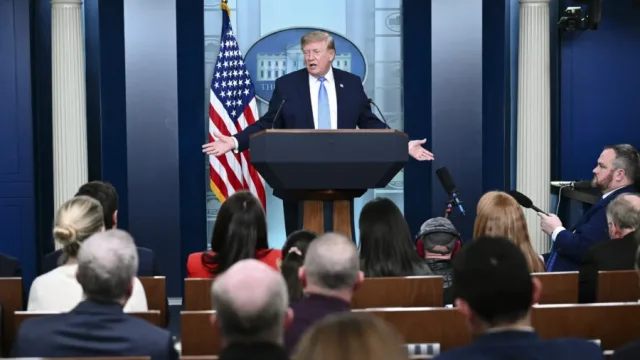
Any prospect of reviving those talks appears dead. Donald Trump stated this week that the US is no longer interested in a deal to end the war with Iran. He ordered Vice-President JD Vance, who had been involved in efforts to restart negotiations, to shift his focus entirely to domestic US politics.
Emboldened by the breakdown in diplomacy, the IRGC adopted a defiant posture following Sunday's attack. In a statement shared on Telegram, the IRGC asserted: The Strait of Hormuz is closed, and any aggression by the American enemy will be met with an even harsher and more forceful response.
Adding to the maritime peril, Iran's Revolutionary Guards Navy reported that two tankers were on fire after striking naval mines in the Strait of Hormuz, according to Iranian state media.
The fallout from the wider confrontation has also reached Washington officialdom. Treasury Secretary Scott Bessent confirmed Sunday that he and his family relocated from their Washington, D.C., residence to a military base due to elevated security threats. Bessent blamed The Wall Street Journal for publishing a geolocated photograph of the home on the day he bought it. We're not going to talk about that, but obviously, it's a high threat level for us to move,
Bessent told Larry Kudlow on Sunday Morning Futures
, broadcast via Fox News. Bessent declined to confirm whether there had been direct Iranian attempts on his life, though he noted he received Iranian death threats over the administration's sanctions campaign: We are squeezing them, and their death threats tell me that everything I'm doing is working.
As the conflict widens across multiple fronts, the foreign ministry of Bahrain awaits further developments while maintaining its demand that Tehran be held fully accountable for the unfolding regional crisis.