Germany pledges 1.3 billion euros in aid as Russia strikes Kyiv
Chancellor Friedrich Merz visited Kyiv during a surge of Russian aerial assaults to announce a massive aid package focused on air defense and energy resilience.
- Headline: Germany pledges 1.3 billion euros in aid as Russia strikes Kyiv
- Dispatch Summary: Chancellor Friedrich Merz visited Kyiv during a surge of Russian aerial assaults to announce a massive aid package focused on air defense and energy resilience.
- Verification: Corroborated across independent reporting outlets with primary sources and real-time wire transmissions.
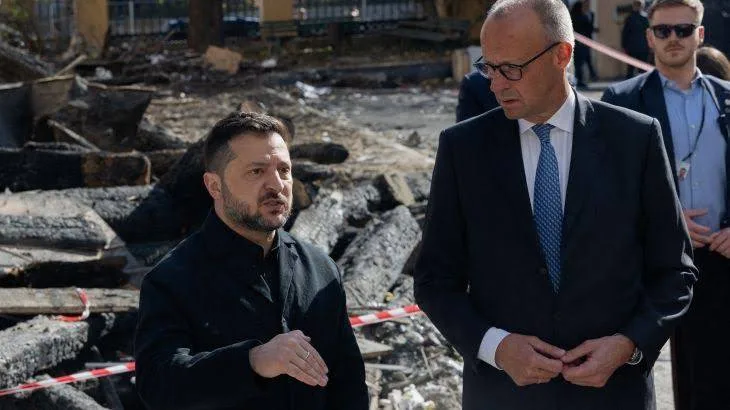
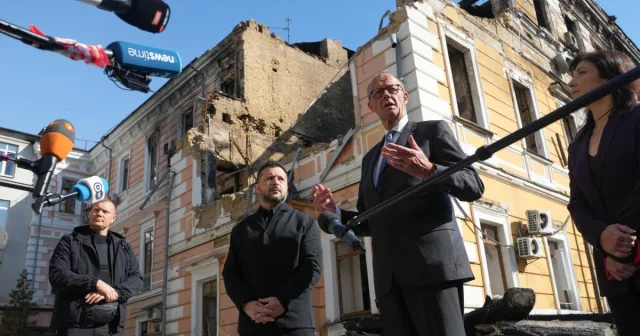
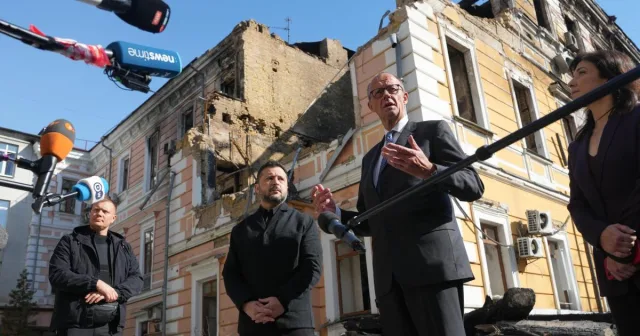
German Chancellor Friedrich Merz arrived in Kyiv on Sunday amid intensified Russian strikes, pledging €1.3 billion in aid to Ukraine as the city faced renewed aerial assaults. The visit, unannounced and timed with a surge in attacks, underscored Germany’s commitment to Ukraine’s defense while highlighting the escalating humanitarian and infrastructural toll of the war.
Russian Strikes Target Kyiv Infrastructure During Merz’s Visit
Russian forces struck Kyiv’s Northern Bridge over the Dnipro River just hours after Merz’s arrival, damaging the road surface and prompting emergency response efforts. The bridge, a critical artery for the city’s 3 million residents, has been repeatedly targeted in recent days, with Kyiv Mayor Vitali Klitschko reporting traffic disruptions and safety concerns. A separate drone attack damaged the National Academy of Sciences building, where two people were killed in a previous strike. Air raid sirens echoed through the capital throughout Merz’s visit, reflecting the persistent threat to civilian life.
Russia’s defense ministry announced plans to intensify strikes on “military and military industrial facilities” in Kyiv and other regions, citing Zelensky’s recent statements about escalating attacks on Russian oil infrastructure. The ministry warned foreign nationals and diplomats to leave the country, a directive that has been repeated in past months but has not deterred allied leaders from visiting.
Germany Unveils €1.3 Billion Aid Package for Ukraine
Merz announced a €1.3 billion aid package during his visit, emphasizing its role in bolstering Ukraine’s defense and energy resilience. The military component, valued at €1 billion, includes long-range strike weapons, combat drones, and satellite technology to enable Ukraine to target Russian launch sites. An additional €350 million will support energy infrastructure, including generators, substations, and grid repairs, to mitigate the risk of winter power shortages.
The aid package also includes plans for joint production of anti-jet drones to counter Russia’s growing arsenal of fast-moving aerial threats. Merz highlighted recent technical advancements in this area, stating that the initiative would “quickly and tangibly strengthen Ukraine’s air defense.” The German leader stressed that Ukraine’s security is intertwined with Europe’s, warning that failure to contain Russia could lead to broader regional instability.
U.S. Proposes Trilateral Talks as Diplomatic Stalemate Persists
Ukrainian President Volodymyr Zelensky revealed that the U.S. is seeking to broker a trilateral meeting with Russia by the end of October, aiming to advance peace negotiations. The proposal, described as a “technical level” dialogue, would involve Ukraine, the U.S., and Russia, with potential mediation from the UAE. However, no progress has been made in resolving the conflict, which has entered its fifth year with no clear path to de-escalation.
Zelensky criticized Russia’s “barbarous attacks” on civilians, calling the war “pointless” and condemning Moscow’s strategy of targeting infrastructure to destabilize Ukraine. He also reiterated calls for advanced missile interceptors to counter Russian drones and ballistic missiles, which have increasingly disrupted daily life in Kyiv and other cities.
Domestic and Regional Tensions Amid European Support
Merz’s visit coincided with growing domestic pressure in Germany over his pro-Ukraine stance. The far-right Alternative for Germany (AfD) criticized the aid package, accusing the government of diverting funds from social programs to support Ukraine. AfD co-leader Alice Weidel questioned the allocation of “billions in German taxpayer money” amid the country’s energy crisis.
Meanwhile, Latvia’s upcoming elections highlighted security concerns, with voters prioritizing policies to counter Russian threats. The Baltic nation, bordering Russia, has seen increased military preparedness following Moscow’s warnings to foreign diplomats. Despite these challenges, European leaders, including the EU delegation, reaffirmed their commitment to Ukraine, stating that threats would not deter support.
| Detail | Information |
|---|---|
| Germany’s Aid Package | €1.3 billion total, including €1 billion in military aid and €350 million for energy infrastructure. |
| Russian Bridge Attacks | Northern Bridge damaged in multiple strikes; five of Kyiv’s six Dnipro River bridges have faced restrictions or closures. |
| U.S. Trilateral Talks | Proposed by the U.S. for late October, involving Ukraine, Russia, and potential UAE mediation. |
| German Domestic Criticism | Far-right AfD questions aid funding amid energy crisis and social program cuts. |
Frequently Asked Questions
What is Germany’s aid package to Ukraine?
Germany has pledged €1.3 billion in aid, including €1 billion for military support such as combat drones and satellite technology, and €350 million for energy infrastructure to prepare for winter.
How have Russian strikes affected Kyiv?
Russian forces have targeted Kyiv’s bridges, including the Northern Bridge, causing traffic disruptions and infrastructure damage. The city has also faced repeated drone attacks on civilian and industrial sites, with air raid sirens becoming a daily occurrence.
What is the U.S. stance on Ukraine-Russia talks?
The U.S. is proposing trilateral talks with Ukraine and Russia by the end of October, aiming to address the conflict. However, no concrete progress has been made, and Russia has continued its offensive against Ukrainian infrastructure.
Russia’s continued strikes on Kyiv’s bridges and energy systems, coupled with Germany’s expanded aid package, signal a deepening phase in the war. As winter approaches, the focus will shift to whether Ukraine can sustain its defense efforts and whether diplomatic initiatives can break the stalemate. Merz’s visit, despite the risks, underscores the fragile balance between military support and the humanitarian crisis unfolding in the Ukrainian capital.
How significant is this wire dispatch?
Cast your anonymous vote to register reader consensus across journalism and intelligence sectors.
Dateline Wire is dedicated to independent, evidence-backed reporting. This briefing was synthesized from primary source reporting, corroborated across independent newsrooms, and verified against our Editorial Standards.