Myanmar committed genocide against Rohingya people, UN’s top court rules
The International Court of Justice has ruled that Myanmar committed genocide against the Rohingya minority during a 2017 military crackdown, marking a landmark legal first.
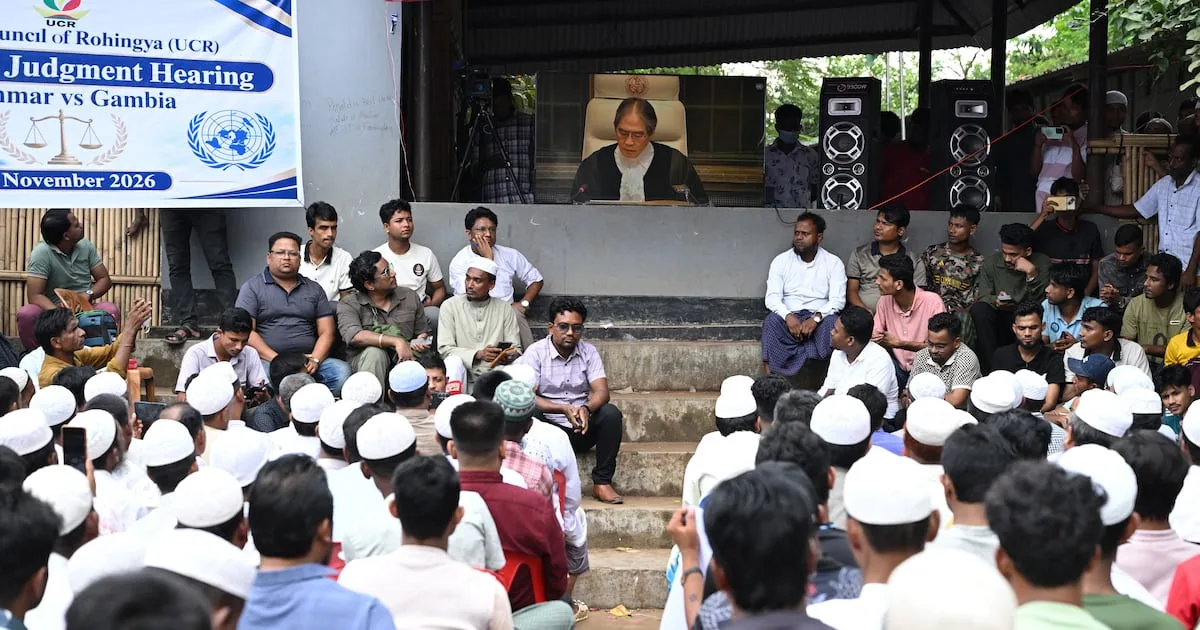
The International Court of Justice delivered a historic ruling on Thursday, November 19, determining that Myanmar committed genocide against the Rohingya minority during its 2017 military operation. In a 9-6 decision announced by ICJ President Yuji Iwasawa in the Great Hall of Justice in The Hague, the 15-judge panel marked the first time in history that the United Nations' top court has found a state responsible for genocide.
The judgment concludes a legal battle initiated in 2019 by the West African nation of The Gambia, which argued that Myanmar breached the 1948 Genocide Convention. Outside the courtroom, lawyers and members of the Rohingya community, some of whom traveled thousands of miles (kilometers) to attend, embraced and wept following the reading.
Court Findings and the Legal Threshold for Genocidal Intent
The case centres on an August 2017 military crackdown in northern Rakhine state, launched by Myanmar's security forces in response to an attack by a Rohingya insurgent group. The military defended the operation as a clearance campaign against insurgents, a position the court's 15-judge panel — which included Navi Pillay — flatly rejected.
Establishing genocide under the 1948 UN Genocide Convention requires meeting a rigorous legal threshold: proving not just war crimes or mass atrocities, but a specific intent to destroy a protected group in whole or in part. Judge Iwasawa told the packed courtroom that the scale and nature of the military's actions went well beyond what would be required to punish the population and were instead characteristic of an intent to destroy a substantial part of the group.
The court is fully convinced that Myanmar committed acts falling under ... the genocide convention with an intent to destroy a substantial part of the Rohingya population in Myanmar
Yuji Iwasawa, ICJ President
Judges estimated that around 815,000 Rohingya lived in northern Rakhine State before the operations, and concluded that security forces violently killed about 10,000 Rohingya. The court found the operations were preceded by an atmosphere of anti-Rohingya hate speech, with the community portrayed as sub-human and a violent threat. Judges highlighted evidence that security forces perpetrated widespread acts of sexual violence, committed acts of extreme violence against children, burned thousands of homes, and attacked fleeing Rohingya as they sought to flee in large numbers.
Furthermore, the court noted that Myanmar violated its obligation to prevent genocide by allowing armed civilians to participate in the campaign and ignoring the clear risk of mass destruction. Myanmar denied carrying out a genocide throughout the proceedings, maintaining that its actions constituted legitimate counterterrorism operations against guerrilla fighters.
Displaced Survivors and the Human Toll Across Borders
The human cost of the 2017 campaign remains staggering. The military offensive drove more than 700,000 mostly Muslim Rohingya to flee across the border into Bangladesh, joining earlier waves of refugees. Today, according to United Nations figures, more than 1.3 million Rohingya remain displaced across South and Southeast Asia, with 1.2 million crammed into the sprawling refugee settlements of Cox's Bazar in Bangladesh.
Refugees in Cox's Bazar closely followed the broadcast on screens at camp sites on Thursday morning. Life in the camps is marked by severe deprivation, including fire hazards, infectious diseases, monsoon landslides, inadequate sanitation, and strict work restrictions. Yasmin Ullah, a Rohingya human rights activist who fled Myanmar as a young child with her mother in the 1990s, sat in the Great Hall of Justice for the nearly three-hour reading and described the legal pursuit as a quest for recognition and dignity after years spent in limbo.
This is a great day for the Rohingya, and it is a great day for all oppressed people, everywhere, who have been told that their suffering does not count and that no one is listening
Yasmin Ullah, Rohingya rights activist
Because so far, we've just been pushed around into this limbo state, Ullah said, noting it has been almost 10 years now that Rohingya have been living in very precarious conditions across the Asia-Pacific.
| Metric | Figure | Context |
|---|---|---|
| Rohingya killed | 10,000 | Estimated by ICJ evidence during 2017 operations |
| Refugees in Bangladesh | 1.2 million | Living primarily in Cox's Bazar district settlements |
| Total displaced | More than 1.3 million | Scattered across South and Southeast Asia |
| Remaining in Myanmar | Fewer than 600,000 | Estimated population left in Buddhist-majority Myanmar |
As part of its requests, The Gambia asked the court to order full reparations. The court ordered Myanmar to commit to reparations including allowing Rohingya a safe, voluntary, and dignified return to their place of residence. The court also ordered Myanmar to investigate, prosecute, and punish people found to have committed genocidal acts and to pay compensation to Rohingya, with the amount to be decided in later court proceedings. The court further directed Myanmar to transmit, within two years of the judgment, a report on the measures of restitution it has adopted and the amount and modalities of compensation.
For readers in the displaced communities or those monitoring international justice, the practical implications of the ruling involve specific avenues of accountability:
- Monitor ongoing reports from the United Nations regarding compliance and potential referrals to the UN Security Council for enforcement discussions.
- Track legal developments surrounding related international arrest warrants, such as the pending International Criminal Court warrant against former general Min Aung Hlaing for crimes against humanity.
- Assess humanitarian updates from Cox's Bazar regarding aid flows, shrinking resources, and dangerous sea crossings affecting vulnerable refugees.
- Observe international diplomatic responses, including whether foreign governments utilize the ICJ judgment to implement targeted sanctions against Myanmar's leadership.
Global Precedents and International Fallout
Because the ICJ has never previously found a state responsible for genocide, legal scholars view the judgment as a historic benchmark. Prior international tribunals established genocide in only a handful of instances since the Holocaust, such as the late 1970s Khmer Rouge rule in Cambodia, the 1994 Rwanda genocide, and the 1995 Srebrenica massacre, when Bosnian Serb forces murdered some 8,000 mostly Muslim men and boys in the Bosnian town. In 2007, the ICJ found that Serbia violated its obligation to prevent genocide during Srebrenica, but stopped short of declaring the state directly guilty.
The ruling immediately reverberates across other high-profile international disputes currently before the World Court. Genocides have similarities in how they are committed so this decision will have an impact on other cases, noted Melanie O'Brien, a professor of international law at the University of Western Australia. Priya Pillai, head of the Asia Justice Coalition, added, This case will certainly impact other genocide cases. Maria Elena Vignoli, senior international justice counsel at Human Rights Watch, stated that The International Court of Justice's landmark ruling is long-awaited recognition of the suffering the Rohingya have endured from Myanmar's military, adding that it provides a significant precedent for victims of genocide, and other grave crimes, across the world in their own quest for justice.
Chief among these is South Africa's case accusing Israel of breaching the Genocide Convention during its offensive in Gaza, a claim that Israel vehemently denies. South Africa alleges Israel's response to the October 7, 2023 Hamas attacks breached the Genocide Convention. Israel has strongly rejected the accusation as baseless, accused South Africa of acting as an emissary of Hamas, and emphasized that it seeks to minimize civilian fatalities while Hamas uses Gaza's civilians as human shields by operating from homes, hospitals, schools, and mosques. Independent UN investigations and genocide scholars have issued assessments on Gaza, while Israel and its primary ally, the United States, have closely watched the Myanmar outcome.
Amnesty International's Secretary General Agnes Callamard called the ruling historic and authoritative recognition of the atrocities committed against the Rohingya and a rare moment of justice for survivors, victims and their families. She said the court's clarification that genocidal intent can coexist with other goals, including military aims, is especially significant for other cases pending at the ICJ, such as the case brought by South Africa against Israel for alleged genocide against Palestinians in Gaza. Callamard urged all states, including members of the Association of Southeast Asian Nations (ASEAN), to uphold the judgment by fulfilling their obligations under the Genocide Convention and international law, warning that failure to do so would only embolden Myanmar's military to continue defying international law and perpetuate a cycle of impunity.
Washington previously classified the Rohingya crisis as genocide under the Biden administration. In March 2022, then-U.S. Secretary of State Antony Blinken declared that Myanmar's treatment of the Rohingya amounted to genocide in a declaration intended to generate international pressure and lay the groundwork for legal action, stating, The day will come when those responsible for these appalling acts will have to answer for them.
Ukraine also maintains a pending case against Russia, launched shortly after Moscow's full-scale invasion in February 2022, in which Kyiv accused Russia of fabricating genocide claims against Ukraine to justify the attack.
While the ICJ's decisions are final and legally binding, the court possesses no independent police force or enforcement mechanism. Its primary recourse for noncompliance is reporting violations to the UN Security Council. That structural limitation leaves a critical question unanswered: how international pressure, diplomatic isolation, or economic sanctions will translate this historic judicial condemnation into enforceable protection and justice for the Rohingya people on the ground.
Updated 3 times since publication; last update 20 November 2026, 01:42.