German Chancellor Friedrich Merz visits Kyiv as Russia strikes capital
German Chancellor Friedrich Merz arrived in Kyiv during a Russian bridge strike to pledge €1 billion in military aid and €350 million for energy repairs.
- Headline: German Chancellor Friedrich Merz visits Kyiv as Russia strikes capital
- Dispatch Summary: German Chancellor Friedrich Merz arrived in Kyiv during a Russian bridge strike to pledge €1 billion in military aid and €350 million for energy repairs.
- Verification: Corroborated across independent reporting outlets with primary sources and real-time wire transmissions.
Germany’s Merz Visits Kyiv Amid Escalating Russian Attacks
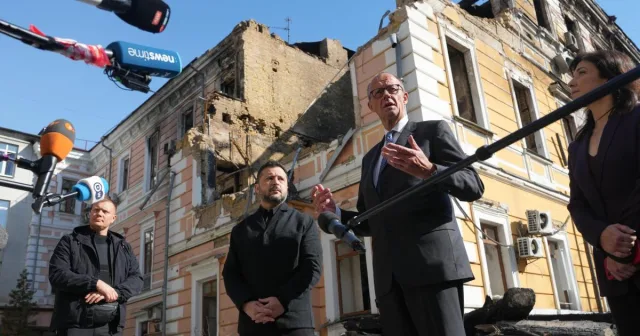
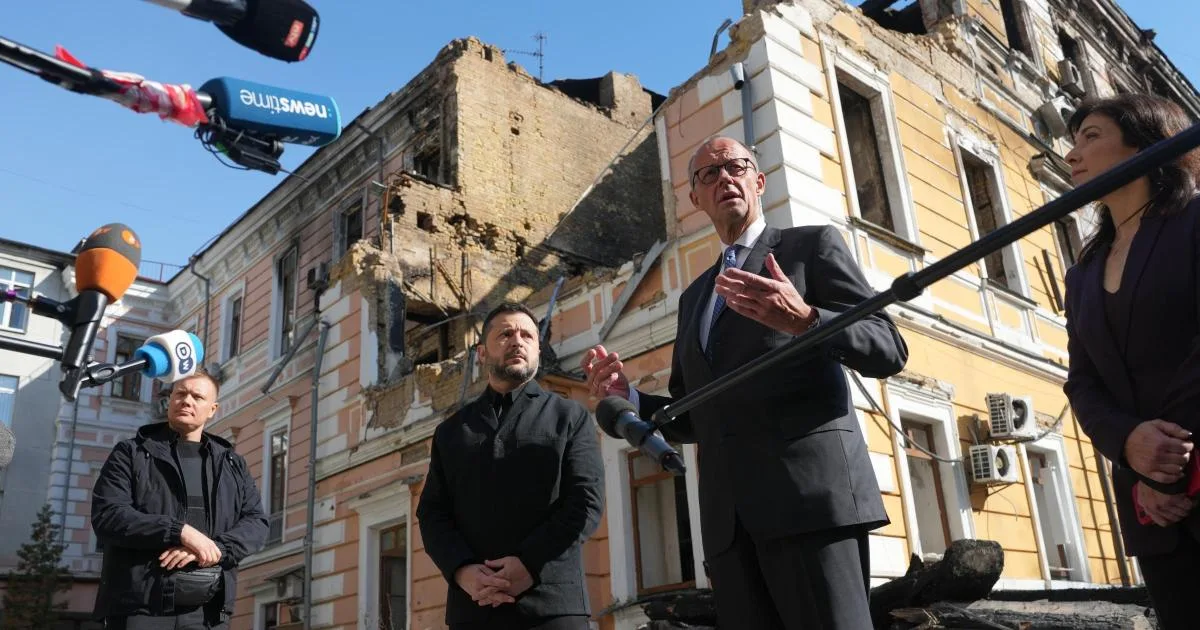
German Chancellor Friedrich Merz arrived in Kyiv on October 4, 2026, for his second visit as chancellor, arriving as Russia struck the Northern Bridge over the Dnipro River with a drone. The attack, which damaged the roadway and injured two people, marked the fourth consecutive day of bridge targeting by Russian forces. Kyiv’s mayor, Vitali Klitschko, reported that the strike also disrupted a hot water supply system in the area. The assault occurred shortly after Merz’s unannounced arrival, which aimed to reinforce Germany’s support for Ukraine amid a surge in Russian aerial attacks.
Russian strikes have increasingly targeted Kyiv’s infrastructure, including bridges, energy systems, and commercial hubs, as part of a broader campaign to destabilize the city. Over the past week, three of Kyiv’s six Dnipro River bridges have been partially or fully closed due to repeated attacks, causing traffic congestion and logistical challenges. The latest strike on the Northern Bridge followed earlier assaults on the Southern Bridge, which had already been damaged in prior attacks. Ukrainian President Volodymyr Zelensky described the Russian campaign as “barbaric,” emphasizing the suffering of Kyiv’s residents.
Aid Package and Joint Drone Production Agreements
During his visit, Merz announced a €1 billion military aid package and €350 million for energy sector repairs, as part of Germany’s ongoing support for Ukraine. The chancellor also finalized a deal for joint production of drones, including anti-jet drones designed to counter Russian high-speed attack drones. A key component of the agreement involves Quantum Systems, a German defense technology firm, and Ukrainian manufacturer WIY Drones, which established a joint venture in April 2026 to produce the Strila interceptor drone. The collaboration aims to enhance Ukraine’s air defense capabilities against Russian aerial threats.
Zelensky and Merz toured the damaged National Academy of Sciences building, where a previous drone strike killed at least two people. The chancellor urged Russia to halt its “senseless war,” stating, “If Russia is not stopped, its war machine will sooner or later turn against us.” He also emphasized the mutual benefits of German-Ukrainian partnerships, citing joint technological projects that strengthen both nations’ security. Ukrainian Foreign Minister Andrii Sybiha reiterated the focus on “strengthening Ukraine’s defense and resilience” during talks with Merz.
Russia’s Escalation and Diplomatic Tensions
Russia’s Foreign Ministry warned foreign nationals and diplomats to leave Ukraine, accusing Germany of being the “main sponsor” of the war and seeking to dominate European military power. The statement came after Moscow announced plans to intensify strikes on “military and military-industrial facilities” in Kyiv and other regions, in response to Zelensky’s threats to escalate attacks on Russian oil refineries. Earlier in the week, Russia had targeted Sumy, killing one person and wounding 16 in an aerial bomb attack.
Diplomatic tensions between Germany and Russia have worsened since an attempted drone attack on Leipzig/Halle airport in early September, which Germany blamed on Moscow. The incident led to the closure of the German consulate in St. Petersburg, part of a cycle of retaliatory measures. Meanwhile, Merz faces domestic political pressure as his approval ratings decline amid criticism from the far-right Alternative for Germany (AfD) party, which accuses him of diverting funds from social programs to Ukraine aid.
| Detail | Information |
|---|---|
| Germany’s total aid to Ukraine since 2022 | €43.3 billion |
| Announced military aid package for Ukraine | €1 billion |
| Energy sector repair funding | €350 million |
| Number of Kyiv bridges affected by Russian strikes | Three of six road bridges over the Dnipro River |
| Casualties from recent Russian attacks | One killed, 16 wounded in Sumy; two injured in Kyiv bridge strike |
Domestic and International Implications
Merz’s visit underscored Germany’s pivotal role in Ukraine’s defense, but it also highlighted the domestic challenges facing the chancellor. His Christian Democratic Union (CDU) has faced setbacks in recent state elections, with the AfD gaining traction by opposing Ukraine aid. Alice Weidel, AfD co-leader, criticized Merz for allocating funds to Ukraine amid Germany’s energy crisis, stating, “Merz is travelling to Ukraine on Germany’s national holiday and promising further billions in German taxpayer money that is missing from the pension and health insurance funds.”
Internationally, the visit drew mixed reactions. While Ukrainian officials praised Germany’s commitment, Russian state media framed the strikes as a demonstration of Moscow’s defiance. Pro-war commentator Sergei Markov noted that Russia no longer pauses attacks during European visits, signaling a shift in strategy. Meanwhile, the U.S. has reduced its military support for Ukraine, allowing Germany to assume a larger role as Kyiv’s primary supplier of arms and funding.
Frequently Asked Questions
What is the significance of Germany’s aid package to Ukraine?
Germany has become Ukraine’s largest donor, providing €43.3 billion since the war began. The €1 billion military aid package and €350 million for energy repairs aim to bolster Ukraine’s defenses and infrastructure, while the joint drone production deal seeks to counter Russian aerial threats.
How have Russian attacks impacted Kyiv’s infrastructure?
Russian strikes have damaged three of Kyiv’s six Dnipro River bridges, disrupting traffic and causing logistical challenges. The Northern Bridge was struck again on October 4, injuring two people and damaging a hot water supply system. Attacks have also targeted energy facilities, data centers, and commercial hubs, exacerbating the city’s winter challenges.
What are the political risks for Merz in supporting Ukraine?
Merz faces growing domestic criticism, particularly from the far-right AfD, which accuses him of mismanaging Germany’s finances by prioritizing Ukraine aid. Recent state election losses for his party highlight the political risks of maintaining support for Kyiv amid economic and energy crises.
The visit by Merz to Kyiv, amid relentless Russian attacks, underscores the deepening entanglement of European politics in the war. As Germany continues to supply arms and funds to Ukraine, the conflict’s trajectory remains uncertain, with both sides preparing for further escalation. The next critical test will come in the coming weeks, as Kyiv seeks to strengthen its defenses and Russia continues its campaign to destabilize the region.
How significant is this wire dispatch?
Cast your anonymous vote to register reader consensus across journalism and intelligence sectors.
Dateline Wire is dedicated to independent, evidence-backed reporting. This briefing was synthesized from primary source reporting, corroborated across independent newsrooms, and verified against our Editorial Standards.