Ukraine strikes major Russian bridge with drones and missiles as aerial …
Ukrainian forces have severed a critical section of the Kerch Strait bridge using drones and missiles, disrupting vital Russian military supply lines ahead of a high-stakes international summit.
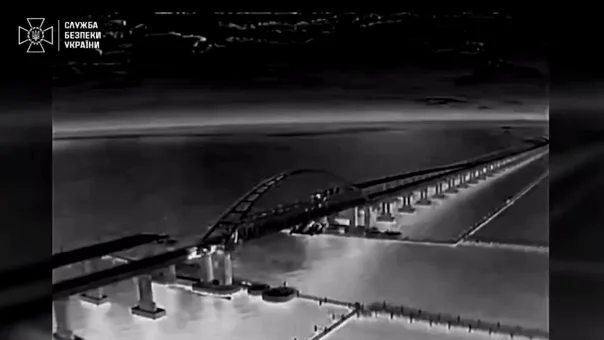
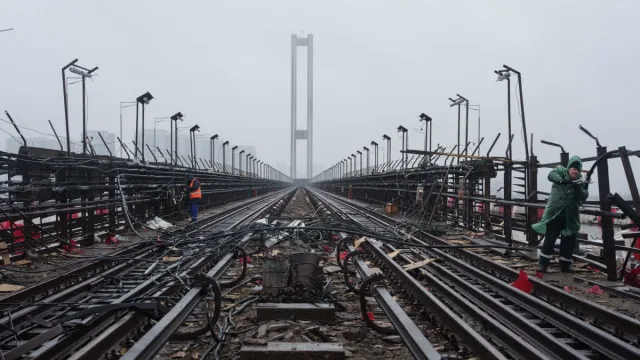
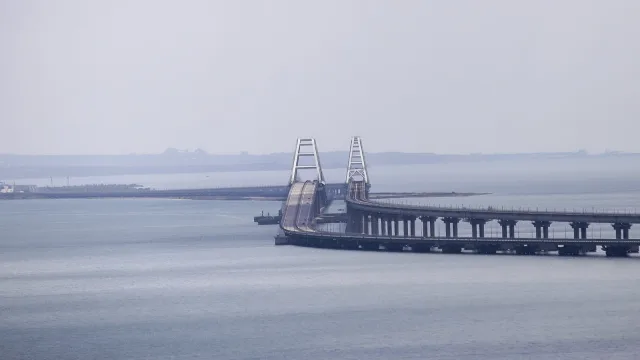
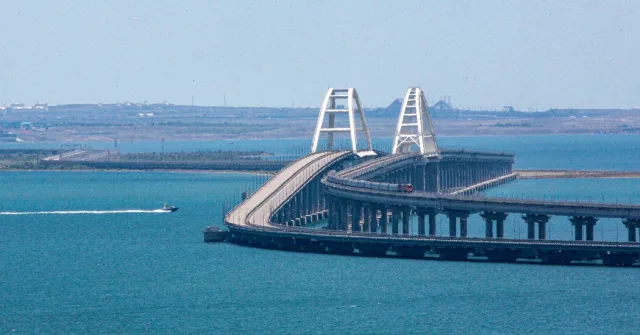
A precision-coordinated assault by Ukrainian forces has severed a critical section of the Kerch Strait bridge, the primary link between the Russian mainland and occupied Crimea. The strike, which Ukrainian President Volodymyr Zelenskyy described on Tuesday as the result of a seven-stage operation, has rendered the bridge’s road section impassable and damaged its parallel rail line. The event marks a strategic and symbolic escalation just days before a high-stakes summit in Shenzhen where Russian President Vladimir Putin is expected to meet with U.S. President Donald Trump and Chinese President Xi Jinping.
The operation, which the Security Service of Ukraine (SBU) claims involved a combination of home-grown drones and cruise missiles, appears to be the most successful effort to date in neutralizing the structure, which is widely regarded as a personal pet project of Mr. Putin. While the Kremlin has promised to rebuild the bridge, the physical destruction of an arch and road span presents an immediate logistical headache for Russian supply chains in the south.
What does the damage to the bridge mean for military logistics?
The bridge has long served as a vital artery for Russian forces moving supplies and personnel toward the front lines. According to the Ukrainian military, the roadway is now out of action,
with no vehicle able to cross it. While the rail section remains standing, reports indicate that its supporting arch sustained damage. Russian-backed Crimean Governor Sergei Aksyonov confirmed that the bridge had been struck, and the Russian-installed governor stated that rail traffic was restored by Tuesday afternoon, though these accounts differ from the assertions of the Ukrainian General Staff, which stated that the rail line’s arch was damaged.
Beyond the immediate crossing, the collapse creates a secondary maritime crisis. Remnants of the enormous steel arch have potentially blocked the shipping channel, complicating efforts to move large vessels toward Russian-occupied ports in the Sea of Azov, such as Mariupol and Berdiansk. Russia may attempt to rely on ferry crossings or sea shipments, but these alternatives remain vulnerable to Ukrainian naval and aerial drones. With the bridge compromised, Russia remains reliant on a land corridor through occupied regions of Zaporizhzhia and Kherson, areas where Kyiv has been consistently targeting logistics hubs.
This leaves the Kremlin with a narrowing list of options for maintaining its supply lines. Relying on the southern land corridor exposes cargo to continued Ukrainian interdiction, while maritime and ferry routes offer only limited capacity and high risk. The military's dependency on the bridge is not just about volume; it is about the speed of movement that the dual road-and-rail structure provides.
How are the residents of Kyiv and other regions reacting?
The escalation has exacted a heavy toll on Ukrainian civilians. In the capital, Kyiv, Russian forces launched ballistic missiles and drones that struck two major transit routes, the Pivnichnyi (Northern) and Pivdennyi (Southern) bridges. Mayor Vitaliy Klitschko reported that both were closed to traffic following the strikes, though the Southern bridge partially reopened on Tuesday. At least two people were killed in the capital, and strikes damaged critical infrastructure, leading to disruptions in heating and water supplies.
For those navigating the city, the situation remains precarious. City officials have advised residents to seek shelter in civil defense facilities when air alerts sound. Because the Dnipro River is crossed by only eight major bridges, any damage to these structures forces millions of residents into lengthy detours, significantly impacting daily life. In addition to the capital, the southern region of Zaporizhzhia reported two deaths and 18 injuries, alongside significant power outages for consumers.
If you are in affected areas, local authorities suggest the following measures:
- Monitor official channels from the Kyiv City State Administration for the status of the Northern and Southern bridges.
- Ensure you are aware of the nearest civil defense shelter locations, as above-ground metro services may experience operational delays or damage.
- Prepare for intermittent utility outages, as officials continue to assess the impact on water and heating infrastructure.
Can Russia sustain this rate of aerial combat?
The scale of the aerial exchange between the two nations has reached unprecedented levels. Russia’s Defense Ministry reported that it downed 1,441 drones on Tuesday, marking the second consecutive night of record-breaking interceptions following a figure of 1,336 the day prior. This surge in drone activity is not limited to the front lines; it extends deep into Russian territory, with reports of a fire at the Gazprom Neftekhim Salavat complex in the Ural Mountains, nearly 1,300 kilometers from the Ukrainian border.
While Russia continues to pound Ukrainian energy and transport infrastructure, the sheer volume of Ukrainian drone operations suggests a strategy of attrition designed to overwhelm Russian air defenses. Mr. Zelenskyy stated that his forces had systematically suppressed Russian radar and electronic warfare equipment over a period of weeks to clear a path for the final strike on the Kerch Strait bridge. The persistence of these attacks indicates that Kyiv is no longer viewing its defensive capabilities as purely reactive.
This suggests that Ukraine’s military planners have prioritized a systematic degradation of Russian defensive depth. By forcing Moscow to expend such massive numbers of interceptors, Kyiv is attempting to thin out the Russian umbrella protecting high-value targets. Whether this results in a permanent shift in air superiority or merely a temporary strain on Russian resources is the central tactical question.
Why did this attack happen now?
The timing appears inextricably linked to the upcoming diplomatic schedule. Mr. Putin, Mr. Trump, and Mr. Xi Jinping are slated to meet in Shenzhen on Thursday to discuss the ongoing war. By striking the bridge—the very symbol of the 2014 annexation—Ukraine has forced the Russian leadership to address a failure of its most secure infrastructure on the eve of high-level negotiations.
Kremlin spokesperson Dmitry Peskov did not rule out a link between the strikes and the upcoming visit, while promising the bridge would be restored and made even better than before.
Meanwhile, representatives from Ukraine and its Western partners, including the United States, France, and Germany, held a working video call on Monday to align positions for the next stage of negotiations. Rustem Umerov, head of Ukraine's Foreign Intelligence Service, confirmed that these discussions focused on the agenda for upcoming talks.
The destruction of the bridge serves as a potent reminder that the conflict remains fluid despite the efforts of international mediators. Whether this damage weakens or strengthens Russia's negotiating position in Shenzhen is uncertain, but it ensures that the territorial integrity of Ukraine remains the unavoidable centerpiece of the conversation.
The ultimate question is how the Russian military will reconfigure its logistics to compensate for the bridge's partial collapse before the diplomatic summit commences. If Moscow cannot secure its supply lines, it may be forced to accept a more defensive posture in the southern regions, changing the leverage available to negotiators when they gather in China.