EU proposes new €45 billion loan for Ukraine for 2027 to be repaid by Ru…
The European Commission has proposed a €45 billion loan package for Ukraine for 2027, featuring €25 billion in military assistance and budget support.
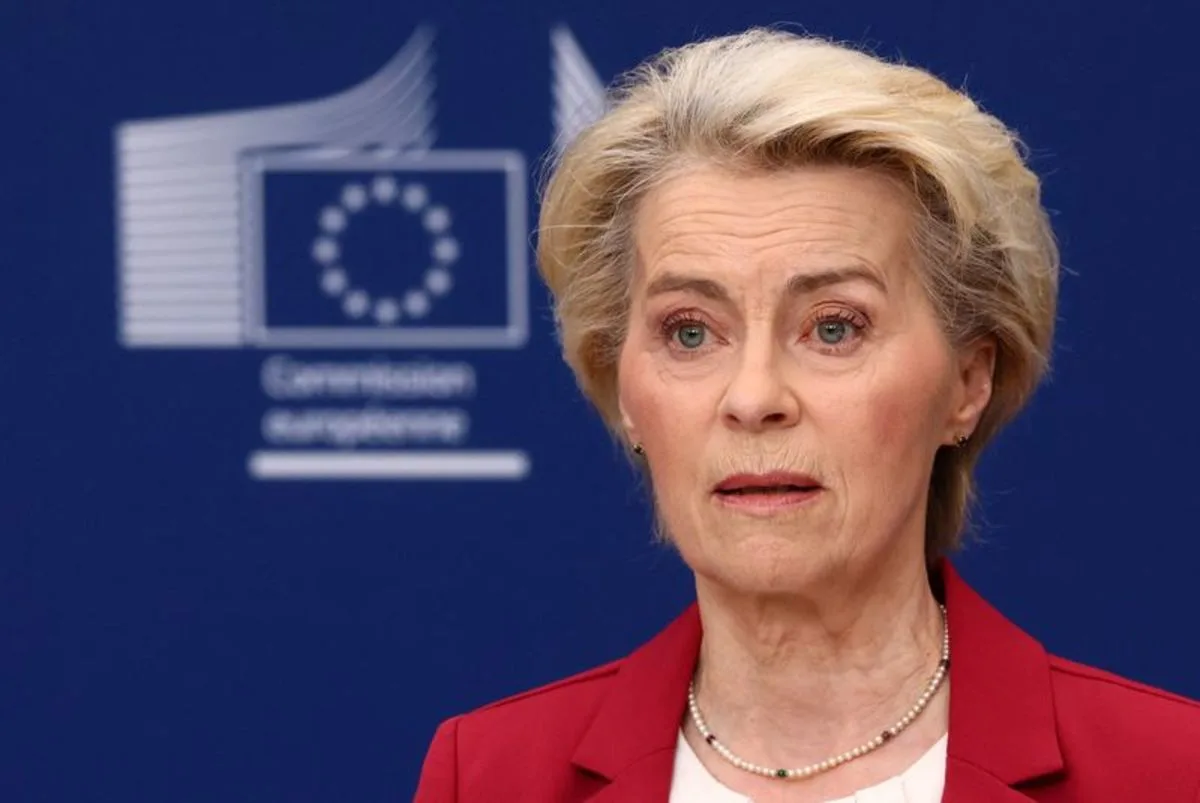
The European Commission has proposed a new €45 billion ($49.5 billion) loan to Ukraine for 2027 to cover approximately two thirds of an anticipated financing gap of €70 billion faced by Kyiv next year. European Commission President Ursula von der Leyen announced the package in Brussels on Wednesday, November 18, 2026, stating that the measure is designed to give Ukraine a strong hand at the negotiation table while it continues to defend against Russia's 2022 invasion.
The proposal comes as Russian military attacks intensify, targeting critical infrastructure and trade routes in Ukraine. The remaining third of Kyiv's funding needs for next year is expected to be provided by international partners such as Canada, Japan, Norway, and the United Kingdom.
Structure and Breakdown of the €45 Billion Package
The legislative proposals adopted by the European Commission outline a specific allocation for the €45 billion fund, which establishes a new Instrument for Coordinated Support to Ukraine. The financing will be raised by the Commission borrowing on capital markets, backed by the headroom in the EU budget.
The funding breaks down into distinct operational areas:
- €25 billion designated for military assistance
- €10 billion allocated for the national budget
- €10 billion directed toward macro-financial assistance to stabilize Ukraine's foreign currency reserves
The budget support portion includes €20 billion split equally between macro-financial assistance and the Ukraine Facility. Disbursements are strictly conditional upon Ukraine continuing essential reforms, particularly concerning the rule of law, the fight against corruption, and public finance management to meet interim benchmarks under the Fundamentals cluster in its EU accession talks.
The loan operates as a limited-recourse mechanism. According to von der Leyen, Ukraine will be required to repay the principal only once it receives reparations from Russia for the damage caused during the war. While interest is to be paid by Ukraine, the Union may provide a borrowing cost subsidy.
Budget Crossfire and Member State Divisions
The new funding push risks becoming entangled in broader negotiations over the European Union's next multiyear budget for 2028-2034, which totals a proposed €1.8 trillion ($1.97 trillion) and is scheduled for debate at a summit in Brussels on November 26-27, with a final agreement eyed for December 17-18.
Political friction has already emerged around the financing terms. For the previous €90 billion loan agreed in December 2025, three EU countries—the Czech Republic, Slovakia, and Hungary—secured an opt-out from interest costs while giving political approval. For the new loan, Bulgaria has indicated it will join those four nations.
Because all four are net recipients of the long-term EU budget, their stance prompted German Chancellor Friedrich Merz to threaten to halt negotiations on the 2028-2034 budget unless all EU members contribute financially to Ukraine. Germany remains Europe's biggest bilateral donor to Kyiv and the largest net payer into the EU budget.
Diplomats point out that Belgium has maintained a veto against leveraging frozen Russian state assets held in the Brussels-based financial markets company Euroclear for a reparation loan, backed quietly by countries such as Luxembourg and France. Consequently, the EU is relying on the EU budget headroom model rather than direct asset confiscation, though the Commission's proposal also amends the Ukraine Loan Cooperation Mechanism to enable new loans to be repaid from future extraordinary revenues stemming from immobilized Russian sovereign assets.
Timeline of Decisions and Political Pressures
The roadmap for approving the package leaves little room for delay. The immediate steps include:
- An extraordinary European Council summit in Brussels on November 26-27, 2026, to consider the European Commission's proposal.
- Following EU leader approval, procedures to amend the existing Multiannual Financial Framework Regulation to permit the EU budget to act as a loan guarantee.
- Subsequent approval by the European Parliament.
Diplomats in Brussels are pushing to lock down all agreements before the end of 2026. This urgency is driven by fears that the 2027 European electoral calendar could upend spending decisions, particularly the French presidential election scheduled for April and May 2027. Polls suggest far-right leader Marine Le Pen looks poised to replace Emmanuel Macron in the Elysee Palace, having campaigned on a pledge to end financial support for Ukraine if she wins.
The upcoming November 26-27 summit will test whether Germany's budget ultimatum and Central European resistance can be reconciled before political shifts in member states alter the bloc's consensus.