Trump, Putin and Xi hold unprecedented trilateral meeting in Shenzhen
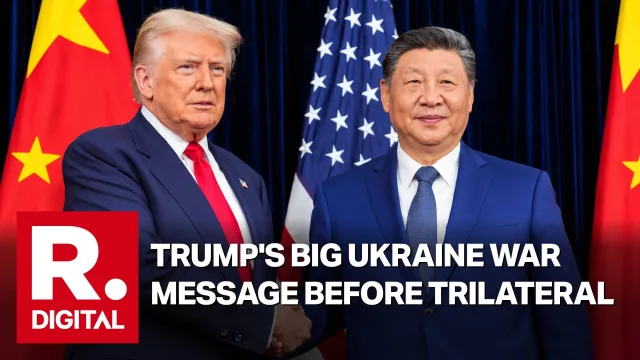
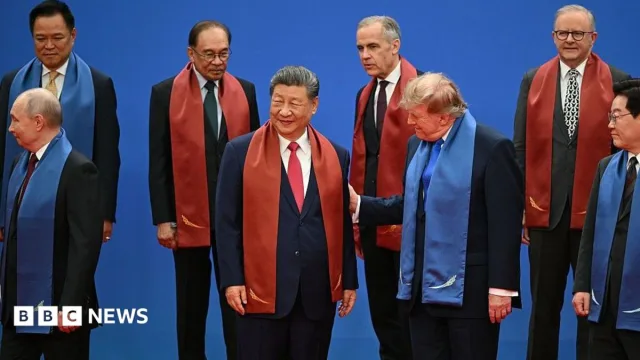
US President Donald Trump, Chinese leader Xi Jinping and Russian President Vladimir Putin concluded an unprecedented trilateral summit in Shenzhen, issuing a joint declaration.
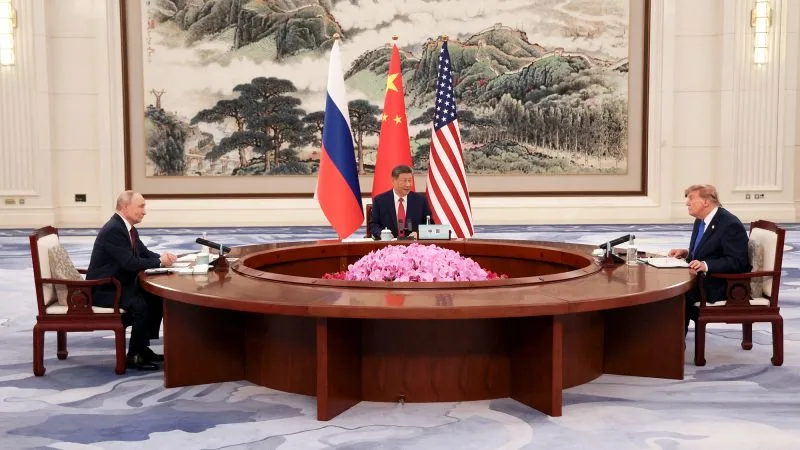
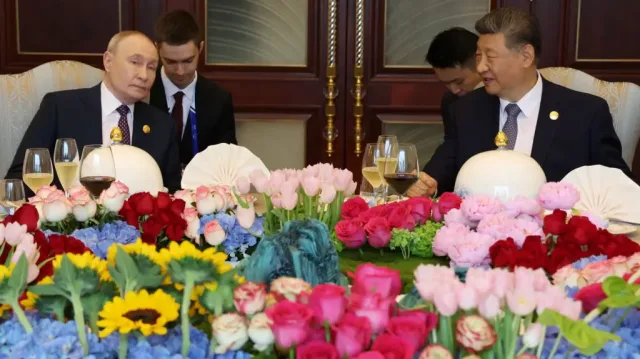
The lives of millions across Europe, Asia and the Americas hang in the balance as energy markets react and security alliances wobble following an extraordinary gathering behind closed doors on the outskirts of Shenzhen. US President Donald Trump, Chinese leader Xi Jinping and Russian President Vladimir Putin concluded an unprecedented trilateral summit on Thursday at the Kylin Villa, issuing a four-point "Declaration Towards Peace" that touches on nuclear risk, UN reform and global petroleum supplies, even as critics warned the meeting bypassed the nations most directly affected by ongoing conflicts.
What began as a proposal by Putin to discuss the war in Ukraine without Kyiv at the table quickly evolved into a broader summit on the sidelines of the Asia-Pacific Economic Cooperation meeting. The final declaration commits the three permanent members of the UN Security Council to pursuing institutional reforms, increasing the production and supply of refined petroleum products to ease the energy crisis, and conducting structured dialogue on nuclear non-proliferation. Yet the event was equally defined by what was left unsaid, as Trump used the platform to lash out at the International Criminal Court for getting "out of control," while Xi sought to project Beijing's stature as a premier global power ahead of a pivotal Communist Party conclave next year.
Optics, Agendas and the Search for Leverage
The diplomatic maneuvering leading up to the summit revealed sharply diverging motives among the three leaders. Putin arrived seeking a vital step out of the diplomatic cold after being shunned for his invasion of Ukraine, securing a joint statement emphasizing that immunity for state officials is "of fundamental importance." Trump, navigating domestic political fallout after midterm election battering and an unfolding technology scandal involving former Nvidia CEO Jensen Huang, aimed to project his dealmaking prowess and discuss nuclear arms control. Xi, meanwhile, managed to host the gathering without committing China to restrictive nuclear caps or a Yalta-style carve-up of territorial disputes that might clash with Beijing's advocacy of multilateralism.
Despite the grand tone of the "Declaration Towards Peace," independent analysts noted the absence of substantive mechanisms to resolve the wars in Ukraine and Iran, which continue to sap military resources and drive up global prices. Ukrainian President Volodymyr Zelensky had argued that the war could end swiftly if Washington and China used their economic leverage against Moscow, yet the summit proceeded without Ukrainian representation. That exclusion drew immediate comparisons to historical spheres of influence, leaving middle powers to question whether grand bargains struck behind closed doors will dictate terms for nations uninvited to the table.
Global Repercussions and Future Uncertainties
The fallout from Shenzhen extends far beyond the borders of the US, China and Russia, sending ripples through capitals from New Delhi to Brussels. India's absence from the talks has sparked intense debate over whether New Delhi's policy of strategic autonomy risks leaving it sidelined as Washington, Moscow and Beijing redraw the contours of great-power bargaining. With India maintaining heavy reliance on Russian energy imports while navigating complex border tensions with China and a rocky trade relationship with the United States, any subsequent shifts in sanctions regimes or technology controls will demand rapid recalculations in South Asia.
At the same time, Trump's dismissal of globalist regulation on artificial intelligence—declaring that his administration opposes any form of control that could "stifle" the technology—contrasts sharply with hawkish factions in his own cabinet who want to sever China's access to advanced US chips. Whether the personal rapport Trump claims with Xi and Putin will translate into lasting geopolitical stability remains deeply doubtful. The summit showcased three leaders eager to project unity and strength to domestic and international audiences, but it left the hardest questions of war, peace and technology entirely unresolved.
The Shenzhen meeting demonstrates that personal leader-to-leader diplomacy can swiftly bypass traditional alliances, but it remains a high-stakes spectacle built on fragile compromises rather than a durable new global order.