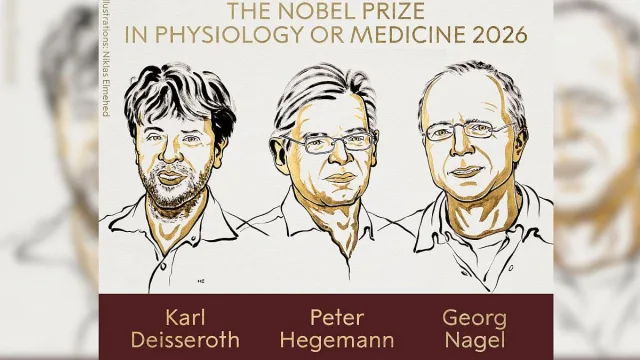
Three Scientists Win 2026 Nobel Prize in Medicine for Optogenetics Research
Three scientists won the 2026 Nobel Prize in Physiology or Medicine for pioneering optogenetics, a technique to control brain cells using light.
- Headline: Three Scientists Win 2026 Nobel Prize in Medicine for Optogenetics Research
- Dispatch Summary: Three scientists won the 2026 Nobel Prize in Physiology or Medicine for pioneering optogenetics, a technique to control brain cells using light.
- Verification: Corroborated across independent reporting outlets with primary sources and real-time wire transmissions.
Breakthrough in Optogenetics Recognized
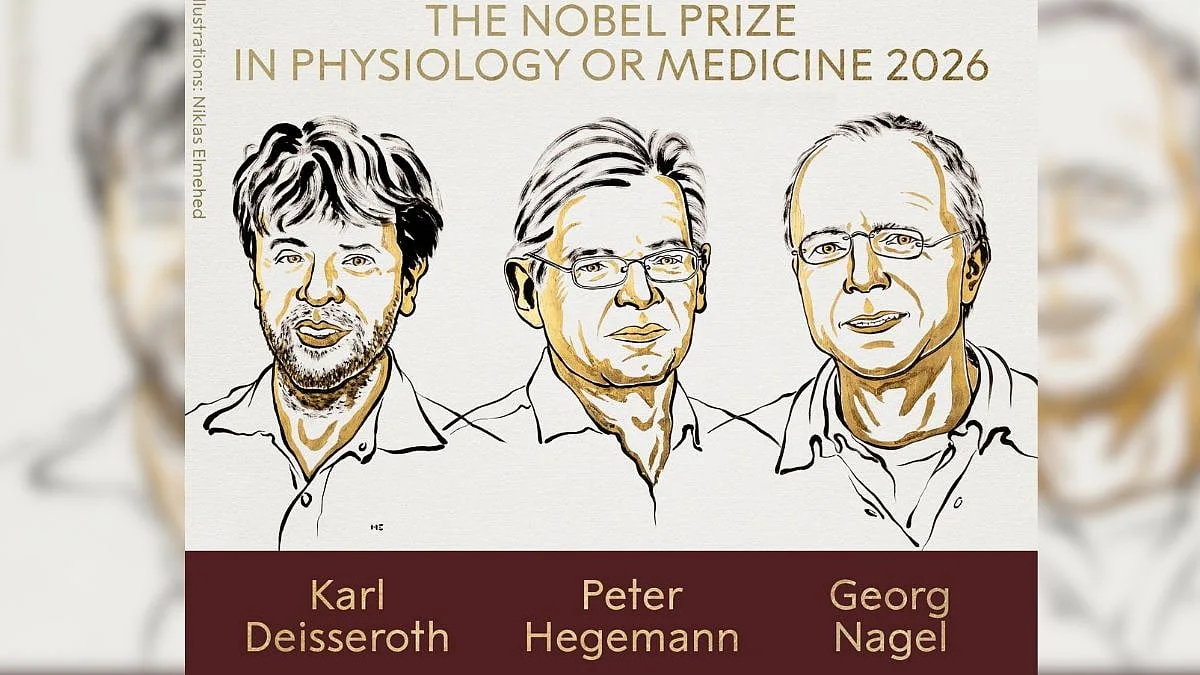
The 2026 Nobel Prize in Physiology or Medicine was awarded to Karl Deisseroth, Peter Hegemann, and Georg Nagel for their foundational work in optogenetics, a revolutionary method that allows scientists to control individual nerve cells using light. The Nobel Assembly at the Karolinska Institutet in Stockholm announced the prize on Monday, highlighting its transformative impact on neuroscience.
The laureates’ research focused on light-gated ion channels, proteins that respond to light to regulate cellular activity. Hegemann and Nagel’s early studies on algae revealed a protein called channelrhodopsin, which triggers electrical impulses when exposed to blue light. Deisseroth later developed this discovery into a precise tool to switch neurons on and off in living organisms, enabling unprecedented insights into brain function.
“Optogenetics makes it possible to switch on, or off, the activity of individual nerve cells in a living brain,” the Nobel Committee stated. The technique has since become a cornerstone for investigating neural circuits and their roles in behavior, memory, and disease. Researchers worldwide now use it to explore conditions such as epilepsy, blindness, and neurodegenerative disorders.
The Scientists and Their Contributions
Karl Deisseroth, a 54-year-old professor at Stanford University, is credited with translating the biological discovery of channelrhodopsin into a practical method for neuroscience. His work, conducted in collaboration with German researchers, established optogenetics as a standard tool for mapping the brain’s complex networks.
Peter Hegemann, 71, and Georg Nagel, 73, both based in Germany, were instrumental in identifying the light-sensitive proteins that underpin the technology. Hegemann, a professor at Humboldt University of Berlin, and Nagel, a researcher at the University of Würzburg, laid the scientific groundwork that Deisseroth later expanded into a versatile experimental framework.
The Nobel Committee emphasized that the trio’s discoveries “laid the foundation for optogenetics,” a field that has redefined how scientists study the brain. “This method is now being used in laboratories around the world to reveal the brain’s mysteries,” the committee wrote, underscoring its global adoption.
| Detail | Information |
|---|---|
| Laureates | Karl Deisseroth (USA), Peter Hegemann (Germany), Georg Nagel (Germany) |
| Prize Amount | 12 million Swedish kronor (approximately $1.2 million USD) |
| Key Discovery | Light-gated ion channels and optogenetics for precise neural control |
| Announcement Date | October 5, 2026 |
| Ceremony Date | December 10, 2026 (Stockholm) |
Global Impact and Future Implications
The Nobel Committee praised the laureates for opening a “new era in neuroscience,” enabling researchers to decode the brain’s activity with surgical precision. Abdel El Manira, a Karolinska Institute professor and Nobel committee member, noted that optogenetics has already advanced understanding of conditions like depression, addiction, and dementia, while highlighting the vast unknowns that remain.
The announcement marks the start of Nobel Week, with prizes in physics, chemistry, literature, and peace to follow. The economics prize will be awarded on October 12. Each laureate receives an identical cash award, regardless of the number of recipients.
Frequently Asked Questions
What is optogenetics, and why is it significant?
Optogenetics is a technique that uses light to control the activity of individual nerve cells. By engineering light-sensitive proteins, scientists can activate or deactivate neurons with precision, enabling deeper understanding of brain function and disease. It has become a critical tool for studying conditions like epilepsy and blindness.
Who were the 2026 Nobel laureates in Medicine?
The 2026 Nobel Prize in Medicine was awarded to Karl Deisseroth (USA), Peter Hegemann (Germany), and Georg Nagel (Germany) for their work on light-gated ion channels and optogenetics.
How much is the Nobel Prize in Medicine worth?
The 2026 prize carries a cash award of 12 million Swedish kronor, equivalent to approximately $1.2 million USD. The amount remains consistent regardless of the number of laureates.
The 2026 Nobel Prize in Medicine underscores the power of interdisciplinary research to unlock the brain’s complexities. As optogenetics continues to evolve, its potential to address neurological and psychiatric disorders remains a focal point for scientists worldwide. The subsequent Nobel Prizes in physics, chemistry, literature, and peace will further highlight the intersection of innovation and discovery.
How significant is this wire dispatch?
Cast your anonymous vote to register reader consensus across journalism and intelligence sectors.
Dateline Wire is dedicated to independent, evidence-backed reporting. This briefing was synthesized from primary source reporting, corroborated across independent newsrooms, and verified against our Editorial Standards.