Democrats Nominate Hakeem Jeffries For House Speaker
House Democrats formally nominated Representative Hakeem Jeffries for Speaker of the House, advancing the historic bid despite 11 opposing votes.
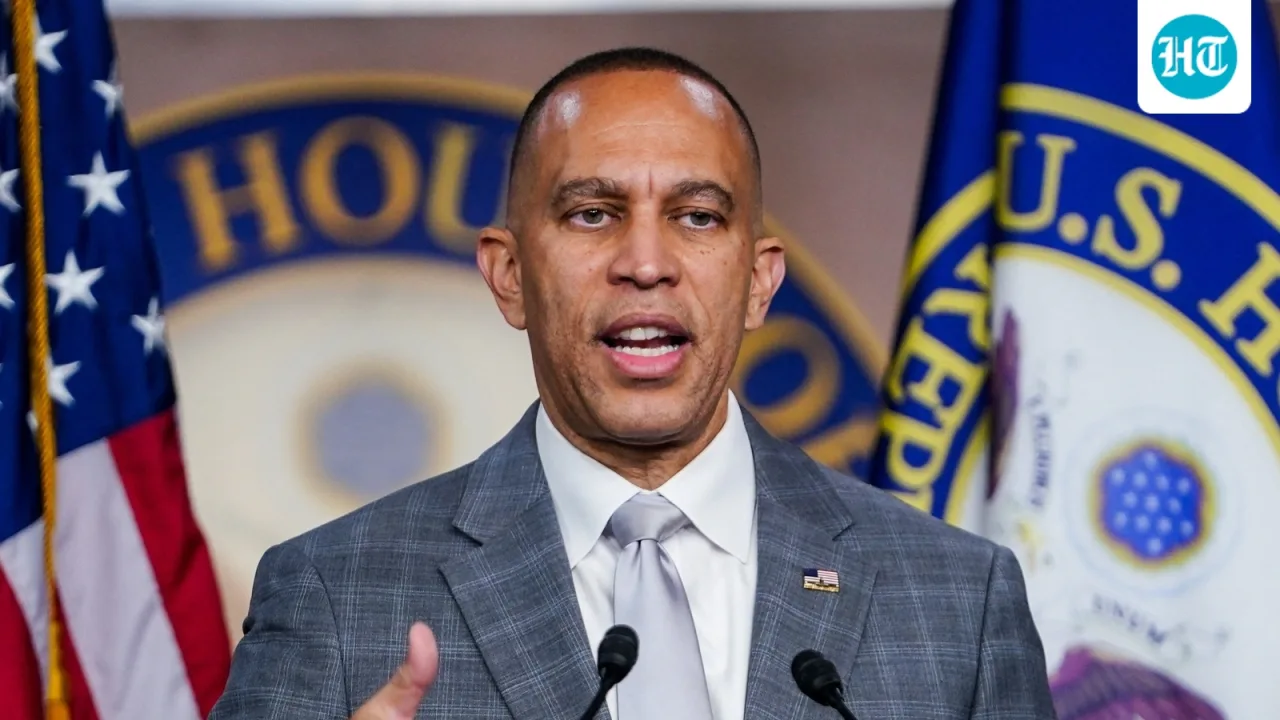
Hakeem Jeffries took a major step Wednesday to becoming the first Black speaker of the US House of Representatives after House Democrats formally nominated the 56-year-old New Yorker for Speaker of the House on Wednesday, November 18, positioning him to hold the gavel during the final two years of President Donald Trump's term. While Jeffries ran unopposed in the closed-door caucus vote, 11 members cast ballots against his selection, resulting in a 251-11 tally that reflects a lingering undercurrent of restlessness within a party that has just secured a significant majority.
The Path to a Historic Nomination
Jeffries, who represents a district in New York and has led House Democrats since 2022, successfully navigated the transition from minority to majority leader by emphasizing unity over factionalism. In the days leading up to the secret ballot, he moved to address the concerns of his party’s left flank by endorsing an expansion of Medicare, a minimum wage hike, and a prohibition on stock trading for members of Congress. These policy commitments appear designed to consolidate support within a diverse caucus that includes both progressive members like Representative Alexandria Ocasio-Cortez and moderate "Blue Dog" Democrats from districts that lean Republican.
The decision to conduct a formal vote rather than selecting Jeffries by acclamation, an approach Nancy Pelosi famously utilized in 2018 when she faced more than 30 opposing votes, allowed members to put their positions on the record. This choice showed the tension within the ranks, where some newly elected members had previously expressed skepticism toward the existing leadership structure.
Leadership Dynamics and the Next Generation
Jeffries is not acting alone; he leads a trio of potential historic firsts alongside Representative Katherine Clark of Massachusetts, slated to be the first female majority leader, and Representative Pete Aguilar of California, positioned to become the first Latino majority whip. Their collective rise signifies a definitive close to the era defined by the long-standing leadership of Pelosi, Steny Hoyer, and James Clyburn.
| Leader | Proposed Role | Historic Milestone |
|---|---|---|
| Hakeem Jeffries | Speaker of the House | First Black Speaker of the House |
| Katherine Clark | Majority Leader | First Female Majority Leader |
| Pete Aguilar | Majority Whip | First Latino Majority Whip |
This team now faces the challenge of managing a sprawling majority that spans from progressive activists to newly elected members from red-leaning regions.
Concerns and Legislative Priorities
Jeffries' victory comes just over a week after House Republicans selected Rep. Jim Jordan of Ohio to be the conference's minority leader; in the Senate, Republicans tapped South Dakota's John Thune for a second term as party leader. The party's focus is now shifting toward the first 100 days of the new Congress. As of Wednesday, Democrats will hold at least 257 seats in the US House next year, with seven races still uncalled. Jeffries maintains a significant cushion that allows him to lose nearly 40 votes and still secure the majority threshold of 218 required for the speakership on the House floor.
Despite overwhelming support, Jeffries faced a handful of holdouts from the party's left wing, who argue Democrats should prioritize advancing a more progressive agenda next year, lobbying for votes on Medicare for All and legislation that would stop the transfer of offensive weapons to Israel. While we have seen meaningful progress, there is still work to be done to ensure that the direction our party takes in this coming Congress reflects what our constituents are demanding of our leadership,
seven incoming lawmakers, including fellow New Yorkers Darializa Avila Chevalier and Claire Valdez, said in a statement.
Senate Leadership Turbulence and the Road to January
Divides inside the party may prove more pronounced in the Senate, where some Democrats are more publicly questioning whether current Minority Leader Chuck Schumer of New York is best suited to deliver on voter demands for change. Schumer faces a challenge from Maryland's Chris Van Hollen, who announced his candidacy last week and is pitching himself as an alternative to the status quo, echoing much of the progressive populist messaging that several successful Senate candidates ran on this cycle. Like Schumer, Van Hollen has also served in Congress for decades. Schumer, the top Democrat in the Senate for nearly a decade, contends that he still has the needed votes to be elected majority leader, though a handful of current and incoming members have declined to back him. Both sides still have time to shore up votes, with leadership elections set for early December.
In the House, the formality of the January 3 floor vote remains the final barrier, where members will be required to state the name of their preferred candidate aloud. Jeffries will be squaring off against Jim Jordan. His election to the powerful position places him in the line of succession to the presidency after the vice-president.
Observers should watch for any further shifts in voting commitments as the January 3 date approaches, particularly among members who have expressed concern about the party's direction regarding impeachment strategies or foreign policy aid. Any change in the number of dissenting voices during the public roll call will serve as the most accurate indicator of Jeffries' ability to maintain his broad coalition once the legislative session formally begins.
Updated 1 time since publication; last update 18 November 2026, 18:27.