2026 Nobel Prize in Physiology or Medicine awarded to scientists behind …
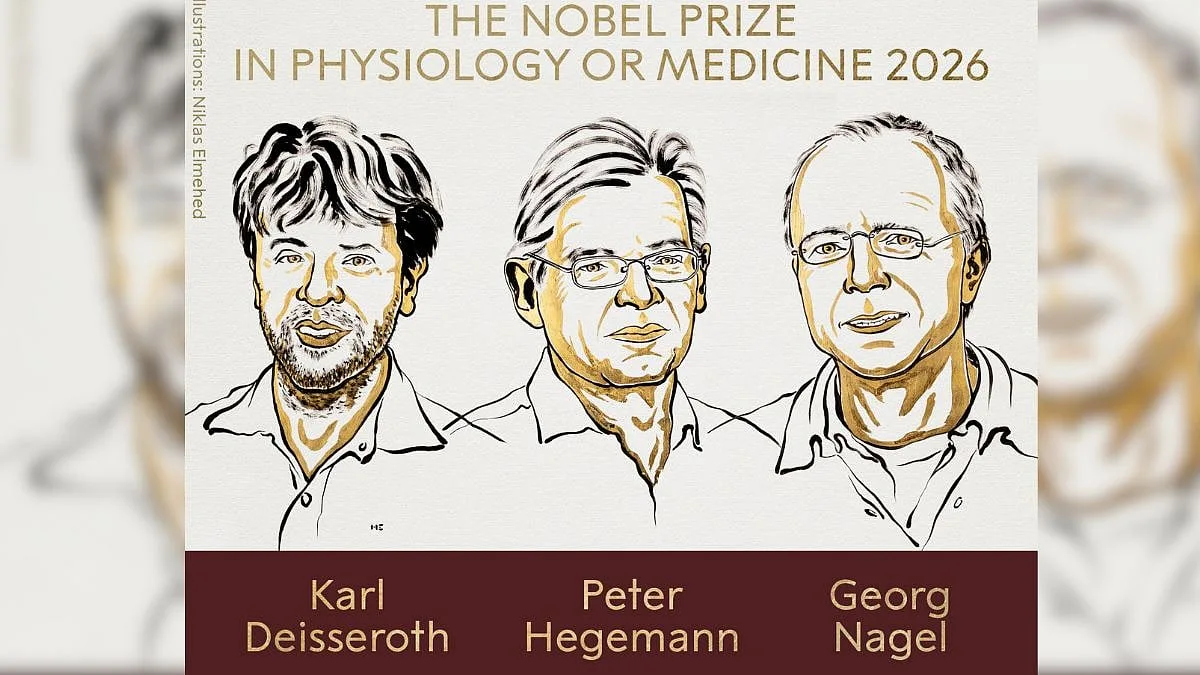
Karl Deisseroth, Peter Hegemann, and Georg Nagel have been awarded the 2026 Nobel Prize in Physiology or Medicine for pioneering optogenetics, a method that allows scientists to control brain cells using light.
- Headline: 2026 Nobel Prize in Physiology or Medicine awarded to scientists behind …
- Dispatch Summary: Karl Deisseroth, Peter Hegemann, and Georg Nagel have been awarded the 2026 Nobel Prize in Physiology or Medicine for pioneering optogenetics, a method that allows scientists to control brain cells using light.
- Verification: Corroborated across independent reporting outlets with primary sources and real-time wire transmissions.
Laureates and Their Contributions
The 2026 Nobel Prize in Physiology or Medicine was awarded to Karl Deisseroth, Peter Hegemann, and Georg Nagel for their foundational work in optogenetics, a revolutionary technique that allows scientists to manipulate and study individual nerve cells using light. The Nobel Assembly at the Karolinska Institutet highlighted their discoveries concerning light-gated ion channels, which have transformed neuroscience by enabling unprecedented precision in understanding brain activity.
Deisseroth, a 54-year-old American scientist affiliated with Stanford University, played a pivotal role in developing optogenetics as a tool to control neuronal activity. Hegemann, 71, and Nagel, 73, both German researchers based at Humboldt University of Berlin and the University of Würzburg respectively, laid the groundwork by identifying light-sensitive proteins in microorganisms. Their collaborative efforts created a method that has become central to modern brain research.
| Laureate | Nationality | Institution | Key Contribution |
|---|---|---|---|
| Karl Deisseroth | United States | Stanford University | Development of optogenetics as a method to control neurons with light. |
| Peter Hegemann | Germany | Humboldt University of Berlin | Discovery of channelrhodopsin, a light-sensitive protein in algae. |
| Georg Nagel | Germany | University of Würzburg | Collaboration on light-sensitive proteins and their application in neuroscience. |
The Science Behind Optogenetics
Optogenetics relies on proteins like channelrhodopsin, first identified by Hegemann and Nagel in green algae. These proteins, when activated by blue light, create electrical impulses that can be harnessed to control cellular activity. Deisseroth expanded this discovery by engineering these proteins to function in neurons, allowing researchers to switch specific brain cells on or off with light. This breakthrough has enabled scientists to map neural circuits and explore their roles in behavior, memory, and disease.
The Nobel Committee emphasized that optogenetics has become a global standard in neuroscience laboratories. It has facilitated studies on neurological disorders such as Parkinson’s and epilepsy, as well as fundamental questions about how the brain generates thoughts, emotions, and actions. The technique’s precision—allowing manipulation of individual cells in living organisms—has been described as a “light switch” for the brain.
Impact on Neuroscience and Future Research
The award underscores the transformative role of optogenetics in bridging the gap between cellular activity and complex brain functions. Researchers cited by the Nobel Assembly noted that the method has unlocked new avenues for understanding conditions like autism, depression, and schizophrenia. It has also been instrumental in advancing treatments by revealing how neural pathways contribute to disease mechanisms.
Previous Nobel laureates in medicine, such as those studying immune tolerance in 2025, have paved the way for similar breakthroughs. The 2026 winners’ work is expected to influence future research in neurodegenerative diseases, brain-computer interfaces, and therapeutic interventions. As one expert noted, the recognition highlights the interdisciplinary nature of modern science, merging genetics, optics, and neuroscience.
Nobel Prize Timeline and Traditions
The 2026 Nobel Prize in Medicine was announced on October 5, marking the start of Nobel Week. Following the medicine prize, awards for Physics, Chemistry, Literature, and Peace will be unveiled through October 12. The Economics Prize, established in 1968, will be announced last. All laureates will receive 12 million Swedish kronor (approximately $1.2 million), a sum that has remained consistent regardless of the number of recipients.
The tradition of announcing the Medicine Prize first dates to 1901, reflecting its historical significance in medical science. The awards ceremony, held at the Karolinska Institutet in Stockholm, will take place on December 10, the anniversary of Alfred Nobel’s death. This year’s announcement aligns with a broader pattern of recognizing innovations that have reshaped scientific understanding, from penicillin to mRNA vaccines.
Frequently Asked Questions
Who won the 2026 Nobel Prize in Physiology or Medicine?
The prize was awarded to Karl Deisseroth, Peter Hegemann, and Georg Nagel for their work on optogenetics and light-gated ion channels.
What is optogenetics, and why is it significant?
Optogenetics is a technique that uses light to control cells, particularly neurons, by engineering light-sensitive proteins. It allows precise manipulation of brain activity, enabling researchers to study neural circuits and their roles in behavior and disease.
When and where will the laureates be honored?
The winners will receive their awards at a ceremony in Stockholm on December 10, alongside other Nobel laureates. The prize money of 12 million Swedish kronor will be shared among the three scientists.
The 2026 Nobel Prize announcement sets the stage for further developments in neuroscience, with the potential to inspire new applications in medicine and technology. As researchers continue to refine optogenetics, the legacy of Deisseroth, Hegemann, and Nagel will likely shape the next generation of brain science. The upcoming Nobel awards in Physics and Chemistry may build on this momentum, reflecting the interconnected nature of scientific progress.
How significant is this wire dispatch?
Cast your anonymous vote to register reader consensus across journalism and intelligence sectors.
Dateline Wire is dedicated to independent, evidence-backed reporting. This briefing was synthesized from primary source reporting, corroborated across independent newsrooms, and verified against our Editorial Standards.