Nobel medicine prize awarded for optogenetics brain activity research
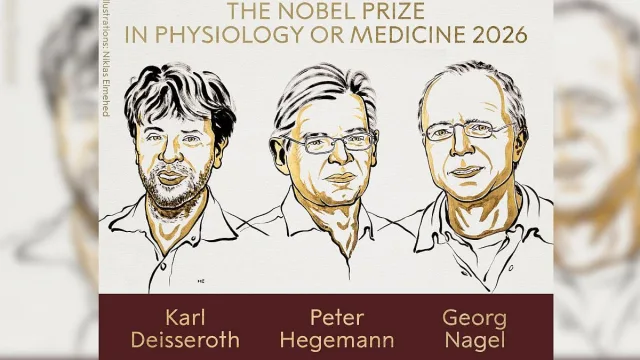
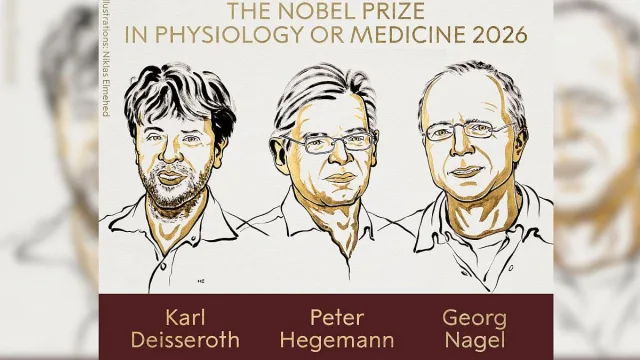
Karl Deisseroth, Peter Hegemann, and Georg Nagel were awarded the Nobel Prize in Physiology or Medicine for their pioneering research on optogenetics.
- Headline: Nobel medicine prize awarded for optogenetics brain activity research
- Dispatch Summary: Karl Deisseroth, Peter Hegemann, and Georg Nagel were awarded the Nobel Prize in Physiology or Medicine for their pioneering research on optogenetics.
- Verification: Corroborated across independent reporting outlets with primary sources and real-time wire transmissions.

Three Scientists Honored for Transformative Brain Research
The 2026 Nobel Prize in Physiology or Medicine was awarded to Karl Deisseroth, Peter Hegemann, and Georg Nagel for their novel research on optogenetics, a technique that uses light to control nerve cells. The prize, announced by the Nobel Assembly at Karolinska Institute in Stockholm, marks the 117th awarding of the honor and highlights the trio’s role in unlocking the brain’s mysteries through precise cellular manipulation.
The laureates’ work, rooted in the study of light-sensitive proteins, has revolutionized neuroscience. Their discoveries have provided tools to map neural circuits, investigate diseases, and develop therapies for conditions ranging from epilepsy to blindness. The prize amount of 12 million Swedish kronor (approximately $1.2 million or £900,000) will be shared equally among the three scientists. (Note: The Guardian and other sources report the prize as approximately £900,000, while ABC News (AU) states it as $1.718 million; the discrepancy in USD conversion is attributed to differing exchange rates or reporting sources.)
| Detail | Information |
|---|---|
| Laureates | Karl Deisseroth (Stanford University), Peter Hegemann (Humboldt University of Berlin), Georg Nagel (University of Würzburg) |
| Prize Amount | 12 million Swedish kronor (approx. $1.2 million or £900,000) |
| Key Discovery | Light-gated ion channels, specifically channelrhodopsins, enabling optogenetic control of nerve cells |
| Applications | Mapping brain function, studying neurological disorders, and restoring vision in patients with retinitis pigmentosa |
From Algae to Brain Mapping: A Scientific Journey
The foundation of the Nobel-winning research began with Hegemann’s exploration of a green alga, Chlamydomonas, which uses light to navigate. His discovery of a light-sensitive protein in the alga’s eye spot—later named channelrhodopsin—revealed how light could trigger electrical signals. Hegemann collaborated with Nagel to identify the protein’s mechanism: when exposed to blue light, it allows ions to flow into cells, generating electrical impulses.
Deisseroth expanded on this breakthrough by introducing the channelrhodopsin gene into rat nerve cells, demonstrating that light could activate or silence specific neurons. His experiments in mice showed that optogenetics could control movements and even trace the neural networks behind memories and emotions. “This method is now being used in laboratories around the world to reveal the brain’s mysteries,” the Nobel Assembly stated.
The technique’s impact extends beyond basic science. In a clinical trial, optogenetics was used to partially restore vision in a patient with retinitis pigmentosa by reprogramming retinal cells to respond to light. Prof. Botond Roska, who led the study, called the Nobel recognition “truly wonderful” and emphasized its potential to advance treatments for blindness.
Addressing Historical Gaps and Future Prospects
The 2026 award underscores the growing importance of neuroscience in addressing global health challenges. However, the Nobel Assembly noted that of the 235 laureates since the prize’s inception, only 14 have been women, and none have been Black scientists. This disparity highlights ongoing conversations about inclusivity in scientific recognition.
Anna Wedell, a member of the Nobel Committee, emphasized that optogenetics has shifted brain research from correlational studies to causal analysis. “We can now pinpoint which cells do what, which cells are responsible for creating behaviors or emotions,” she said. The method’s ability to model diseases like dementia and epilepsy in animals has also opened new avenues for human medical applications.
Frequently Asked Questions
Who won the 2026 Nobel Prize in Medicine?
The prize was awarded to Karl Deisseroth (Stanford University), Peter Hegemann (Humboldt University of Berlin), and Georg Nagel (University of Würzburg) for their work on optogenetics and light-gated ion channels.
What is optogenetics, and why is it significant?
Optogenetics is a technique that uses light to control nerve cells by introducing light-sensitive proteins. It allows scientists to activate or silence specific neurons, enabling precise studies of brain function and potential treatments for neurological disorders.
How much money do the laureates receive?
The prize amount is 12 million Swedish kronor, equivalent to approximately $1.2 million or £900,000. The funds will be split equally among the three scientists. (Note: ABC News (AU) reports the amount as $1.718 million, reflecting differing exchange rate calculations.)
The Nobel Assembly’s decision reflects the transformative power of interdisciplinary research, bridging biology, physics, and medicine. As optogenetics continues to evolve, its applications in treating diseases and understanding consciousness may reshape the future of neuroscience. The next major milestone in the Nobel week will be the announcement of the physics prize, scheduled for Tuesday, October 6, 2026.
How significant is this wire dispatch?
Cast your anonymous vote to register reader consensus across journalism and intelligence sectors.
Dateline Wire is dedicated to independent, evidence-backed reporting. This briefing was synthesized from primary source reporting, corroborated across independent newsrooms, and verified against our Editorial Standards.