Anthropic IPO raises record $81.3 billion on strong AI demand
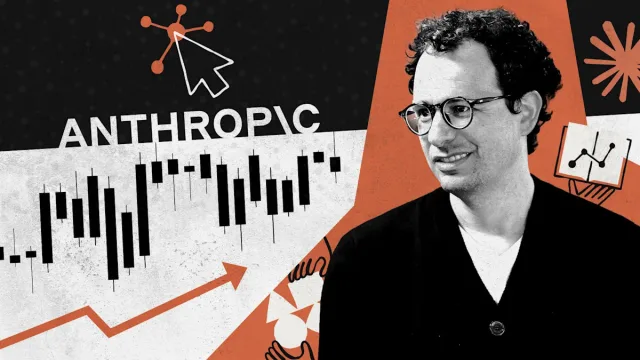
AI powerhouse Anthropic has completed a record-breaking stock market debut, pricing its IPO at $83 per share to raise $81.3 billion amid surging demand.
Update: This article has been updated to reflect final figures and additional details from Anthropic's public market debut, including its total combined haul of $107.3 billion through its public offering and concurrent private placement.
Anthropic IPO raises record $81.3 billion on strong AI demand
I think if we do this right, we can create an age of miracles where humanity is able to solve problems that have eluded us for millennia,
Anthropic CEO Dario Amodei said in the company's roadshow video.
That grand vision collided with Wall Street as the artificial intelligence powerhouse priced its initial public offering at $83 per share, eclipsing Elon Musk's SpaceX to claim the largest stock market debut on record. The offering generated $81.3 billion through the public sale alone, surpassing the $75 billion IPO haul secured by SpaceX earlier in the year. Combined with a $26 billion private placement, the total capital raised reached $107.3 billion.
Anthropic sold 956.4 million shares directly, while its seven co-founders offloaded 23.6 million shares. The company and some shareholders ultimately sold roughly 980 million shares, bringing the total haul past expectations. The listing was heavily oversubscribed despite growing investor anxiety over a possible artificial intelligence bubble and volatility across tech stocks.
Scaling the Heights of a Trillion-Dollar Valuation
The stellar debut pushes Anthropic's fully diluted market capitalization to about $1.5 trillion, while its basic market capitalization sits just above $1 trillion, valuing the creator of Claude far beyond its initial prospectus targets. The company originally planned to sell 825 million shares at a price range of $70 to $78 per share, but overwhelming demand allowed the firm and its co-founders to upsize the offering. The offering price is a notable jump from its private funding round in May, when the company raised $65 billion at a $965 billion valuation, though it fell short of a reported earlier target of around $2 trillion. Trading on the Nasdaq Global Select Market begins Thursday under the ticker symbol ANT, with the offering expected to close on November 20.
An initial public offering, or IPO, marks the moment a privately held company sells shares of stock to the public for the first time to raise capital. In this case, Anthropic also granted underwriters a 30-day option to purchase up to 147 million additional shares, which would add about $12 billion. Goldman Sachs and Morgan Stanley led the underwriting syndicate for the massive debut, alongside 20 other banks.
Tokenized exposure to the shares is also set to go live. Changpeng “CZ” Zhao, the founder of crypto exchange Binance, said BNB Chain will carry versions of the stock via bStocks, Ondo and xStocks, while a version issued by Backpack Securities will be available on Solana.
The staggering numbers reflect a meteoric rise for the firm, which was founded in 2021 by Dario Amodei and six other former OpenAI researchers. The company reported generating $33.24 billion in revenue for the nine months ended September 30, up roughly 1,200% from the same period last year. Its annualised revenue run rate reached $81 billion at the end of October, marking an increase of $10 billion from the previous month, fueled by explosive growth in business adoption of its AI coding tool, Claude Code. Anthropic counted 11,900 customers generating at least $100,000 in annual revenue on a trailing 12-month basis as of September 30, compared with more than 1,500 at the end of 2025.
The Heavy Toll of Infrastructure Commitments
Yet that rapid commercial expansion is mirrored by staggering financial exposure. Developing and running advanced frontier models requires massive amounts of computing power, specialized chips, and data center capacity, driving the company's aggregate computing and infrastructure commitments to about $900.9 billion as of and subsequent to September 30, 2026. This total includes roughly $451.6 billion expected to be incurred before the end of 2030, with $70.7 billion due in the 12 months following September 30.
These long-term purchase commitments and lease obligations have already left their mark on the ledger. Anthropic spent nearly $9 billion on computing capacity and infrastructure in the first half of 2026, followed by another $5 billion in the third quarter. For the third quarter, the company reported an operating loss of $567 million, contrasting with operating income of $974 million in the second quarter. Its net loss for the nine months ended September 30 reached $104 billion, compared with a net loss of $25.1 billion in the corresponding period last year, though the vast majority of that figure stemmed from non-operating items linked to convertible notes and derivative liabilities.
The company also warned in its filings that its infrastructure partners depend on third-party financing and credit support to acquire chips and build out capacity. If that financing becomes unavailable, contracted capacity could be delayed, repriced, or reduced. Meanwhile, competition is closing in. OpenAI, widely viewed as Anthropic's closest rival, has indicated it does not plan to pursue an IPO before 2027 after posting an annualised revenue run rate passing $40 billion in July. Meta Platforms, one of Anthropic's largest customers, has been looking to reduce its use of the startup's models as it develops more AI capabilities internally.
Strategic Beneficiaries and Market Pressures
Unlike standard technology firms, Anthropic is incorporated as a public benefit corporation, legally requiring it to balance shareholder interests with its stated purpose of developing advanced artificial intelligence responsibly under the oversight of its Long Term Benefit Trust. This governance structure has occasionally placed the company at odds with the federal government, leading to two high-profile disputes this year over safety, regulation, and national security, with its IPO prospectus outlining more than 90 pages of risk factors for prospective investors.
The IPO arrives during a challenging period for tech stocks. The Nasdaq 100 is down 14% from its October record and the S&P 500 is down 7%. AI cloud-computing stocks including CoreWeave, Cipher Digital and IREN have fallen as much as 70% from their highs, while chipmakers Sandisk, Micron Technology and Marvell Technology have lost some 50%. Bitcoin is on course for a seventh straight weekly decline, down roughly 27% from its September high near $87,000, though markets rebounded ahead of the debut with Nasdaq 100 futures rising more than 2% before the open on Thursday.
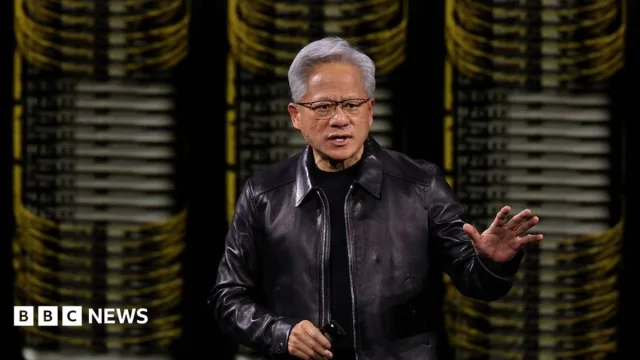
The debut is also shadowed by rising interest rates that threaten debt-fueled data center expansion. Major technology giants maintain deep ties to the newly public firm. Amazon owns nearly 15% of Anthropic, while Google holds around 14%, with their stakes valued at over $100 billion each. Meanwhile, a coalition including Alphabet's Google, Microsoft, Nvidia, Advanced Micro Devices (AMD), Broadcom, Micron and TSMC Partners agreed to collectively invest $26 billion through a private placement at the IPO price. Nvidia is expected to acquire $10 billion worth of Anthropic shares through that private placement.
Venture investors also reaped substantial rewards. Sequoia Capital and former Google CEO Eric Schmidt each own approximately 1% of Anthropic, while Singapore's sovereign wealth fund GIC holds a comparable stake. Other investors earning returns include Iconiq, Menlo Ventures, Coatue, Sound Ventures, and Spark Capital, which holds a board seat as the company's first institutional backer after leading a $450 million Series C round in 2023 at a $4.5 billion valuation. Furthermore, firms including Sequoia, Iconiq, Lightspeed, Accel and Altimeter Capital Management purchased millions of dollars worth of Anthropic shares directly in the offering. Anthropic's seven co-founders also cashed in during the debut, selling nearly 3.4 million shares each for total individual proceeds of $282 million.
Whether this historic influx of public capital can sustainably bridge the gap between astronomical infrastructure costs and corporate profitability remains the central test for the artificial intelligence sector, with trading set to begin on November 20.
Updated 1 time since publication; last update 19 November 2026, 14:36.