Trump urges Xi to help end Ukraine war ahead of trilateral with Putin
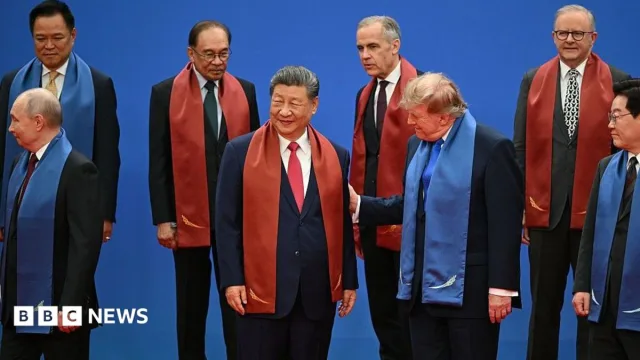
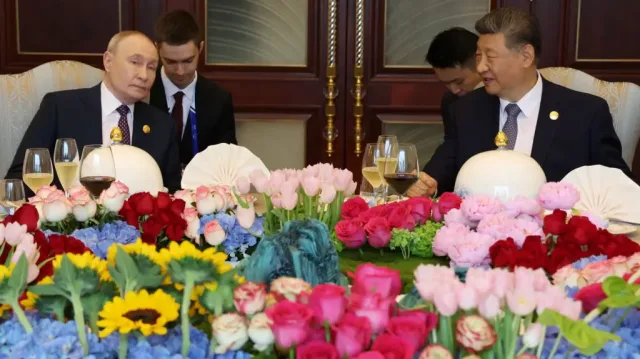
US President Donald Trump met with Chinese President Xi Jinping and Russian President Vladimir Putin in Shenzhen for an unprecedented trilateral summit.
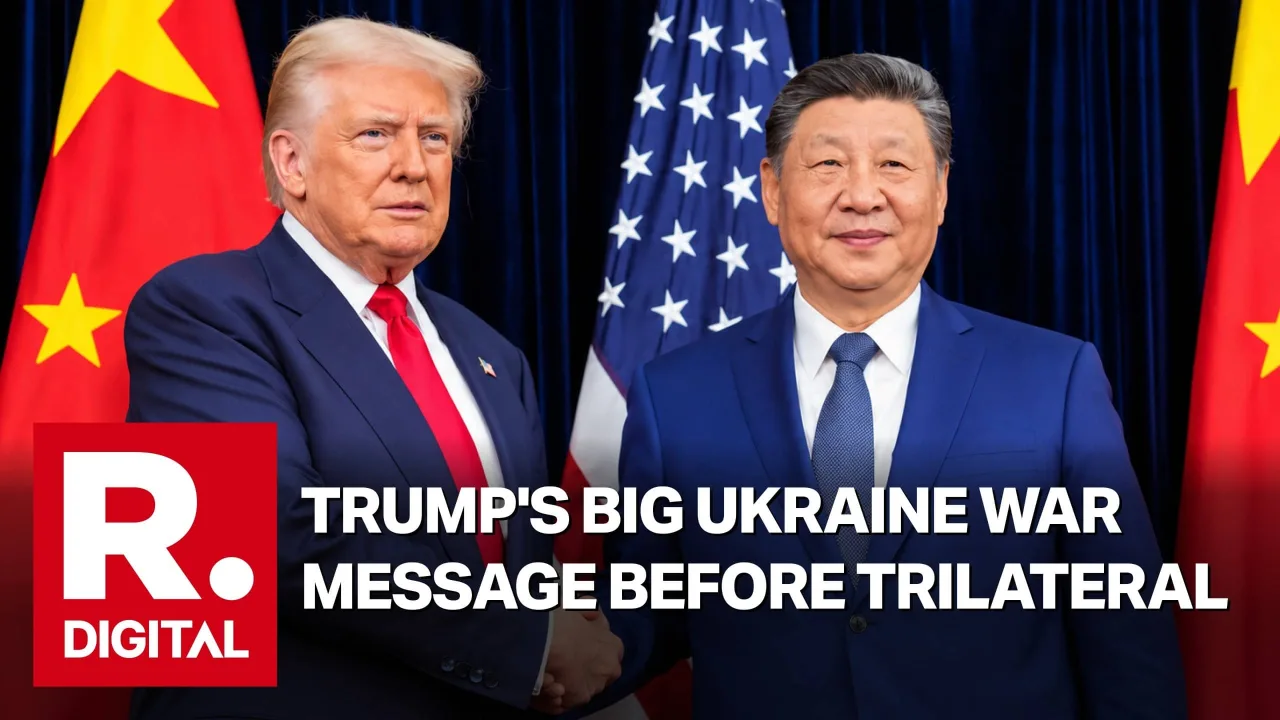
US President Donald Trump urged Chinese President Xi Jinping to help end the war in Ukraine during separate bilateral talks held ahead of an unprecedented three-way summit in Shenzhen, China. The diplomatic gathering brings together the leaders of the world's largest nuclear powers on the sidelines of the Asia-Pacific Economic Cooperation forum. Trump met with Xi and Russian President Vladimir Putin individually before sitting down for the trilateral talks, calling Putin a friend
and describing the welcoming pageantry orchestrated by Xi as a major diplomatic win.
The meetings in China's southern tech hub come amid a backdrop of competing economic visions and deep geopolitical divisions. While the summit marks the first time the three leaders have convened in a trilateral format, analysts warn that the fundamental disagreements over regional conflicts and global trade will likely prevent major substantive agreements. Smaller nations have watched the proceedings with anxiety, fearing that their own strategic interests might be sidelined by the world's superpowers.
Divergent Agendas on Ukraine, Iran, and Nuclear Arms Control
The discussions in Shenzhen exposed stark contrasts in how each global power approaches ongoing international conflicts. Trump stated that both the United States and China should exert influence to halt the fighting in Ukraine, telling reporters, We're looking to both help with respect to the war with Russia and Ukraine. I'd like to see it ended.
Trump also noted that both he and Xi felt strongly about ensuring that oil continues to flow through the Strait of Hormuz, which has suffered disruptions due to the war involving Iran.
Yet Chinese President Xi Jinping omitted any mention of Ukraine or Iran during his remarks. Patricia Kim, a foreign policy fellow at the Brookings Institution, explained that Beijing remains reluctant to assume responsibility for brokering a settlement. Xi has characterized the Russia-Ukraine war as fundamentally a European problem, making Beijing even less inclined to assume responsibility for resolving it,
Kim said.
Meanwhile, the Kremlin confirmed that Ukraine dominated discussions between Putin and Trump. Kremlin foreign policy aide Yuri Ushakov reported that the 40-minute bilateral meeting between Trump and Putin left the Russian leader in an excellent
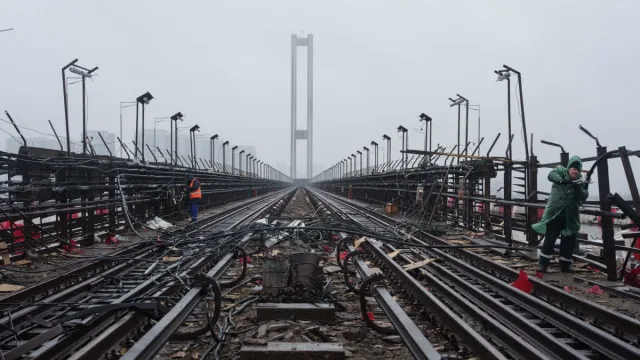
mood. Putin arrived at the summit fresh from a setback in the conflict following the crippling of a key bridge linking Crimea to Russia, yet he used his platform to position Moscow as essential for Asia-Pacific energy and food security. Trump has insisted nuclear arms control be a central topic of the summit, despite China's repeated objections to joining talks with Washington and Moscow, which have far larger nuclear arsenals.
Pomp in Shenzhen and Lingering Trade Tensions
The diplomatic pageantry in Shenzhen contrasted sharply with underlying trade frictions and regional security disputes. Trump praised the lavish reception extended by Xi, which included thousands of participants, children, soldiers, and a personal greeting at the airport—an honor Xi had not previously extended to any visiting head of state. Trump called the welcome a big win for us. It's a big win for China too,
after the two leaders briefly hugged.
The warm reception stood in stark contrast to the chilly treatment experienced by Japanese Prime Minister Sanae Takaichi, who landed without an official welcoming ceremony. Bilateral ties between Tokyo and Beijing have remained strained since Takaichi suggested in 2025 that Japan could deploy military forces if Chinese actions against Taiwan threatened Japanese territory. On Thursday, Takaichi reaffirmed that Tokyo's stance on Taiwan remained unchanged, while Taiwan's defence ministry reported that two Russian military aircraft flew to the island's east.
Before the trilateral proceedings commenced, Xi and Putin delivered pointed speeches condemning Western trade protectionism and sanctions. During the APEC proceedings, Xi advocated for free and open trade and announced that China would provide $20 million to support practical APEC cooperation, alongside the creation of an Asia-Pacific Community Research Centre in Shenzhen. Trump told the audience the US has been a Pacific power for hundreds of years and touted the strength of its economy, while telling the audience he opposed regulating artificial intelligence as it would stifle
the industry.
| Leader | Key Priority Stated at APEC | Position on Regional Conflicts |
|---|---|---|
| Donald Trump | Economic growth, AI freedom, nuclear arms control | Urged US-China cooperation to end the war in Ukraine; emphasized Strait of Hormuz oil flow |
| Xi Jinping | Free and open trade, digital economy, green growth | Did not mention Ukraine or Iran; framed Russia-Ukraine war as a European matter |
| Vladimir Putin | Asia-Pacific food and energy security | Focused on shared interests in Ukraine following bilateral talks with Trump |
Political Baggage Back Home and Structural Realities
Beyond the diplomatic optics, all three leaders return to domestic vulnerabilities that complicate their long-term strategies. Trump faces mounting political pressures upon returning to Washington, including fallout from bruising midterm elections, an investigation into the Nvidia spy scandal, and widespread disruptions across US tech infrastructure and air travel. Reports of advanced Nvidia artificial intelligence chips being diverted to China through Southeast Asia have further strained export controls, prompting Craig Singleton of the Foundation for Defense of Democracies to observe that Beijing seeks chip access through direct negotiation even as lawmakers weigh stricter statutory curbs.
The leaders have plenty of reasons to appear together but far fewer to agree on substance, given differences over Ukraine, Iran, nuclear weapons, trade and China's military buildup, said Craig Singleton of the Foundation for Defense of Democracies.
A photograph could serve all three men well.
Craig Singleton, Foundation for Defense of Democracies
Trump's Asia trip has offered a chance to showcase US influence, strengthen ties with regional allies and pursue a high-profile diplomatic opening with Xi and Putin, yet the absence of a shared framework on Ukraine, Iran, or nuclear reduction leaves the historic trilateral heavily symbolic. As the meetings conclude in Shenzhen, the immediate diplomatic gains are measured entirely in handshakes, photo opportunities, and the management of entrenched disagreements rather than binding resolutions.