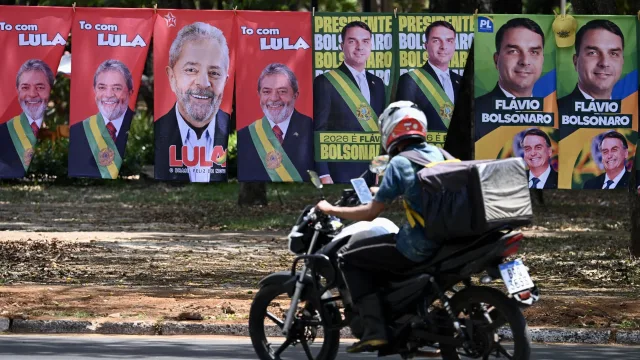
Lula wins Brazil presidential election as Bolsonaro rejects results
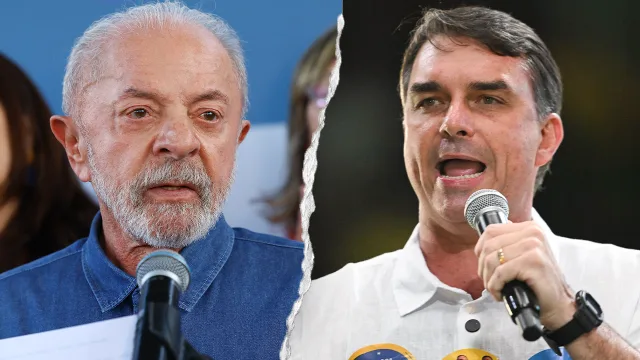
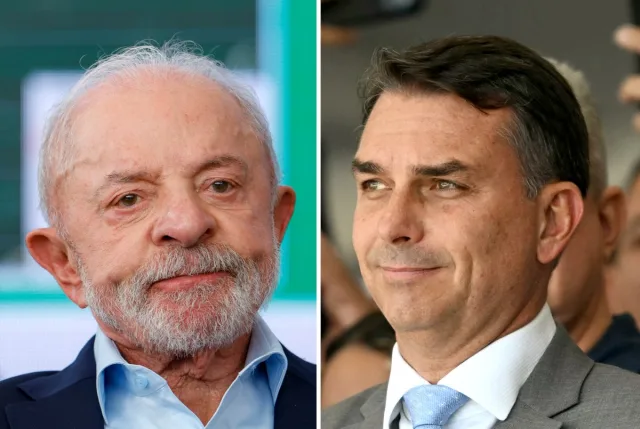
Luiz Inácio Lula da Silva secured a historic fourth term as Brazil's president after defeating Flávio Bolsonaro in a presidential runoff.
- Headline: Lula wins Brazil presidential election as Bolsonaro rejects results
- Dispatch Summary: Luiz Inácio Lula da Silva secured a historic fourth term as Brazil's president after defeating Flávio Bolsonaro in a presidential runoff.
- Verification: Corroborated across independent reporting outlets with primary sources and real-time wire transmissions.
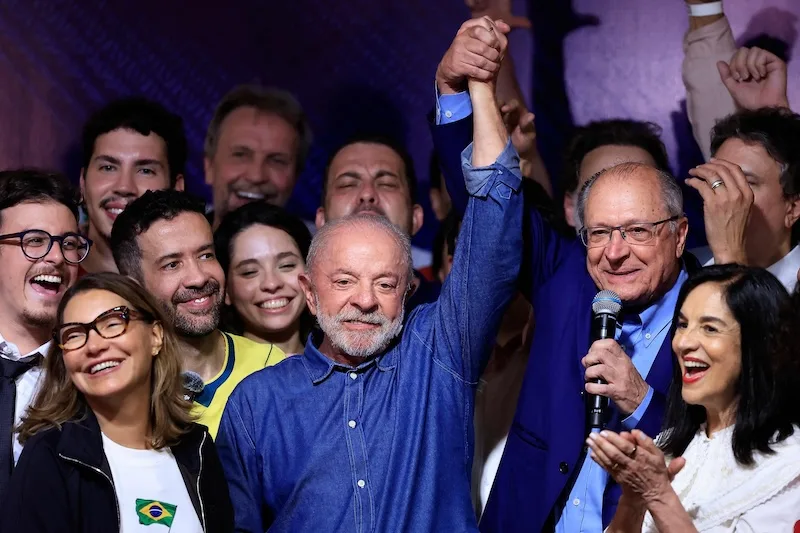
Either the homeland remains free, or we die for Brazil,
Luiz Inácio Lula da Silva told supporters on Sunday night, framing his historic electoral triumph as a defense of national sovereignty. This country will not accept being anyone’s backyard.
Those defiant words capped a dramatic turnaround in Latin America's largest economy. Lula secured a fourth term in office after defeating right-wing senator Flávio Bolsonaro in Sunday's presidential runoff, according to Brazil's Superior Electoral Court. The 80-year-old incumbent captured 51.8% of the vote — or 51.79% in exact court figures — translating to 64.26 million ballots. Senator Bolsonaro, the 45-year-old son of former president Jair Bolsonaro, finished with 48.2% (or 48.21%), garnering 59.83 million votes. The final margin exceeded 4.4 million votes, making Lula the first Brazilian president to win four non-consecutive terms and the first candidate since the end of the military dictatorship in 1985 to win the presidency after trailing in the first round.
That victory instantly reshapes the geopolitical landscape of the Americas, providing a direct counterweight to right-of-center leaders allied with U.S. President Donald Trump. Yet the outcome arrived amid deep friction over voting procedures, setting off immediate legal challenges that threaten to prolong political instability in Brasilia.
How did a first-round deficit turn into a historic victory?
The road to Sunday's runoff was paved with an unexpected reversal. On October 4, Senator Bolsonaro bested Lula in the first round of voting, pulling in approximately 47% of the ballot against Lula's 45%, a lead of more than 2.2 million votes. Several right-wing candidates who lost in that initial contest promptly endorsed Bolsonaro, creating a powerful conservative coalition backed by the legacy of his father, who is serving a 27-year prison sentence for attempting a coup after he lost the 2022 presidential election to Lula.
Faced with a formidable challenge driven by voter anxieties over the cost of living and security, Lula reorganized his campaign. He appealed aggressively to young voters, mobilized millions of Brazilians on the streets to defend democratic values, boosted government initiatives, and raised alarms about the prospect of another Bolsonaro administration. The strategy paid off in turnout. Participation rose on Sunday to 80.79%, up from 78.92% in the earlier round, bucking the usual electoral trend. Lula gained significant ground across Brazil's northeast, overturned Bolsonaro's first-round lead in Minas Gerais, and moved ahead in 211 municipalities, including Rio de Janeiro.
The campaign was also defined by sharp ideological clashes. Bolsonaro made a tough-on-crime approach the cornerstone of his platform and pledged to lower food costs. Lula, meanwhile, invested in costly incentives to lure undecided voters while attacking his opponent's rhetoric. This was a defeat for denialism and lies,
Lula declared after his victory. I must confess that every time I attended a debate, I felt embarrassed.
That triumph also holds major implications for international relations. Lula enters his fourth term as a vocal critic of U.S. President Donald Trump, offering relief to critics of widening Washington influence in Latin America. At the same time, his re-election keeps relations with Israel in a deep freeze. Conversely, Israeli Prime Minister Benjamin Netanyahu had recently invited Senator Bolsonaro to visit Jerusalem, hoping to reset bilateral ties that flourished under the elder Bolsonaro.
Why are election results being contested now?
The celebration on the streets of São Paulo and Rio de Janeiro was immediately overshadowed by a bitter dispute over an eleventh-hour procedural ruling. Just three minutes before polls were scheduled to close on Sunday, Supreme Court Justice Cristiano Zanin ruled to keep voting stations open for two more hours following requests from both political campaigns. Lula's representatives had cited transportation shortages and issues with buses providing access to polls in São Paulo and Salvador, cities that historically favor the incumbent. Bolsonaro's campaign had requested the extension due to heavy rainfall in southern Brazil, where the challenger enjoyed strong support.
The decision delayed the tallying of votes by two hours. It remained unclear how many polling stations actually stayed open past the original closing time, with Associated Press reporters observing that stations in Brasília and Rio de Janeiro closed shortly after the standard 5 p.m. deadline. Pointing out that Justice Zanin is a former lawyer for Lula, Senator Bolsonaro accused him of changing the rules mid-game. It is impossible to recognize the election results, given the circumstances under which things unfolded,
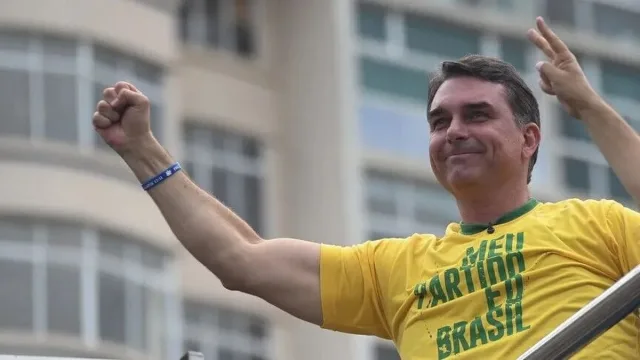
Bolsonaro told journalists with a stone-faced expression in Brasília, announcing plans to seek an annulment.
Despite the high-stakes pushback, legal experts expressed skepticism over the viability of Bolsonaro's challenge. Kassio Nunes Marques, the president of the electoral court who was originally appointed to the Supreme Court by former President Jair Bolsonaro, stated that extending voting hours did not impact the final outcome. Joao Pedro Padua, a law professor at Fluminense Federal University, noted that while Bolsonaro has the right to file a lawsuit or request a recount if he presents evidence of fraud, the legal hurdles are steep. The extension of voting hours is unusual, but for it to invalidate the elections, the candidate would have to prove that it affected voters’ ability to freely express their will,
Padua said. There doesn’t seem to have been any such impact.
Who is affected by the outcome?
- Brazilian voters, who turned out in higher numbers for the runoff (80.79%) than the first round (78.92%) and now navigate a deeply polarized political environment.
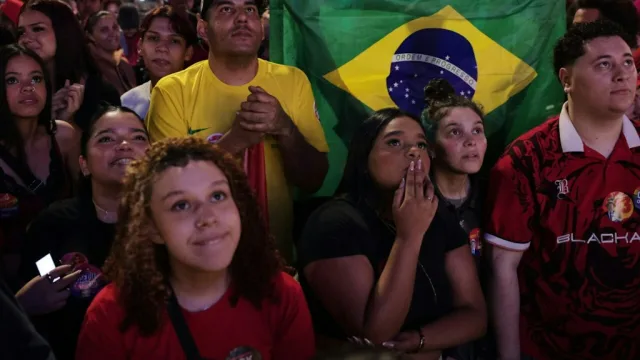
- Supporters of both camps, visible on streets celebrating in red for Lula or reacting with anger and disbelief in yellow and green for Bolsonaro.
- International observers and foreign leaders, including European Commission President Ursula von der Leyen, French President Emmanuel Macron, and Canadian Prime Minister Mark Carney, who congratulated Lula on upholding multilateralism, alongside a silent Washington and a sidelined Israeli leadership.
- Incoming legislators in Brazil's newly elected National Congress, which is the most conservative parliament since the return to democracy four decades ago.
That conservative congressional majority guarantees that Lula will face substantial legislative resistance when he attempts to pass his agenda of poverty reduction, employment expansion, increased social spending, and environmental protection.
What do financial markets and citizens need to know right now?
For citizens, business owners, and investors watching the country's $2.6 trillion GDP economy, the transition period brings immediate uncertainty as legal challenges unfold. While supporters celebrate on the streets, with scenes featuring red-clad crowds shouting slogans at Bolsonaro voters sipping beers in yellow and green, critics argue that another leftist administration will destabilize the economy. Rodrigo Valentim, a 51-year-old businessman and Bolsonaro supporter, pointed to the positive reaction financial markets showed after the first round when Bolsonaro led. I don’t understand how people can vote for Lula,
Valentim said. The country is collapsing.
Affected readers and observers monitoring the situation can take specific steps to track legal developments and market shifts:
- Monitor filings at the Superior Electoral Court (TSE) and the Brazilian Supreme Court (STF) to see whether Senator Bolsonaro's planned annulment petition meets formal legal thresholds or triggers a formal recount.
- Watch official announcements from Brazil's National Congress regarding the seating of the newly elected conservative legislative majority and how it plans to engage with the incoming executive branch.
- Track statements from international financial institutions and trade partners regarding currency stability, inflation, and tariff pressures tied to Latin America's largest economy.
Lula's fourth presidential term is officially scheduled to begin on January 5, 2027, and run until 2030.