María Corina Machado returns to Venezuela after ten months in exile
Nobel laureate María Corina Machado has ended months in exile by returning to Venezuela, challenging acting President Delcy Rodríguez and shaking up the nation's political deadlock.
- Headline: María Corina Machado returns to Venezuela after ten months in exile
- Dispatch Summary: Nobel laureate María Corina Machado has ended months in exile by returning to Venezuela, challenging acting President Delcy Rodríguez and shaking up the nation's political deadlock.
- Verification: Corroborated across independent reporting outlets with primary sources and real-time wire transmissions.
Why did María Corina Machado risk returning to Venezuela now?
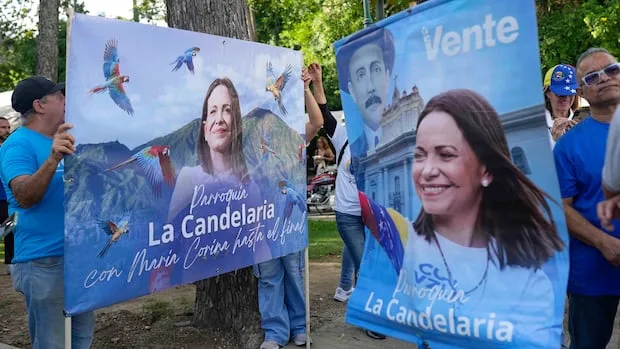
Opposition leader and Nobel laureate María Corina Machado reappeared in Venezuela on Sunday for the first time since December, ending more than 10 months in exile. Machado announced her arrival on social media with the message, I am here. With you.
Her return shatters a months-long political deadlock and directly confronts the interim government of acting President Delcy Rodríguez, a longtime Maduro ally who received the Trump administration's blessing to succeed him. Rodríguez has exceeded the time she was authorized to serve as acting president following the U.S. military's capture of former leader Nicolás Maduro in January, and no election is currently scheduled.
Machado's homecoming comes as doubts over Venezuela's democratic future and the U.S. role in it deepen. After being briefly detained following a protest in January 2025, Machado went into hiding in Venezuela for 11 months. She later left the country in a clandestine escape and reappeared in December in Norway, where she was awarded the Nobel Peace Prize for her peaceful challenge to Maduro's authoritarian government. According to her campaign team, Machado made her first public appearance among worshippers at the Church of Santa Rosa in Lara State, in western Venezuela, where she was quickly surrounded by an ecstatic congregation. Edmundo González, her ally and a former presidential candidate who has been living in Spain, confirmed her arrival on X, writing: Today is a very important day for Venezuelans. Our sovereign voice returns with her to lead and guide this process!
González added that he would be next to her very soon
and concluded, You know it, this is until the end.
How did she finally break through the blockade?
Getting back into the country was a grueling test of endurance. According to her party, Machado made seven unsuccessful attempts to return. One attempt would have seen her take a charter boat, but the operator canceled the trip, alleging the vessel was unfit for navigation. In another attempt, her team stated that Machado tried to fly to the Caribbean island of Curacao, from where she could take a speedboat to Venezuela, but her plane was denied landing permits. In September, the opposition leader was denied entry into Venezuela three times over 24 hours, according to statements from senior adviser David Smolansky. She has attempted to enter the country by air and sea but has been turned away each time,
Smolansky said at the time, noting she tried to return during the aftermath of the devastating June 24 double earthquakes. Opposition activists accused Venezuela's government of blocking her return, a claim denied by Venezuelan authorities, while others questioned whether the Trump administration had been involved in efforts to stop her. Machado did not disclose further details about her current location or how she ultimately managed to return.
What do Washington and Caracas say about her sudden reappearance?
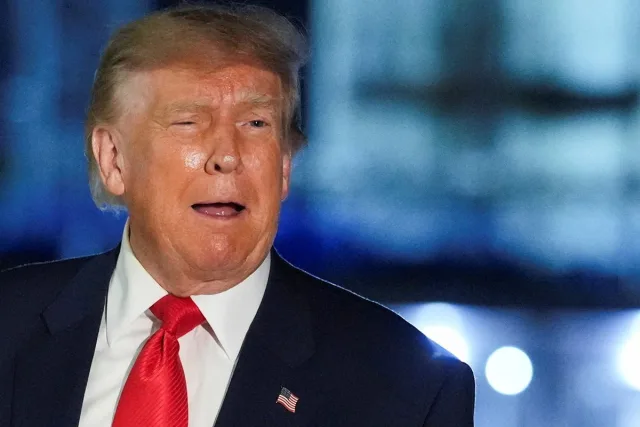
The political friction between Washington, Caracas, and the Venezuelan opposition forms a tense triangle. Speaking to reporters as he left the White House on Sunday afternoon, President Trump said he knew nothing about Machado's return, describing her as a very nice woman
and adding that she had given him her Nobel Prize. And I hope she's safe,
he said, adding that we're doing really well in Venezuela.
Trump administration officials have previously denied holding Machado back, though they acknowledged they had on some occasions advised her against returning because of safety concerns. U.S. Secretary of State Marco Rubio has argued that before holding new elections, Venezuela must stabilize its economy and rebuild its institutions, including its courts and electoral council, though he said at a news conference earlier this month that Machado has every right to enter her country whenever she wants to return.
Meanwhile, after Maduro was deposed, Venezuela's highest court said Rodríguez could serve as acting president for up to 90 days — an interim appointment the National Assembly could extend by another 90 days. But the ruling party-controlled assembly never voted to extend her term, and in September, Rodríguez told the U.N. General Assembly that Venezuelans will determine the right moment
for the next election. Many Venezuelans have been stunned that the Trump administration chose to work with Rodríguez rather than Machado to revitalize the crisis-racked country, with Venezuelans of all stripes denouncing Trump's 'biggest oil deal ever'.
What does this mean for the future of the Venezuelan opposition?
Machado's return introduces an unpredictable dynamic to a political system rigidly controlled by the ruling party and backed by Washington's economic stabilization priorities. In October 2023, Machado won an opposition primary — held outside the Maduro government's official election authority, earning more than 90% of the vote. Despite winning the primary, Maduro's government barred her from running for office, accusing her of fraud and tax violations, allegations Machado denied as politically motivated. In the 2024 election, González ran in her place, and ample credible evidence showed that he defeated Maduro by more than a 2-to-1 margin. The National Electoral Council declared Maduro the winner without making detailed voting tallies public, sparking widespread government repression that included forced disappearances, torture, and the detention of more than 2,000 people, including poll workers, in the days after the vote. Now, with Machado back on domestic soil, her senior adviser David Smolansky called her homecoming a major step toward a democratic transition and free, fair, and verifiable presidential elections in the near future.
Whether her physical presence can force the interim government to yield to democratic demands remains the central question as Machado steps back into the political arena.