Flavio Bolsonaro takes early lead in Brazil presidential election
Flavio Bolsonaro holds an early lead over incumbent President Luiz Inacio Lula da Silva in preliminary results, setting the stage for a runoff on October 25.
- Headline: Flavio Bolsonaro takes early lead in Brazil presidential election
- Dispatch Summary: Flavio Bolsonaro holds an early lead over incumbent President Luiz Inacio Lula da Silva in preliminary results, setting the stage for a runoff on October 25.
- Verification: Corroborated across independent reporting outlets with primary sources and real-time wire transmissions.
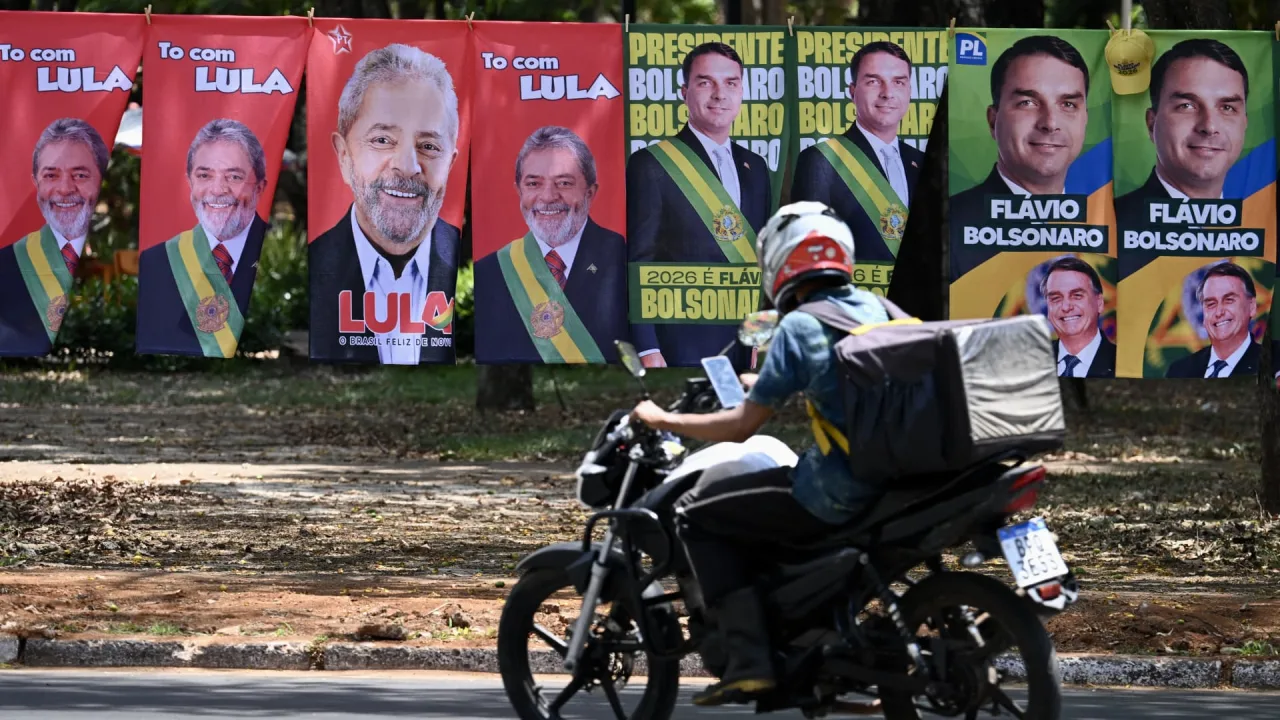
Flavio Bolsonaro, the 45-year-old son of former President Jair Bolsonaro, took an early lead in Brazil’s presidential election, according to preliminary results released Sunday as polls closed. With 11% of votes reported, Bolsonaro secured 51.09% of the vote compared to 40.67% for incumbent President Luiz Inacio Lula da Silva, setting the stage for a runoff on October 25. The outcome of the race, which has polarized the nation, carries significant implications for Brazil’s political direction and its role in Latin America.
Early Results and Regional Divide
The early results highlighted a stark regional divide, with southern states — historically aligned with Bolsonaro’s right-wing movement — reporting faster tallies than Lula’s traditional strongholds in the northeast. This pattern mirrors previous elections, where Lula’s support in the northeast often lags in initial counts but surges as more votes are processed. Bolsonaro, positioning himself as a challenger to Lula’s left-wing policies, emphasized his campaign’s focus on economic anxiety and anti-corruption rhetoric, though both candidates faced allegations of scandals during the race.
Despite the early lead, neither candidate reached the 50% threshold required for an outright victory. Surveys indicate the two remain closely matched in potential runoff scenarios, with Lula’s allies warning of U.S. interference in the election. The Trump administration has not formally endorsed Bolsonaro, though the senator has publicly praised the former U.S. president, and some analysts note a broader regional shift toward right-wing leaders aligned with Trump’s policies.
Context of a Polarized Campaign
The election campaign was marked by intense polarization, with both candidates facing high rejection rates. Lula, 80, sought to frame the race as a battle between “democracy and barbarism,” citing concerns over U.S. influence and Brazil’s sovereignty. His administration has overseen reduced Amazon deforestation and social welfare programs, but voters have expressed frustration over high living costs and stagnant economic growth. Bolsonaro, meanwhile, capitalized on discontent with Lula’s policies, vowing to tackle corruption and restore “national pride.”
Corruption scandals overshadowed both campaigns. Bolsonaro faces investigations into his ties to Banco Master, a bank implicated in a multibillion-dollar fraud scheme. Lula’s allies have also been scrutinized, with allegations of misconduct involving his son and a former aide. The Supreme Court, led by Justice Alexandre de Moraes, a Lula ally, has been embroiled in its own controversy, with Bolsonaro’s team accusing it of political bias. These issues have fueled a broader “anti-system” sentiment among voters, many of whom feel disillusioned with traditional politics.
International Implications and Electoral Process
The election’s outcome could reshape Brazil’s role in Latin America, where right-wing leaders have gained momentum. A Bolsonaro victory would align Brazil with Trump-friendly governments in Argentina, Chile, and Colombia, while Lula’s re-election could strain relations with Washington over trade and security policies. The U.S. has denied allegations of interference, but Lula’s campaign has accused the Trump administration of using tariffs and diplomatic pressure to favor Bolsonaro.
Brazil’s electronic voting system, adopted in the 1990s to combat fraud, has been a cornerstone of the election’s credibility. Results from Sunday’s vote were expected to be finalized within hours, with the electoral court chief, Kassio Nunes Marques, stating that “no risks” were identified. Voters in remote areas, including Amazonian communities, traveled long distances to cast ballots, underscoring the nation’s commitment to democratic participation despite logistical challenges.
| Detail | Information |
|---|---|
| Flavio Bolsonaro’s early lead | 51.09% of votes reported |
| Lula’s early share | 40.67% of votes reported |
| Runoff date | October 25 |
| Regional voting patterns | Southern states report faster; Lula’s northeast stronghold tallies later |
Voter Sentiment and Unanswered Questions
Voter sentiment reflected deep divisions. Some, like Thaise Lima, a lawyer in São Paulo, expressed frustration with Lula’s policies but remained undecided, while others, like Marciano de Souza e Silva, a public servant, shifted right to prioritize economic growth. Religious and cultural issues also played a role, with Bolsonaro’s comments about Brazil’s patron saint sparking fears among Catholics, though he denied any intent to remove her status.
Unresolved questions linger over the election’s long-term impact. Will the runoff bring new policy clarity, or will the race remain mired in controversy? How will Brazil’s Amazon management and U.S.-Brazil relations evolve under either candidate? As the nation awaits final results, the election’s outcome will not only determine Brazil’s next leader but also signal the country’s trajectory in an increasingly polarized region.
Frequently Asked Questions
What happens if no candidate wins 50% of the vote?
A runoff between the top two candidates, Lula and Flavio Bolsonaro, is scheduled for October 25.
Why is the Amazon a key issue in this election?
Lula has reduced Amazon deforestation, while Bolsonaro has pledged to end illegal deforestation by 2029. Environmental groups fear a Bolsonaro victory could reverse recent conservation efforts.
How does Brazil’s voting system work?
Electronic voting machines, introduced in the 1990s, allow results to be reported hours after polls close. The system is designed to prevent fraud, though past elections have seen allegations of irregularities.
The next critical development will be the finalization of results and the official announcement of the runoff. As Brazil’s political landscape remains in flux, the election’s outcome will shape the nation’s future for years to come.
How significant is this wire dispatch?
Cast your anonymous vote to register reader consensus across journalism and intelligence sectors.
Dateline Wire is dedicated to independent, evidence-backed reporting. This briefing was synthesized from primary source reporting, corroborated across independent newsrooms, and verified against our Editorial Standards.