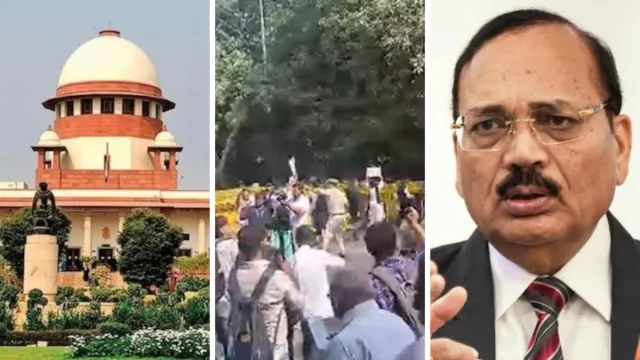
INDIA bloc leaders file Supreme Court petition against Election Commission
Eleven opposition leaders filed a formal petition in the Supreme Court against the Chief Election Commissioner amid intense protests and police crackdowns in Delhi.
- Headline: INDIA bloc leaders file Supreme Court petition against Election Commission
- Dispatch Summary: Eleven opposition leaders filed a formal petition in the Supreme Court against the Chief Election Commissioner amid intense protests and police crackdowns in Delhi.
- Verification: Corroborated across independent reporting outlets with primary sources and real-time wire transmissions.
Ordinary readers navigating Delhi face a transformed capital on Monday, October 12, 2026, as 11 leaders of the opposition INDIA bloc march to the Supreme Court to file a formal petition against Chief Election Commissioner Gyanesh Kumar over alleged vote manipulation and the Special Intensive Revision of electoral rolls. The legal challenge unfolds alongside a sweeping police crackdown, the sudden denotification of Jantar Mantar as the city's historic protest hub, and widespread travel disruptions that have shuttered key metro stations and brought thousands of paramilitary personnel onto the streets.
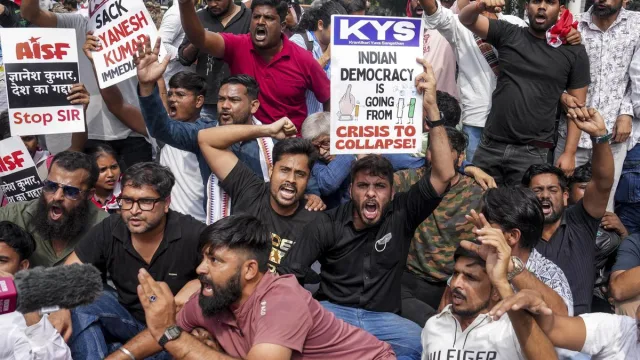
The political escalation follows days of intense agitations led by opposition parties, student groups, and the youth-led Cockroach Janta Party demanding the resignation of CEC Gyanesh Kumar. Chief Justice of India Surya Kant declined an initial request for a meeting, advising the opposition leaders to pursue judicial remedies instead. Following that directive, Lok Sabha Leader of the Opposition Rahul Gandhi, Congress President Mallikarjun Kharge, Samajwadi Party chief Akhilesh Yadav, Trinamool Congress leader Saugata Roy, and seven other opposition leaders proceeded to file their petition inside the apex court complex.
Why did the Supreme Court petition happen today and what are the leaders demanding?
The decision to approach the Supreme Court comes at the height of a nationwide controversy surrounding the Special Intensive Revision of electoral rolls and allegations of systematic vote tampering dubbed vote chori. Protesters and opposition figures argue that the administrative actions of the Election Commission threaten the integrity of democratic processes. Ahead of the filing, Rahul Gandhi opened the march to the public, inviting anyone dedicated to defending the Constitution to participate.
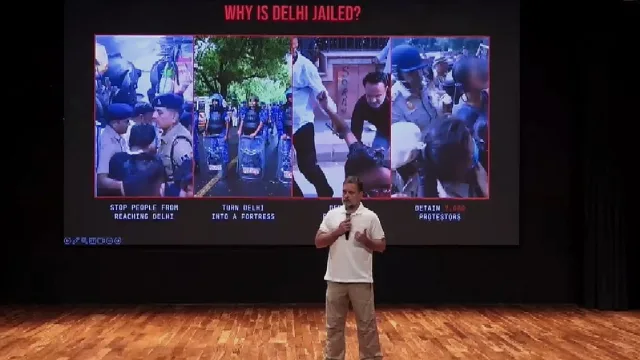
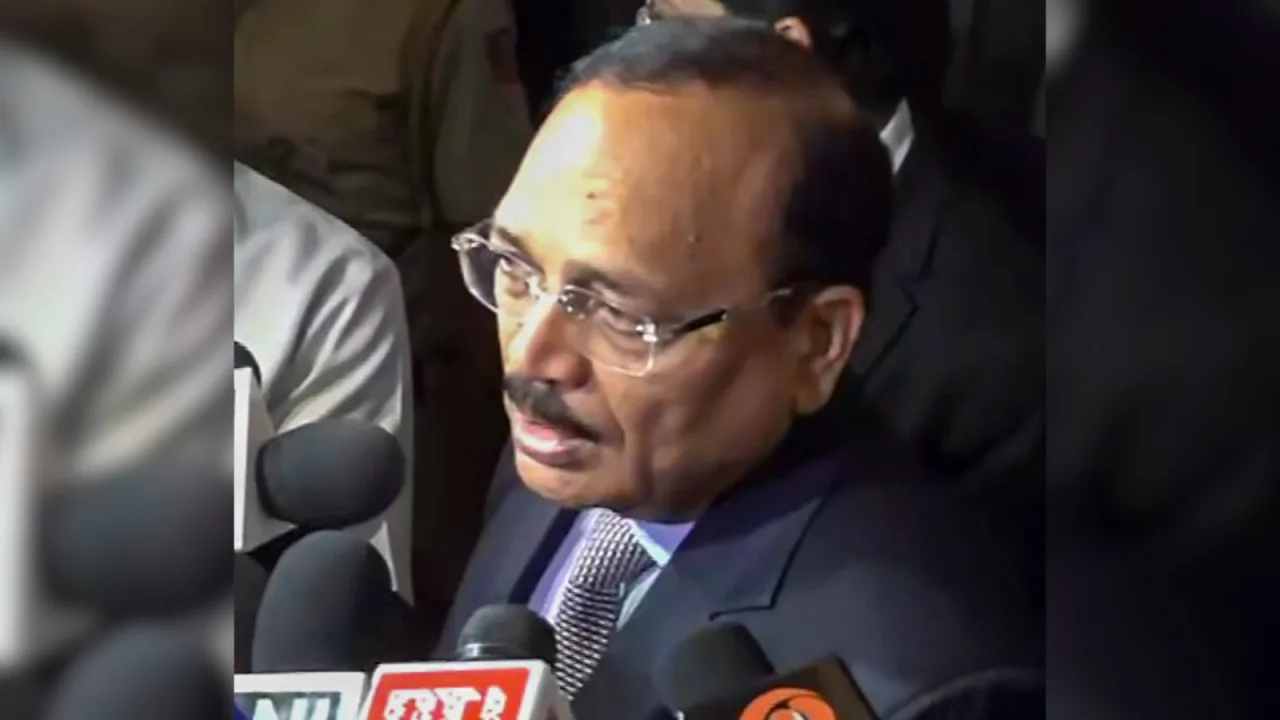
Rahul Gandhi warned the Chief Election Commissioner directly during a press briefing at Indira Bhawan, stating, we will not spare you.
He further advised Kumar to step down and turn approver, adding, You have made a mistake, but you are not the mind behind the mistake.
The legal filing itself was executed by 11 prominent opposition figures after Chief Justice Surya Kant noted that discussing administrative removals or ongoing agitations informally would violate the separation of powers. Instead, the CJI confirmed that the court is duty-bound to examine issues affecting citizens and directed the delegation to use formal judicial channels. That left the opposition with no alternative but to take their grievances directly to the court's filing counter.
That procedural hurdle cleared the way for a high-stakes legal battle, yet it also exposed deep divisions over institutional authority. When the judiciary insists on strict procedural boundaries while the opposition faces intense street-level pressure, the courts become the sole arena for political disputes that the executive refuses to negotiate.
How did the Delhi Police crackdown and transit shutdowns unfold?
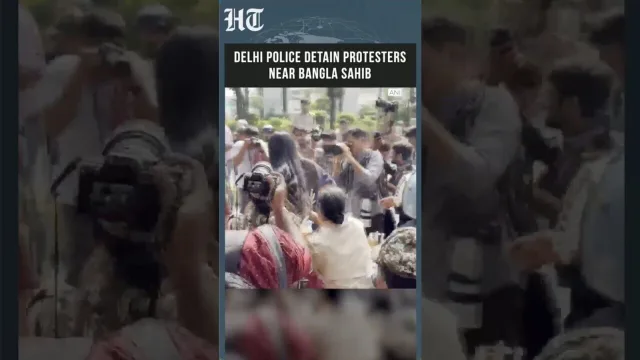
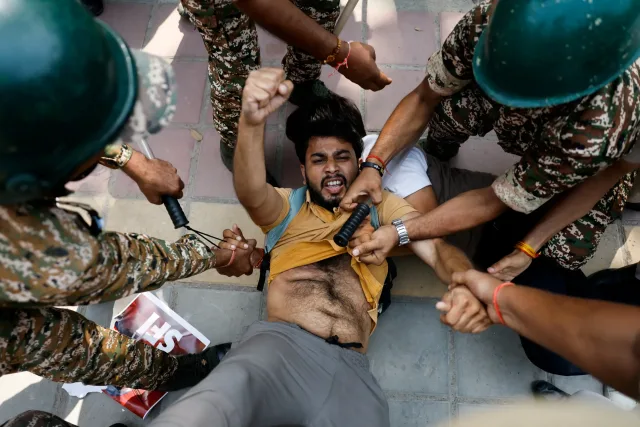
The march to the Supreme Court was preceded by a massive security lockdown across the capital on October 10 and 11, resulting in thousands of detentions by Delhi Police. Security forces deployed 20,000 paramilitary personnel across Delhi for a one-month period to contain agitations. Student organizations, lawyers, and civil society members reported violent confrontations with security personnel inside detention buses and near protest sites.
Transportation networks bore the immediate brunt of the security operation. The Delhi Metro Rail Corporation ordered the closure of entry and exit gates at six major stations, including Patel Chowk, Janpath, Rajiv Chowk, Mandi House, Central Secretariat, and Barakhamba Road, starting at 6 am on Monday. Although officials initially announced plans to reopen the stations by 4 pm, the DMRC abruptly extended the closure until 5 pm for security reasons.
Senior advocates appearing before the Supreme Court detailed alarming instances of police excess. Senior advocate Gopal Sankaranarayanan informed a bench led by the CJI that lawyers had been detained and alleged that Senior Advocate Shadan Farasat was dragged through the streets.
Additional accounts claimed that senior advocates Dinesh Dwivedi and Uttara Babbar were confined in buses, while student activists from the Students' Federation of India displayed bruised limbs and alleged physical abuse during detention.
That heavy-handed policing strategy risks alienating professional classes who traditionally remain outside direct political friction. When lawyers and students are swept into mass detentions alongside political workers, the state transforms ordinary professional spaces into flashpoints for civil disobedience.
Why was Jantar Mantar denotified and where can citizens protest now?
In a parallel move on Sunday, October 11, the Delhi Police acting on recommendations from a Union Ministry of Home Affairs committee officially denotified Jantar Mantar as a designated protest site. The historic location, situated less than three kilometers from Parliament, had served as Delhi's premier marketplace of grievances for decades following its relocation from the Boat Club lawns after farmer leader Mahendra Singh Tikait's massive 1988 protests.
To replace Jantar Mantar, the authorities designated three alternative venues across the capital: Ramlila Ground, Burari Ground and CBD Ground in east Delhi. The new locations share a defining characteristic: significant distance from the corridors of power. While Jantar Mantar placed demonstrators within walking distance of government ministries, the new sites are situated far from central administrative zones.
Why not declare Mt Everest as the designated protest site?
Ashutosh Ranka, Cockroach Janta Party co-convener, via X
The timing of the denotification drew sharp condemnation from grassroots groups. Cockroach Janta Party founder Abhijeet Dipke posted on social media that Today, Modi denotified Jantar Mantar as a designated protest site.
and Tomorrow, he will denotify democracy itself,
Legal challenges to the closure are already moving through the courts. The Delhi High Court agreed to hear a petition on October 13 regarding the sudden shutdown, questioning police counsel on how officers could confine activists like Nadeem Khan without formal legal orders. Meanwhile, protesters converged on Connaught Place and Barakhamba Road, temporarily turning the surrounding streets into an impromptu protest hub.
That geographical displacement is designed to render dissent invisible to lawmakers. By pushing demonstrators to the outer edges of the city, authorities trade short-term traffic relief for long-term democratic alienation, ensuring that grievances remain safely out of sight.
What are the contrasting political reactions and international responses?
The escalating crisis drew sharp reactions across the political spectrum. Minority Affairs Minister Kiren Rijiju condemned the opposition march, stating on X that brazenly abusing constitutional authorities is deplorable.
Rijiju added that the Congress party lacks direction and suggested its leaders improve their numbers by finding a mature leader who does not enjoy spending 200 holidays in a year.
Delhi Chief Minister Rekha Gupta defended the Electoral Commission's institutional integrity, backed the Special Intensive Revision process, and cited an open letter signed by 124 former IAS, IFS, and allied service officers supporting transparent voter rolls. Uttar Pradesh Chief Minister Yogi Adityanath similarly accused Congress of manufacturing anarchy to destabilize elected governments and mask its own electoral failures.
International concern also mounted as the demonstrations drew scrutiny from academic and foreign diplomatic quarters. At least 100 Harvard University alumni, students, staff, and faculty issued a statement condemning the unprecedented siege of Delhi by police and paramilitary forces
and arbitrary actions against peaceful protesters. Overseas, Indian diaspora communities held solidarity demonstrations in London, Berlin, and Amsterdam.
Even foreign governments registered the turbulence. China's Foreign Ministry spokesperson Mao Ning announced during a media briefing that Beijing will assess whether travel advisories are needed for Chinese nationals visiting India as the situation evolves.
| New Protest Venue | Distance from Parliament | Capacity / Features |
|---|---|---|
| Ramlila Ground | Approx. 4 kilometers | Holds over 30,000 people; historic site for major political rallies. |
| CBD Ground, Shahdara | Approx. 12 to 14 kilometers | Located in East Delhi; peripheral commercial district. |
| Burari Ground | Approx. 20 to 23 kilometers | Northern outskirts; largest venue accommodating up to 80,000 people. |
That global and cross-party polarization turns a domestic electoral dispute into an international test of governance. When foreign ministries begin weighing travel advisories over domestic police crackdowns, administrative decisions in New Delhi carry immediate diplomatic costs.
What lies ahead as the Supreme Court prepares for hearings?
The immediate legal battle shifts directly to the Supreme Court and the Delhi High Court on Tuesday, October 13, 2026. Multiple petitions challenging police brutality, unlawful detentions, and the denotification of Jantar Mantar are formally listed for consideration before judicial benches.
The core question remaining open is whether the judiciary will intervene directly in the administrative mechanisms governing public assembly and election oversight, or whether the mounting pressure from street protests and opposition petitions will force a broader political compromise. How the courts rule on these conflicting constitutional claims will determine not only where citizens can assemble in the capital, but how much institutional independence remains within India's electoral machinery.