Florida pastor convicted of US charges in 2021 killing of Haitian president
A federal jury in Miami convicted Florida pastor Christian Emmanuel Sanon on eight counts for his role in the 2021 assassination of Haitian President Jovenel Moïse.
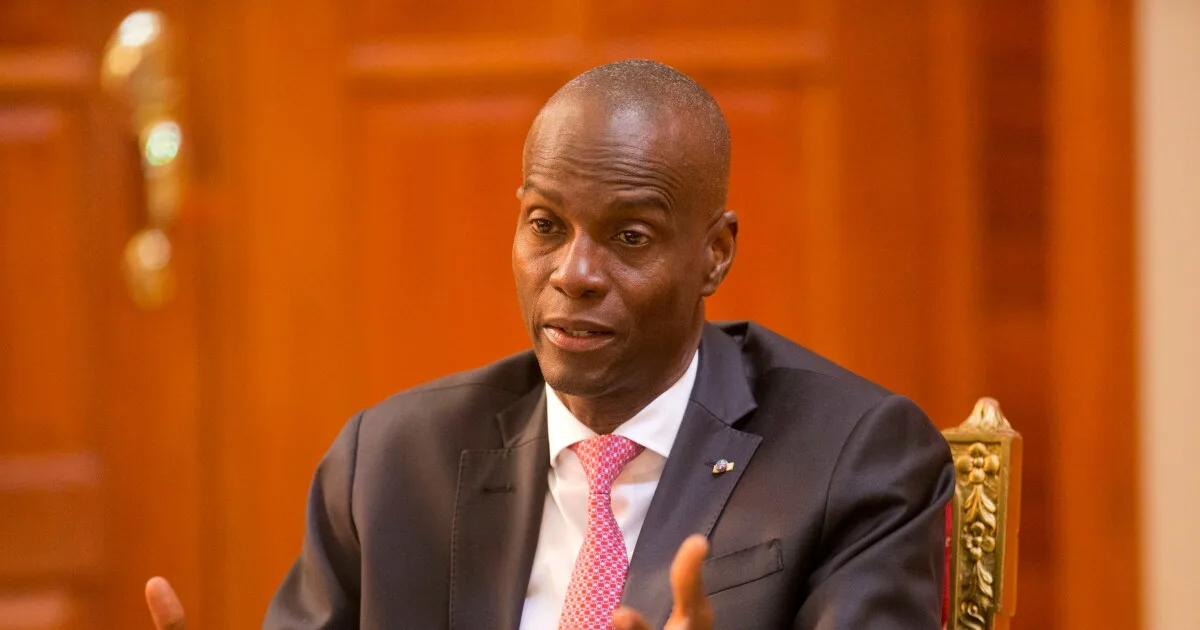
Christian Emmanuel Sanon, a Florida pastor with dual Haitian-American citizenship, faces up to life in prison after being convicted on Wednesday of U.S. charges arising from the July 7, 2021 assassination of Haitian President Jovenel Moïse. Sanon was found guilty on all eight counts against him in federal court in Miami, including the most serious charge of conspiracy to kidnap or kill a person outside the United States, capping a nearly eight-week trial.
Sanon showed little reaction as the jury verdict was announced and remains in federal custody ahead of his Feb. 10 sentencing. Zeljka Bozanic, an attorney for Sanon, said in a statement reported by CBS News: We respect the jury's decision, but strongly disagree with the verdict and will file an appeal.
Prosecutors declined to comment following the verdict.
That leaves the defense with a narrow window to overturn a verdict built on months of testimony placing South Florida at the center of an international conspiracy. The conviction highlights how easily domestic financial systems and foreign mercenaries can be weaponized across borders when state institutions are frail.
How did South Florida become the planning hub for the assassination?
Federal prosecutors told the court that South Florida served as the core base for planning and financing the plot to oust Moïse and install a replacement of the conspirators' choosing. Investigators said the conspiracy began taking final shape in April 2021 when Sanon met in South Florida with a former Haitian senator and several U.S. businesspeople, according to an indictment. The group agreed that Sanon, once in power, would award lucrative contracts to two Florida-based companies known collectively as CTU — Counter Terrorist Unit Federal Academy and Counter Terrorist Unit Security — for infrastructure projects, security forces, and military equipment.
Court records revealed that the scheme to finance the operation involved paying about two dozen foreign mercenaries using money obtained from U.S. government programs intended to help businesses during the COVID-19 pandemic. CTU initially hired about 18 Colombian nationals with military training to provide security for Sanon, while conspirators spent months obtaining weapons, body armor, and attempting to build ties with local gangs in Haiti. By June 2021, however, the conspirators realized Sanon had neither the constitutional qualifications nor sufficient popular support to become president, prompting them to shift their backing to Wendelle Coq Thélot, a former Haitian Supreme Court judge who died in January 2025 while a fugitive.
That financial trail exposes glaring vulnerabilities in pandemic-era relief oversight, showing how easily state-backed emergency funds were diverted into international assassination plots. The use of Florida as a logistical launchpad also raises uncomfortable questions about federal monitoring of private security contractors operating on U.S. soil.
What was Christian Emmanuel Sanon's defense in court?
Born in Haiti before moving to the United States as a teenager, Sanon testified that he worked with churches in Haitian immigrant communities in Florida and the Midwest. During the trial, Sanon acknowledged that he was in communication at one point with people trying to replace Moïse. However, he maintained that the group had moved on to another candidate long before the assassination took place and denied any knowledge of plans to kill the Haitian leader.
Sanon's case was originally scheduled to be tried alongside four other men who were convicted earlier this year, but his proceedings were separated and delayed for health reasons. The earlier trial resulted in convictions for Arcangel Pretel Ortiz, Antonio Intriago, Walter Veintemilla, and James Solages, who were found guilty of conspiring to kill or kidnap the elected leader, providing material support for the plot, and violating the U.S. Neutrality Act. Those four men also face possible life sentences and await sentencing.
The separation of Sanon's trial allowed prosecutors to refine their narrative, isolating his initial role as the figurehead replacement from the later tactical execution carried out by military contractors. While Sanon successfully distanced himself from the final hit squad on the witness stand, the jury ultimately rejected his claim of total ignorance regarding the broader conspiracy.
What is the wider toll of the federal prosecution effort?
The conviction of the Florida pastor marks another milestone in a sprawling American legal case that has seen more than 40 people charged with crimes related to the assassination. A dozen defendants have now been convicted in U.S. courts, with five who are serving life sentences,
according to prosecutors. The international dragnet also expanded significantly in late September, when 18 suspects arrested in Haiti, including 17 former Colombian soldiers and Joseph Badio, a former employee of the Haiti Ministry of Justice who worked in an anti-corruption unit, were extradited to the United States.
Badio, considered a key suspect, was arrested in Haiti in October 2023 after more than two years on the run and is currently in U.S. custody. His Miami-based attorney, William Barzee, did not immediately respond to an email seeking comment from The Associated Press. Meanwhile, Haiti has remained without a president since the nighttime raid that killed Moïse and wounded his wife, leaving the poorest country in the Americas grappling with the lingering consequences of dictatorship, political upheaval, and foreign intervention.
The steady accumulation of U.S. convictions underscores how thoroughly American jurisdiction has absorbed an investigation that Haitian authorities alone could never fully prosecute. Yet these foreign courtroom victories do little to restore stability to a nation preparing for a general election next year featuring a crowded field of contentious candidates.
That leaves a fractured Haiti bracing for a high-stakes presidential vote next year against a backdrop of gang violence and political uncertainty, even as American courts lock away the architects of its modern crisis.