Supreme Court blocks Trump-backed Missouri congressional map for third time
The Supreme Court has intervened for a third time to halt a redistricting map in Missouri, ruling that the state must use 2022 boundaries for the general election.
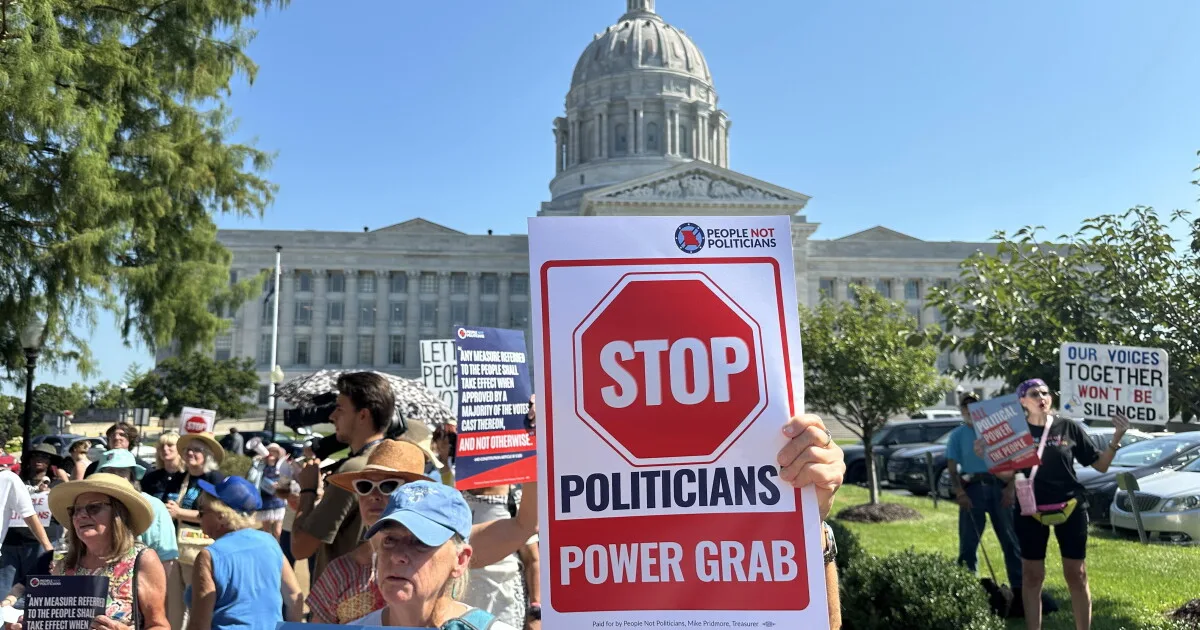
The Supreme Court on Friday blocked a Trump-backed congressional map in Missouri for the third time, ending a prolonged legal battle over the state’s redistricting and ensuring that voters will cast ballots under the 2022 map for the 2026 midterm elections. The unsigned decision halted a federal appeals court ruling that had sought to reinstate the Republican-drawn map, which was used in the August primary, and affirmed the Missouri Supreme Court’s earlier order that the map could not be implemented without a voter referendum.
The ruling resolved months of legal uncertainty, as Missouri’s congressional districts had shifted multiple times amid competing state and federal court decisions. The 2022 map, used in the 2024 and 2022 elections, will now remain in place for the November general election, avoiding what the Supreme Court described as “electoral chaos” if the 2025 map had been enforced at this late stage. The court emphasized that the 2022 map was the “correct” one to use, citing state law and the lack of a constitutional mandate to maintain primary election boundaries for the general election.
The dispute began when Missouri lawmakers, under pressure from President Donald Trump and Republican Governor Mike Kehoe, passed a revised map in September 2025 that reshaped a Democratic-held Kansas City district. The changes, which split the district and shifted its boundaries to favor Republicans, led to a significant realignment of voters. According to an Associated Press estimate, 59% of potential voters in the newly drawn district were newly assigned, altering the political landscape for the 2026 race. The map also affected other districts, with nearly one in four Missouri voters now in different districts than they were during the August primary.
A coalition of voters, including Republican state senator Rick Brattin and Congressman Bob Onder, challenged the map in court, arguing that the 2025 boundaries violated constitutional principles by creating unequal voting power between primary and general election districts. The Eighth U.S. Circuit Court of Appeals ruled in favor of the new map in late September, stating that switching districts between the primary and general election would “violate the Constitution” by giving some voters more influence than others. However, the Supreme Court intervened, blocking the appeals court’s order and allowing the Missouri Supreme Court’s decision to stand.
The Missouri Supreme Court had previously ruled on September 3 that a citizen petition seeking a referendum on the map was valid, ordering Secretary of State Denny Hoskins to reject the 2025 map. Hoskins, a Republican, had delayed his decision until August 4—the same day as the primary—preventing a legal challenge before the election. The Missouri Supreme Court later held Hoskins in contempt for instructing local officials to use the new map after a conflicting district court order. Despite these complications, the Supreme Court’s latest decision ensures the 2022 map will govern the general election.
The legal battle has involved at least 16 lawsuits in state and federal courts, making it one of the most complex redistricting disputes in the nation. While the 2025 map survived several challenges, including claims that it violated state constitutional requirements for compactness, the final outcome underscores the courts’ reluctance to disrupt election processes at such a late stage. Missouri Republicans, who currently hold six of the state’s eight congressional seats, had hoped the new map would secure an additional victory in the midterms, but the Supreme Court’s decision has preserved the status quo.
For now, voters in Missouri will cast ballots under the 2022 map, with candidates like Democratic Congressman Emanuel Cleaver and Republican Rick Brattin remaining in their respective races despite the district boundary shifts. The case highlights the broader national debate over redistricting, as states continue to grapple with the political implications of mid-decade map changes.
Updated 1 time since publication; last update 9 October 2026, 14:41.