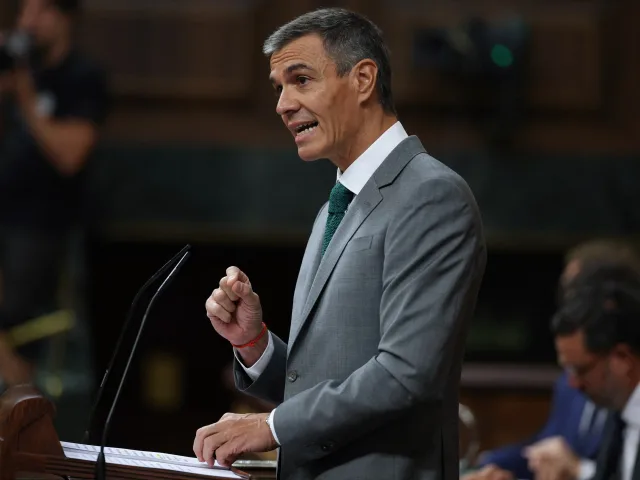
Spain calls snap election after housing bill defeat
Spanish Prime Minister Pedro Sánchez has called a snap general election for November 29 following the parliamentary defeat of emergency housing legislation, risking a far-right coalition.
- Headline: Spain calls snap election after housing bill defeat
- Dispatch Summary: Spanish Prime Minister Pedro Sánchez has called a snap general election for November 29 following the parliamentary defeat of emergency housing legislation, risking a far-right coalition.
- Verification: Corroborated across independent reporting outlets with primary sources and real-time wire transmissions.

Spain’s Prime Minister Pedro Sánchez has announced a snap general election for November 29, eight months before the end of his term, after rightwing parties blocked his government’s housing legislation. The decision, framed as a bid to rally left-leaning voters, comes amid escalating public fury over unaffordable housing, evictions, and a perceived failure to address the crisis. The election, the earliest possible date under procedural rules, has raised concerns about the potential rise of a conservative or far-right coalition, reshaping Spain’s political trajectory and its influence in Europe.
Parliamentary Defeat and Public Outcry
The snap election was triggered by the rejection of two emergency housing decrees in parliament on Friday. The measures, which included bans on evictions until 2030 and restrictions on short-term rentals, were opposed by the conservative People’s Party (PP), far-right Vox, and the Catalan separatist party Junts. Their combined votes ensured the legislation’s defeat, sparking immediate protests outside parliament. Demonstrators chanted “shame” and “Your profits; our misery,” as tensions over housing affordability reached a boiling point.
The crisis gained national attention after the eviction of 87-year-old Maricarmen Abascal from her Madrid home, where she had lived for 70 years. An investment fund that purchased her apartment demanded a 230% rent increase, prompting tens of thousands to take to the streets. A tent camp resembling the 2011 indignados movement emerged in Madrid’s Puerta del Sol square, symbolizing a resurgence of grassroots anger over economic inequality and housing insecurity.
Protests expanded over the weekend, with organizers claiming 500,000 participants in Madrid alone. Authorities reported 70,000 attendees, but the scale of the demonstrations underscored the public’s frustration with a housing market deemed inaccessible to many. The government’s inability to pass reforms amid a minority parliamentary majority has further eroded its credibility, with Sánchez’s Socialist Workers’ Party (PSOE) struggling to maintain support.
Election as Political Gamble
Sánchez’s decision to call an early election is a high-stakes maneuver. Analysts suggest he hopes to reframe the campaign around housing affordability, mobilizing left-leaning voters while weakening turnout among right-wing groups. However, opinion polls indicate a likely victory for a coalition of the PP and Vox, which could mark the first far-right government in Spain since the end of Francisco Franco’s dictatorship. Such an outcome would signal a significant shift in Europe’s political landscape, as right-wing parties gain momentum across the continent.
The election also comes amid broader challenges for Sánchez’s government. Corruption allegations and its handling of the Ceuta migration crisis have further damaged his party’s standing. The PSOE, which has led Spain since 2018, has relied on fragile coalitions to govern, including a previous alliance with Junts that collapsed last year. Without a parliamentary majority, Sánchez’s ability to pass legislation has been severely constrained, leaving the housing crisis unresolved.
During his televised address announcing the election, Sánchez framed the vote as a choice between “regressing” under a far-right coalition or continuing his progressive agenda. He emphasized themes of “openness, social justice, and environmental responsibility,” while acknowledging past failures. However, his appeal to voters faces an uphill battle, with the PP and Vox positioned to capitalize on public discontent.
| Detail | Information |
|---|---|
| Election Date | November 29 |
| Reason for Defeat | Rejection of housing decrees by PP, Vox, and Junts |
| Key Protest Incident | Eviction of 87-year-old Maricarmen Abascal from Madrid home |
| Polling Trends | PP and Vox likely to form majority coalition |
Broader Implications for Spain and Europe
The election’s outcome could have far-reaching consequences for Spain’s role in the European Union. Sánchez, a vocal advocate for progressive policies on immigration and climate action, has positioned himself as a counterweight to rising right-wing movements. A conservative or far-right government might prioritize austerity, stricter immigration controls, and reduced social spending, altering Spain’s alignment with EU priorities.
Analysts warn that the election also reflects broader European trends, where populist and far-right parties are gaining traction amid economic uncertainty and cultural divides. Spain’s vote could serve as a bellwether for similar contests in other EU nations, particularly as inflation and housing costs remain pressing issues across the bloc.
For Sánchez, the election is both a test of his leadership and a gamble on public sentiment. While he has framed the campaign as a fight for Spain’s future, the political landscape remains volatile. With protests ongoing and polls favoring his opponents, the coming weeks will determine whether his strategy to reinvigorate left-wing support succeeds or backfires.
Frequently Asked Questions
When is the snap election scheduled?
The election is set for November 29, the earliest possible date under Spain’s procedural rules.
What caused the government’s housing legislation to fail?
The measures were rejected by rightwing parties, including the PP, Vox, and Junts, which argued that construction, not regulation, was the solution to the housing crisis.
What are the potential outcomes of the election?
Polls suggest a likely victory for a coalition of the PP and Vox, which could bring Spain’s first far-right government since Franco’s era. This would mark a significant shift in Europe’s political dynamics.
The election campaign will unfold against a backdrop of ongoing protests and economic uncertainty. As Spain’s political parties prepare for the contest, the focus remains on housing affordability, the role of right-wing populism, and the broader implications for Europe. With the November 29 date set, the next few weeks will determine whether Sánchez can reassert his government’s relevance or face a historic political realignment.
How significant is this wire dispatch?
Cast your anonymous vote to register reader consensus across journalism and intelligence sectors.
Dateline Wire is dedicated to independent, evidence-backed reporting. This briefing was synthesized from primary source reporting, corroborated across independent newsrooms, and verified against our Editorial Standards.