Mike Huckabee Demands Prosecution After Settlers Beat US Photographer
Masked settlers severely beat US photojournalist Heidi Levine and attacked European diplomats in the West Bank, sparking an international diplomatic crisis.
- Headline: Mike Huckabee Demands Prosecution After Settlers Beat US Photographer
- Dispatch Summary: Masked settlers severely beat US photojournalist Heidi Levine and attacked European diplomats in the West Bank, sparking an international diplomatic crisis.
- Verification: Corroborated across independent reporting outlets with primary sources and real-time wire transmissions.
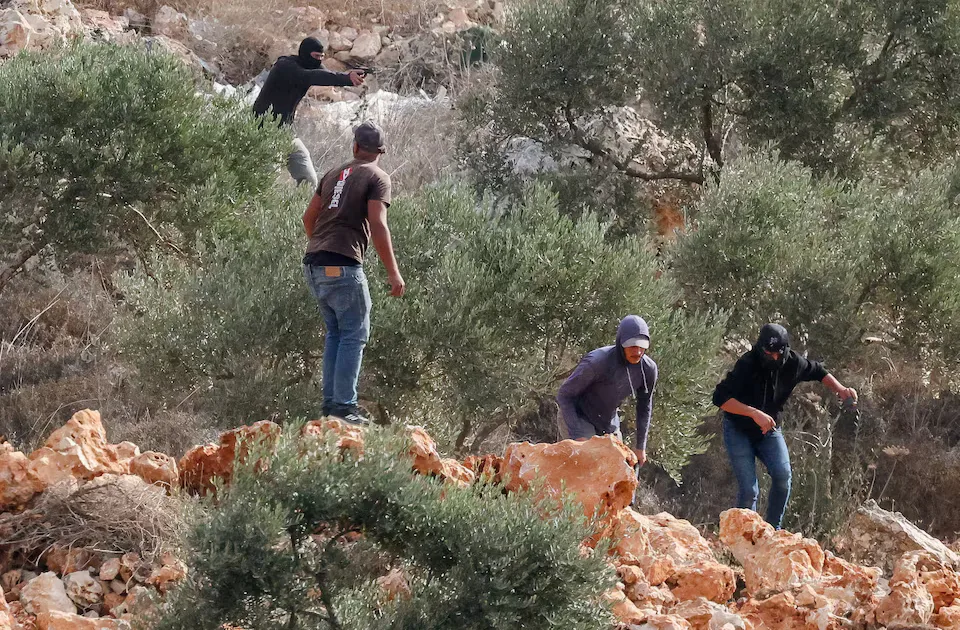
That uncompromising statement from a staunch ally of Israel underscores an extraordinary diplomatic crisis now unfolding across two separate days of unchecked violence. While Levine recuperates in a Tel Aviv hospital, international outrage has boiled over following a second assault that targeted European diplomats, a French mayor, and Catholic clergy members in the village of Taybeh. The back-to-back attacks have laid bare a stark fracture between Washington, European capitals, and the government of Israeli Prime Minister Benjamin Netanyahu over surging settler violence during the annual olive harvest.
The immediate catalyst for the diplomatic firestorm is the severe beating of 64-year-old American photojournalist Heidi Levine on Friday in the village of Abu Falah. Masked settlers beat and kicked Levine for about 10 minutes while she tried to hold onto her cameras and bag, according to accounts from Levine and independent journalist Jasper Nathaniel, who witnessed the attack and stated that Levine could not get up from the ground. Levine suffered broken ribs, multiple broken vertebrae, lacerations, and a nearly severed finger, undergoing hand surgery on Saturday at a hospital in Tel Aviv, where a Beilinson hospital spokesperson described her condition as moderate. The attackers also made off with her camera, passport, phone, and wallet. Secretary of State Marco Rubio told reporters at Joint Base Andrews in Maryland that the State Department had asked about the attack and expected an answer from the US embassy in Jerusalem by Sunday, adding that Washington has asked Israel, and will keep asking, to crack down on such violence because neither Washington nor Israel needs it right now.
Who is accountable when masked settlers strike in plain sight?
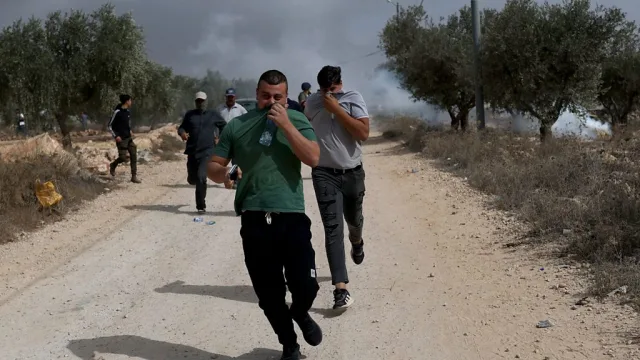
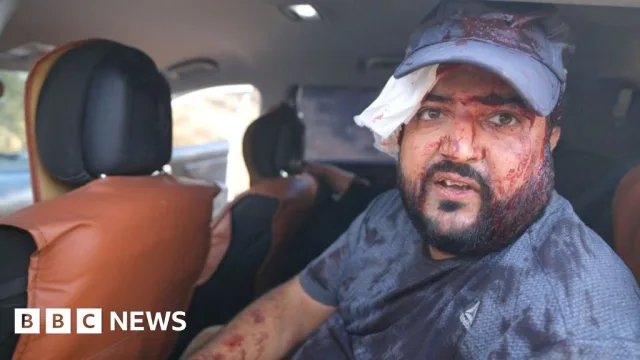
The violence escalated on Saturday in the Christian town of Taybeh near Ramallah, where a delegation of European diplomats had arrived to assess the situation during the olive harvest. Masked settlers attacked the convoy, throwing stones, smashing the window of an armoured car belonging to the Belgian mission, and assaulting Bernard Baudoux, the left-wing mayor of Aulnoye-Aymeries in northern France. Baudoux, who was wearing his red, white and blue sash of office for the launch of a twinning agreement, told Reuters and AFP that he was kicked, beaten with iron bars, and thrown to the ground by enraged settlers shouting slogans. Archbishop of Cambrai Vincent Dollmann and Baudoux's wife were also threatened, while a Palestinian woman in her 70s was kicked and abused and a Palestinian man suffered a head injury requiring six stitches. Belgian Foreign Minister Maxime Prevot said Belgium's consul general to the Palestinians, French and Polish diplomats, and Catholic representatives were among those targeted. Polish Foreign Ministry spokesperson Maciej Wewior confirmed that a convoy carrying Polish officials was attacked, though those diplomats were unharmed.
- Late September: Annual olive harvest begins, accompanied by heightened Israeli military restrictions barring Palestinians from trees in Area C.
- September 27 to October 17: Israeli rights group Yesh Din records more than 170 settler attacks, resulting in at least four deaths and over 100 injuries.
- Friday: Dozens of masked settlers attack Palestinians harvesting olives in Abu Falah, beating Washington Post photographer Heidi Levine.
- Saturday: Masked settlers attack European diplomats, French mayor Bernard Baudoux, and Catholic clergy in Taybeh, prompting international condemnation.
That timeline reflects a systematic breakdown of civil order that rights groups say is fueled by near-total impunity. According to data from the rights group Yesh Din, about 94% of investigations into settler violence since 2005 have closed without an indictment, with only 3% producing full or partial convictions. Former prime minister Ehud Olmert has called for the International Criminal Court to intervene due to this entrenched culture of impunity. Meanwhile, opposition politician and former general Gadi Eisenkot described the violence as Jewish terror under the auspices of the Israeli government,
warning that the attackers are harming both national security and the West Bank settlement enterprise as elections approach on October 27.
What do Israeli authorities and Western capitals disagree on?
Sharp divisions separate the official responses from Jerusalem, Washington, and European capitals. Prime Minister Benjamin Netanyahu's office condemned violence anyone while casting doubt on the reports, calling the assault on Levine alleged and suggesting that the Taybeh incident was part of a coordinated campaign to smear Israel and Jewish residents of Judea and Samaria with sensational headlines before full facts emerge. Israeli Foreign Minister Gideon Saar condemned the actions of what he termed Israeli rioters, but he also criticized the diplomats for failing to coordinate their visit with the Israeli military in advance, stating that such coordination could have helped safeguard their security. That assertion was immediately rejected by a western diplomatic source who spoke anonymously, pointing out that demanding advance notification violates diplomatic conventions and international law, especially since Israel is responsible for security in Areas B and C.
- Palestinian civilians facing daily violence and property damage during the olive harvest.
- Journalists, including Washington Post photographer Heidi Levine, targeted while reporting on the ground.
- European diplomats, French and Polish consular officials, and Catholic clergy ambushed by masked groups.
- Local agricultural communities in Abu Falah and Taybeh losing access to economically vital crops.
The international fallout is accelerating beyond verbal rebukes. Belgium, which has already enacted a ban on imports from Israeli settlements in the West Bank and the Golan Heights, announced it will press for European Union sanctions against those responsible for the violence and those who support them. France's Foreign Minister Jean-Noël Barrot called on Israeli authorities to urgently halt criminal violence and guarantee civilian safety, while Poland demanded a firm response. In Washington, Marco Rubio reiterated that the US wants Israel to do more, noting that officials are very disturbed by the images emerging from the West Bank. The European Union similarly urged Israel to comply with international and human rights law, end settlement expansion, and provide full accountability.
That leaves Prime Minister Netanyahu's government caught between mounting international demands for criminal accountability and a domestic political landscape where far-right coalition partners oppose crackdowns on the settlement movement. Israeli police have opened investigations into both the assault on Levine and the attack on the diplomatic convoy, but no arrests have been announced. With elections looming on October 27, the prospect of genuine reform remains distant.
The diplomatic pressure from Washington and Brussels will force a temporary reckoning, but systemic impunity in the West Bank will persist until Israeli authorities dismantle the infrastructure protecting violent settlers.