Iran says offer, conditions to reopen Strait of Hormuz still on
Foreign Minister Abbas Araghchi says Iran's proposal to reopen the Strait of Hormuz remains on the table, even as Washington demands nuclear concessions first.
- Headline: Iran says offer, conditions to reopen Strait of Hormuz still on
- Dispatch Summary: Foreign Minister Abbas Araghchi says Iran's proposal to reopen the Strait of Hormuz remains on the table, even as Washington demands nuclear concessions first.
- Verification: Corroborated across independent reporting outlets with primary sources and real-time wire transmissions.
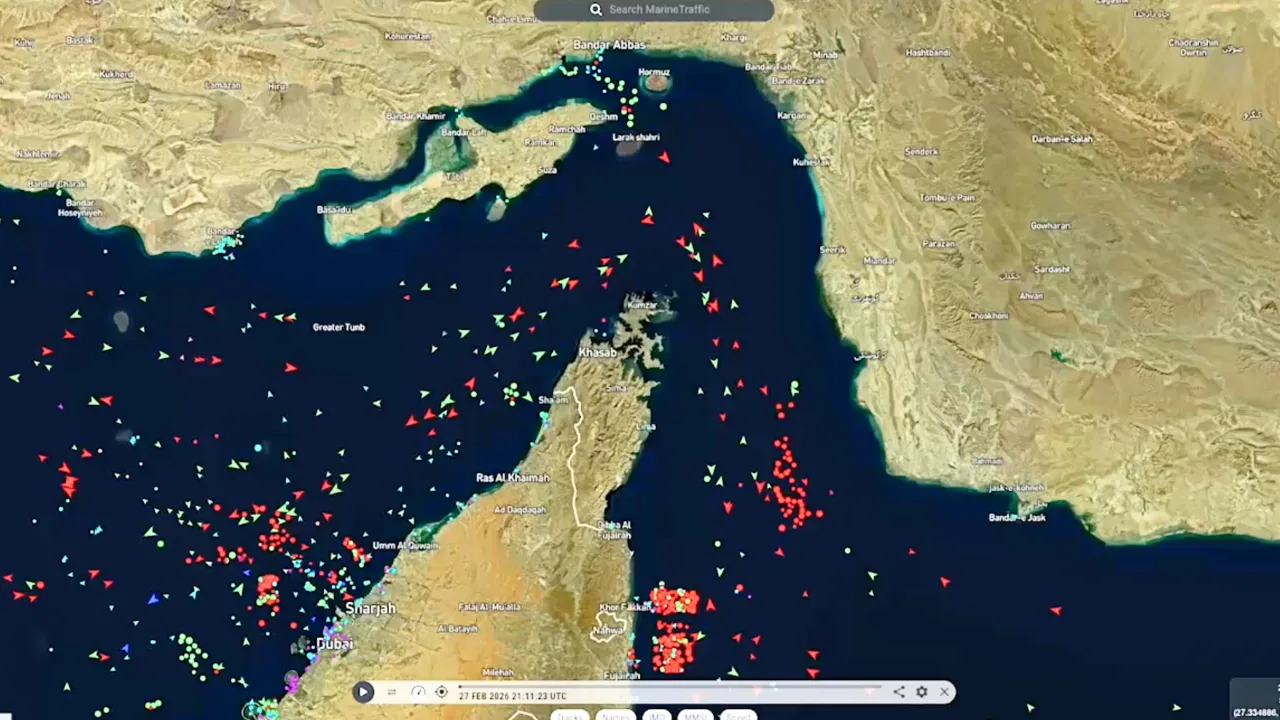
Iran’s proposal to reopen the Strait of Hormuz within seven days remains on the table, Foreign Minister Abbas Araghchi said Sunday during a meeting of the Organization of Islamic Cooperation in Baghdad, even as Washington and Tehran stay deadlocked over the sequencing of peace terms for their ongoing war. Behind the diplomatic posturing, October has become the busiest month for reported attacks on shipping in the Strait of Hormuz since March, with the United Kingdom Maritime Trade Operations reporting 10 attacks in the week ending Friday alone.
That juxtaposition highlights the central reality of the current conflict: Tehran is attempting to leverage control over a vital maritime chokepoint through a rigid conditional framework, while the United States and its allies treat the waterway as effectively open and demand foundational concessions on Iran's nuclear infrastructure before granting sanctions relief. The standoff leaves global energy markets vulnerable while military frictions escalate across multiple regional fronts, from the Persian Gulf to Yemen.
Conditions, Counter-Terms, and the Standoff in the Gulf
The diplomatic track remains tethered to a proposal Iran first presented in mid-September after an interim ceasefire collapsed. Araghchi told Iranian media outlets that Tehran is currently reviewing comments shared by the United States, but offered a bleak assessment of American sincerity. Our situation is clear and based on the seven-days proposal presented to the U.S.,
Araghchi said in remarks reported by Fox News Digital and Reuters. They shared comments which we are reviewing, but our proposal is still on the table and if there is any honesty on the U.S. part, which there isn't, the way to reopening the Strait of Hormuz is obvious.
Under Tehran's formula, if Washington accepts its terms, the strategic waterway could reopen within six days, with broader peace talks resuming on the seventh day. Iran's conditions include lifting the U.S. blockade on its ports, removing American sanctions on Iranian oil exports, and ending hostilities across all regional fronts. Before the war, the Strait of Hormuz carried roughly one-fifth of the world’s oil and liquefied natural gas trade.
Yet Washington has drawn a firm line against sequencing that separates maritime security from nuclear proliferation. Vice President JD Vance stated earlier this month that Tehran must make a meaningful reduction in its uranium enrichment capacity to satisfy U.S. demands and end the eight-month war.
Between those competing demands lies a stark disagreement over what is happening on the water itself. U.S. Central Command spokesperson and U.S. Navy Capt. Tim Hawkins told Fox News Digital this week that the vast majority of Iran's attempted attacks on shipping are unsuccessful, maintaining that the key waterway remains open for transit. The U.S. military has assisted in providing coordinated protection for thousands of ships that have safely transited,
Hawkins said, adding that about 97% of ships seeking to transit the strait have done so successfully without being hit by an Iranian projectile. Hawkins called the actions of the Islamic Revolutionary Guard Corps unjustified and unsuccessful in achieving their objective of closing the strait.
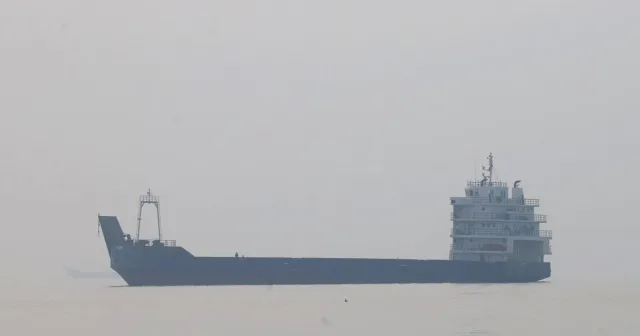
That assessment collides directly with maritime monitoring data and Iranian assertions. The UKMTO reported that October has seen a surge in incidents, though it is struggling to accurately report the true number because most ships now refuse to report attacks. Incidents this week included a Singapore-flagged, Cyprus-owned container ship, the GFS Pride, being hit by an Iranian projectile and sinking while being towed ashore due to a fire. Additionally, a tugboat traveling southbound off the coast of the United Arab Emirates was struck by two unknown projectiles, sustaining damage with one minor casualty reported.
Meanwhile, the Revolutionary Guards Corps claimed responsibility for an explosion involving a supertanker carrying over two million barrels of crude oil that struck a mine in the Strait of Hormuz while attempting to pass with U.S. support and with tracking systems deactivated.
| Actor | Stated Position on Sequencing | Core Demands |
|---|---|---|
| Iran | Negotiations should initially focus on reopening the Strait of Hormuz and ending regional hostilities. | Lift U.S. blockade on ports, remove sanctions on oil exports, end hostilities on all fronts. |
| United States | Negotiations must address Iran's nuclear program from the outset. | Meaningful reduction in uranium enrichment capacity. |
Regional Spillover and the Widening Theater of War
The diplomatic impasse in Baghdad and Washington does not exist in a vacuum; it is compounded by an expanding ring of violence involving Iran's regional allies and adversaries. Araghchi met on the sidelines of the Organization of Islamic Cooperation gathering with foreign ministers from Turkey, Egypt, Libya, Lebanon, and Algeria, pitching an inclusive political process and offering to mediate the war between Saudi Arabia and the Iran-backed Houthi militant group in Yemen. That mediation offer was swiftly rebuffed. Yemeni Foreign Minister Afrah Alzouba lashed out at the proposal, stating that when Iranian officials offer mediation, they are offering to mediate a war ignited by a Houthi coup and prolonged by Iranian arming, financing, and training of the militia.
The conflict in Yemen continues to generate immediate security shocks across the Arabian Peninsula. Residents in Riyadh received mobile phone alerts warning of a hostile aerial threat, while the Saudi military intercepted two ballistic missiles fired toward Khamis Mushait and a drone targeting Riyadh. In a separate incident, two Saudi officers were killed when their AH-6i reconnaissance helicopter belonging to the national guard crashed in the Najran area due to a technical malfunction, according to coalition spokesperson Turki al-Malki. Saudi-led coalition strikes in Yemen have continued daily, with Houthi media reporting that recent raids in Taiz and Dhamar killed at least 12 people, including three children.
The regional instability has also begun to affect major sporting and commercial events. Organizers of the Asian Cup, scheduled to be held in Saudi Arabia from January 7 to February 5, 2027, insisted that preparations remain on track despite missile and drone attacks hitting facilities in the kingdom. South Korea's Professional Footballers' Association had earlier expressed security concerns following attacks that have already prompted the cancellation or postponement of several events in Saudi Arabia, including Netflix's Six Kings Slam tennis tournament, the WTA Finals, and an Olympic BMX cycling qualifying event.
Amidst the multi-front escalation, Iranian President Masoud Pezeshkian denied during a meeting with Georgia's prime minister in Yerevan that Tehran seeks nuclear weapons, condemning U.S. sanctions as unjustifiable and inhumane while maintaining that Iran will not bow to coercion. Yet as military strikes continue to hit infrastructure from Aden airport to Riyadh, and as maritime monitors document mounting attacks on commercial vessels in the Persian Gulf, the seven-day proposal championed by Araghchi remains stalled against an American wall insisting on nuclear concessions first.
The refusal of both Washington and Tehran to compromise on the ordering of negotiations guarantees that the waterway remains a high-risk zone for commercial shipping. That leaves regional economies absorbing continuous security alerts, energy markets reacting to every reported projectile, and any durable peace dependent on a breakthrough that neither side's stated conditions currently allow.