Israeli settlers attack European diplomats and French mayor in West Bank
Masked settlers assaulted European diplomats and a visiting French mayor in the West Bank village of Taybeh during the annual olive harvest.
- Headline: Israeli settlers attack European diplomats and French mayor in West Bank
- Dispatch Summary: Masked settlers assaulted European diplomats and a visiting French mayor in the West Bank village of Taybeh during the annual olive harvest.
- Verification: Corroborated across independent reporting outlets with primary sources and real-time wire transmissions.
Israeli settlers attack European diplomats and French mayor in West Bank
Prime Minister Benjamin Netanyahu’s office has cast doubt on reports of the assault on a European diplomatic delegation in the occupied West Bank, suggesting the incident was part of a coordinated campaign to smear Israel.
A French mayor was assaulted and a Belgian vehicle damaged. Our team is safe, said Belgian Foreign Minister Maxime Prevot after a delegation of European diplomats came under attack by masked settlers in the occupied West Bank on Saturday. Prevot linked the attack to Israel’s illegal settlement policy and pledged to push for further European Union sanctions against those responsible for this violence and those who support them.
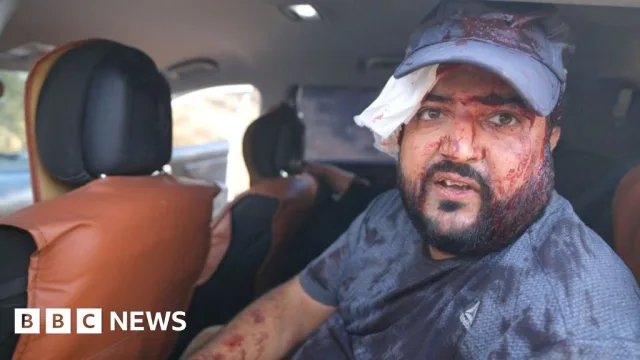
The assault in the village of Taybeh occurred during a visit to the occupied West Bank. The delegation included Belgium’s consul general, French and Polish diplomats, and Catholic representatives. Masked settlers targeted the delegation, and a Belgian vehicle was damaged. Bernard Baudoux, mayor of Aulnoye-Aymeries in northern France, told the AFP news agency that the violence suggests that there is a tolerance on the part of the Israeli government towards settler violence. Baudoux told AFP that the settlers kicked him and beat him with iron bars, throwing him to the ground. It's the gratuitous nature of the violence that stuns me, he said, adding, They arrived completely enraged. He also noted, The whole world needs to know what's happening there. For me, I'll go back to my country and everything will be fine. Those who continue to suffer the most are those who are here.Video: Israeli settlers injure journalist in West Bank attack — NBC News (YouTube)
Al Jazeera’s Nour Odeh, reporting from Ramallah, said the settlers surrounded the diplomats’ vehicles, pelted them with stones and smashed their windows. Taybeh’s mayor told Al Jazeera that the settlers blocked the diplomats’ vehicles, assaulted members of the group and shattered a window. The ceremony was attended by the French and Belgian consuls, a Polish representative, and Saint-Pierre Mayor Christian Ravain. The attack targeted the delegation in the town, as well as Palestinians who were picking olives.
The Palestinian Ministry of Foreign Affairs and Expatriates stated that the attack is further evidence of the growing organized settler terrorism targeting Palestinians, their land, and property, and does not spare international supporters, diplomats, journalists, or clergy.
Widespread violence and property destruction across the West Bank
The incident marks an escalation during the annual olive harvest, unfolding just a day after settlers beat Washington Post photojournalist Heidi Levine.
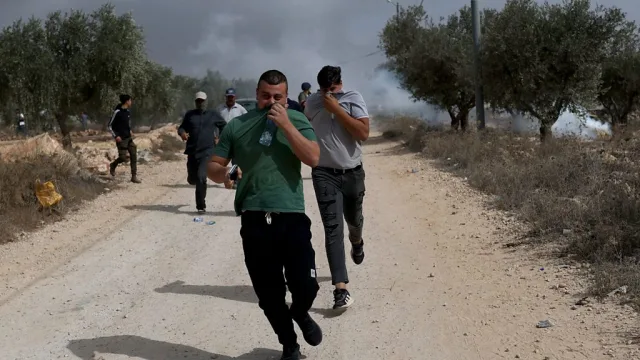
Earlier on Saturday, several Palestinians were injured by Israeli settlers, as Israeli forces arrested farmers during pogroms across the occupied West Bank. Four women and a child were among six people injured when Israeli settlers attacked residents in Ma’in village in the Masafer Yatta area, south of Hebron, according to the Palestine Red Crescent Society. In the town of Deir Ammar, west of Ramallah, Israeli forces opened fire on farmers picking olives, forcing them to leave their land, according to the Palestinian news agency Wafa. In the same area, Israeli settlers shot and injured two Palestinians. In the village of Tuqu, southeast of Bethlehem, Israeli forces fired on a Palestinian civilian vehicle.
In the village of Kafr Malek, northeast of Ramallah, settlers raided a farm at dawn and killed about 20 sheep, Mayor Najeh Rustum told Al Jazeera. He added that Israeli forces had raided the village the previous night as well, firing tear gas canisters that ignited a fire in a house and caused material damage. Odeh said settlers destroyed olive trees across the Beit Furik plain, east of Nablus, in the northern West Bank while Israeli forces arrested landowners and olive pickers. In the village of Deir Jarir, east of Ramallah, settlers under army protection fired live ammunition at farmers in the al-Hariq area to prevent them from completing the harvest and forced them off their land. Settlers also smashed the vehicle of international activist Jonathan Budlak in the village and threw stones at a farmer’s vehicle. In the village of Burqa near Ramallah, Israeli forces and settlers prevented farmers from picking olives, Odeh said, adding that settlers attacked farmers in the Wadi al-Sha’er area, southeast of Salfit.
What we see, whether it’s in Beit Furik, Kafr Malek, Deir Jarir or elsewhere in the occupied West Bank, is part of a campaign, Odeh said. She added that settlers have become increasingly emboldened, publicly advertising attack campaigns on social media platforms.
Official Israeli responses and political divisions
Official responses from Jerusalem revealed friction over security coordination, accountability, and the political implications of the violence. Israeli Foreign Minister Gideon Sa'ar strongly condemned the severe acts of violence by Israeli rioters on X, adding that his ministry was in contact with ambassadors from the countries concerned. Without detracting from the severity of the incident, Sa'ar said it was unfortunate that the visit was not coordinated with the IDF in advance, adding that such coordination could have helped safeguard the visitors' security. The Israel Defense Forces similarly called Saturday's attack on the diplomats a severe act of violence, but said the visit had not been coordinated with it and no soldiers were at the scene.
By contrast, Prime Minister Benjamin Netanyahu’s office urged caution before drawing conclusions from reports about the attack. A statement from the prime minister's office said the images on social media do not establish the complete sequence of events or individual responsibility, noting that circumstances remain under investigation. Netanyahu’s office named the injured French official as Bernard Baudoux, but maintained that the reports came amid concerns about a coordinated campaign to smear Israel and the Jewish residents of Judea and Samaria during the annual olive harvest, relying on sensational headlines before the full facts emerge.
Israeli police said they had opened an investigation into the incident, with no immediate announcement of any arrests. The police statement added: The Israel police condemns violence of any kind and will work to complete these investigations until everyone who took part in these cases is brought to justice.
Odeh said Netanyahu downplays pogroms and no concrete action is taken to stop them. It is a matter of debate among politicians, but no one is stopping these settlers, whose names, locations and homes are known, she said, adding that politicians permit the violence to continue because it is politically expedient and secures votes before elections on October 27.
The attacks follow a religious edict issued by Rabbi Dov Lior, a prominent rabbi for National Security Minister Itamar Ben-Gvir’s Jewish Power party and a leading authority among the Hilltop Youth. In the edict, Lior stated that harvesting olives in the Holy Land is entirely permitted and carries an added virtue, given security dangers. He wrote that Jews are permitted to harvest olives even in areas far from Jewish communities to publicly display ownership of the land and fulfil God’s commandment of conquering it, claiming the land belongs to the Jewish people and Palestinians did not buy or rent it.
The flashpoint of the olive harvest season
The attacks come during the annual olive harvest, when Palestinian farmers face heightened settler violence while accessing their land. Odeh noted that there have been 300 documented attacks since the beginning of October. According to the Palestinian Health Ministry, at least four people have been killed and more than 100 injured since this year's harvest began.
| Incident Date | Target / Victim | Location | Official Response |
|---|---|---|---|
| Friday | Heidi Levine (Washington Post photojournalist) and Palestinian farmers | Northern West Bank | Levine hospitalized |
| Saturday | European diplomatic delegation and French Mayor Bernard Baudoux | Taybeh | Foreign Minister Gideon Sa'ar condemned "rioters" |
Activists say Israeli authorities do little to stop attacks that involve weapons ranging from slingshots to guns.
In response to the attack, Belgian Foreign Minister Maxime Prevot pledged to push for further European Union sanctions against those responsible for this violence and those who support them. Prevot stated that Israeli authorities must protect Palestinians as the occupying power, and added that impunity for violent settlers must end. Palestinians face this violence every day. Settlers also target journalists reporting on it and diplomats. Harvesting olives, reporting the news or carrying out diplomatic duties should never put anyone at risk of attack, Prevot said.
Israel captured the West Bank, along with Gaza and east Jerusalem, in the 1967 Mideast war, territories the Palestinians want for a future state.
As election day nears, the convergence of targeted violence against foreign diplomats, injured journalists, and vulnerable Palestinian farmers exposes deep cracks in state control over unauthorized outposts in the West Bank.
Updated 3 times since publication; last update 17 October 2026, 22:12.