Trump Blames Immigration For Violent Unrest And Protests In France
US leaders have blamed immigration for violent riots and arson across French cities, even as available reporting confirms the unrest originated from cost-of-living protests.
- Headline: Trump Blames Immigration For Violent Unrest And Protests In France
- Dispatch Summary: US leaders have blamed immigration for violent riots and arson across French cities, even as available reporting confirms the unrest originated from cost-of-living protests.
- Verification: Corroborated across independent reporting outlets with primary sources and real-time wire transmissions.
Why are American leaders blaming immigration for French riots right now?
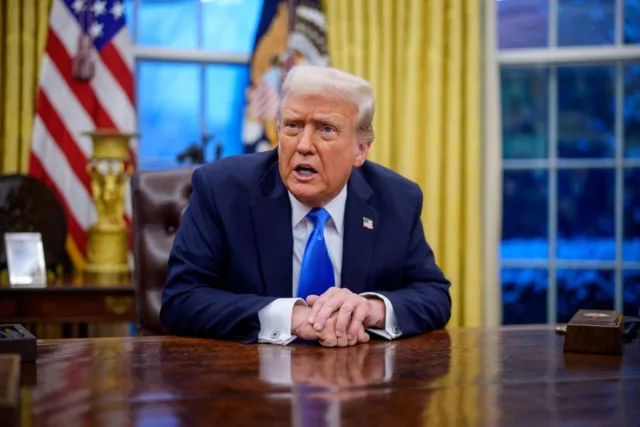
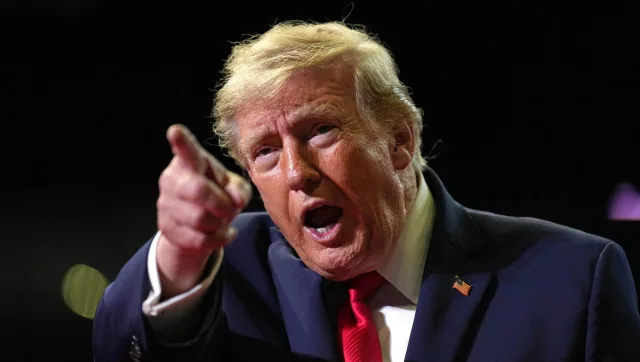
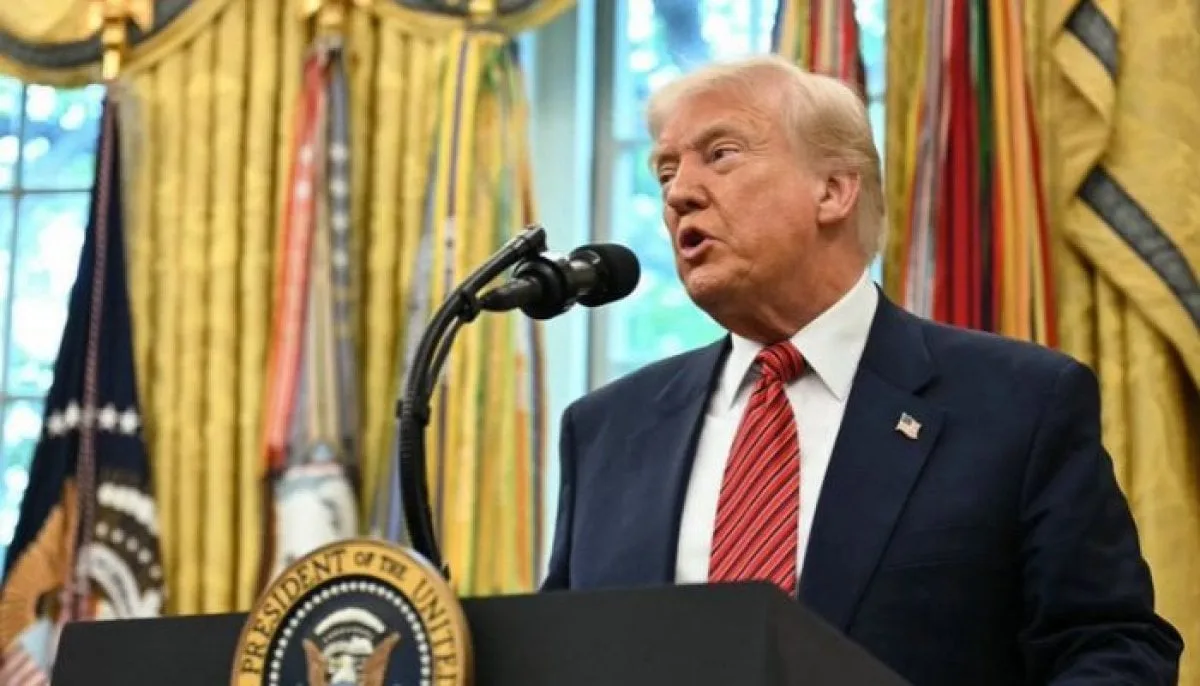
As French authorities scrambled on Sunday to tally the wreckage from nationwide demonstrations over soaring living costs and deteriorating public services, Washington intervened in the domestic crisis. US President Donald Trump posted on Truth Social that France is burning!
and claimed that The immigration of people from an entirely different world, people with hatred in their hearts, has shattered that once great country.
Trump urged European nations to Close your Borders and take control, before it is too late!
His remarks followed a Saturday of intense rioting in Paris and other major urban centers where government buildings were set ablaze, luxury boutiques ransacked, and clashes erupted with law enforcement.
US Vice President JD Vance quickly echoed these criticisms on X, arguing that Western liberals imported the Third World into France and other countries in the name of diversity and compassion while ignoring fundamental questions of assimilation and compatibility. Kirill Dmitriev, who acts as a liaison between Vladimir Putin and the American administration, also jumped on the opportunity to echo Mr Vance’s sentiments, saying that Left wing globalists are sowing migration driven chaos
. However, available reporting shows that Saturday's demonstrations began as protests against rising food, fuel, and energy prices, alongside anger over public services and education. Available reports do not establish a link between immigration and the arson, looting, and violence that followed.
| Metric / Event | Government Count | Union / Independent Count |
|---|---|---|
| Nationwide arrests | More than 1,800 people (Laurent Nunez) / 272 people (AP) | Not reported |
| Protest turnout | 550,000 people (Interior Ministry) | 800,000 to approximately 800,000 (CGT labour union) |
| Limoges City Hall age | 143 years old | Inaugurated in 1883, historic landmark in 1975 |
How severe is the destruction in Paris and Limoges?
The unrest left enduring scars on French infrastructure and local commerce, most notably in the city of Limoges. There, a deliberate act of arson partially destroyed a 143-year-old municipal building. Local prefect Maurice Barate told AFP that the Limoges Town Hall was largely lost, explaining that The roof has collapsed onto lower floors, except the west wing, and two-thirds of the exterior has already disappeared.
Barate described the fire as a deliberate act of arson, calling the destruction a deliberate act by hooligans
and a catastrophe for heritage
. In Paris, Ariel Weil, mayor of Paris Centre, described the violence as an unprecedented situation in down town Paris – one we had never experienced even during the Yellow Vests protests
. Paris Mayor Anne Hidalgo noted that entire streets had been methodically destroyed.
Commercial hubs suffered devastating financial blows as masked rioters hijacked peaceful marches to raid luxury boutiques, tech stores, and grocery shops. Thierry Guibert, chief executive of Maus, the Lacoste owner, emphasized the human cost: When our Lacoste and Aigle stores are looted, like so many other businesses across France, it is not only shop windows that are being smashed. It is jobs, years of work, know how, and the commitment of thousands of women and men that are being put at risk.
Thierry Véron, president of the Federation of Parisian Shopkeepers and Artisans, told France Info media that the situation was a disaster. We’re in a dire situation. It’s a disgrace. We’re ashamed when we talk to major European cities that ask us: ‘What on earth is going on in France?’ It’s a disaster. It’s mind boggling,
Véron said. Fashion houses such as Dior hired private security officers to line the street outside the shop after police failed to prevent the unrest.
Who are French politicians blaming for the chaos?
Within France, the riots ignited a bitter political blame game just six months before the presidential election. French Prime Minister Sebastien Lecornu also denounced the destruction and said the government would not be daunted by those responsible. He blamed the violence on the far-left criminals, warning against efforts to capitalize on the turmoil for partisan advantage leading up to next year’s presidential election, and targeted Jean-Luc Mélenchon, leader of the far-left France Unbowed party, accusing him of political irresponsibility. Mélenchon fired back, calling the prime minister a pathetic politician
and accusing him of being responsible for the chaos he methodically brought about, whether through incompetence or a strategy of making things as bad as possible
.
Marine Le Pen, the hard Right National Rally candidate, condemned the rioters
and claimed that France Unbowed had legitimised the violence
, promising to protect the French from the violence of the extreme Left
. Amidst this political finger-pointing, French President Emmanuel Macron will deliver an emergency address to the nation at 7pm UK time after meeting with his ministers, though he is yet to respond to Mr Trump.
What drove the protests before they turned violent?
The unrest stems from the fourth consecutive week of economic demonstrations that began on Saturday, mobilizing hundreds of thousands of participants nationwide. Citizens poured into the streets to protest soaring food, fuel, and energy prices, as well as concerns about public services and education. While the CGT labour union estimated turnout at approximately 800,000 demonstrators, France’s Interior Ministry put the figure at 550,000 people. Many participants marched peacefully with French flags and singing the national anthem.
However, hooded and masked rioters infiltrated the crowds, setting cars and rubbish bins on fire, smashing windows, and breaking into shops using barricades and brute force. Police used tear gas and water cannons to disperse violent groups, closing multiple metro stations at police request, including those near the Champs-Elysées, the presidential palace and government offices. Unrest extended far beyond the capital, with violent incidents, arson, and looting reported in Lyon, Marseille, Rennes, Toulouse, Montpellier and Grenoble. In Lyon, where around 20,000 demonstrators joined a march, a fire broke out inside a tourist office, while protesters in Marseille briefly entered the lobby of City Hall.
That leaves President Macron facing a fractured political landscape and a damaged national reputation with just six months left in his term. Whether emergency security measures and his planned national address can restore calm before economic grievances fuel further nationalist gains remains the central question for the French republic.