India’s education minister resigns after youth protests over exam leaks
Indian Education Minister Dharmendra Pradhan has stepped down following weeks of youth-led protests over major exam paper leaks that impacted millions of students.
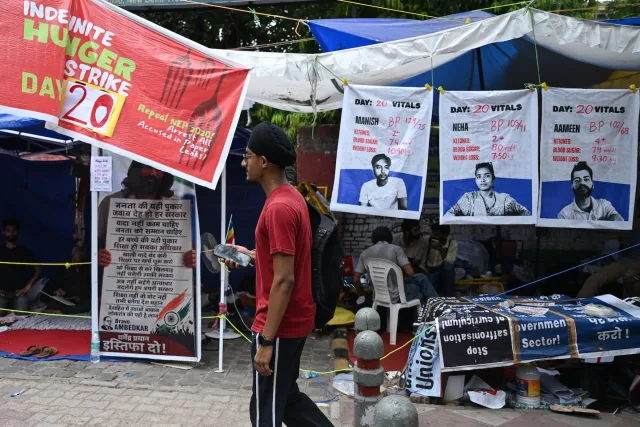
India’s education minister, Dharmendra Pradhan, resigned on Saturday after weeks of protests that demanded his removal over alleged leaks in some of the country’s most competitive entrance exams and irregularities in the education system. The move marked a major victory for the “Cockroach” movement, which has spearheaded nationwide demonstrations, sit-ins, and hunger strikes. Pradhan’s resignation represents the second ministerial resignation since Prime Minister Narendra Modi’s 2014 ascent, following M.J. Akbar’s 2018 departure over sexual harassment allegations, and the first significant concession by Modi’s government to sustained public dissent in recent years, echoing the 2021 reversal of controversial farm laws after a yearlong farmers’ protest.
The “Cockroach” movement, launched more than a month ago, began as a call for education reforms but expanded into a broader critique of unemployment, government accountability, and economic opportunities. Students, professionals, families, and activists have joined rallies in New Delhi and other cities, with protests intensifying after police used tear gas and batons to disperse marchers near Parliament on Monday. The crackdown left dozens injured, fueling anger among demonstrators who accused authorities of suppressing dissent.
Pradhan announced his resignation in a post on X, citing concerns over “anti-national forces” exploiting unrest and a desire to “prevent the country’s youth from being caught in confusion.” The Cockroach Janta Party (CJP), which organized the protests, declared victory, stating on X: “DEMOCRACY WINS!” Abhijeet Dipke, a movement leader, warned: “Remember, do not mess with (the) cockroach.” The CJP had demanded Pradhan’s resignation, compensation for families of students who died by suicide over exam leaks, and immunity from legal action for protesters. While the minister’s exit met the primary demand, the group vowed to continue advocating for broader reforms.
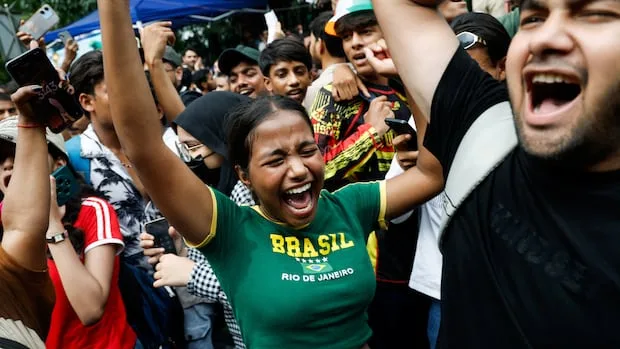
Modi’s government had attempted to ease tensions by announcing fast-track courts for exam leak cases and pledging legislation to combat cheating and corruption. However, protesters argued these measures failed to address systemic issues, including government accountability. Prachi Kumar, a corporate employee who joined the demonstrations, emphasized the need for “restoring accountability in the education system.” Celebrations erupted among protesters, with thousands waving the Indian flag and chanting “Jai Hind” at New Delhi’s Jantar Mantar site.
The resignation underscores the growing influence of youth activism in India, as the CJP’s campaign reshaped political discourse. Opposition leaders, including Congress party’s Rahul Gandhi, praised the outcome but called for Modi to apologize for the use of force against protesters. The movement’s persistence forced a rare concession, challenging the government’s narrative of stability. However, critics argue deeper reforms are needed to address the root causes of youth frustration, such as job scarcity and systemic corruption.
As the CJP continues its campaign, the resignation leaves unresolved questions about the long-term impact of the protests. While Pradhan’s exit is a symbolic triumph, the movement’s focus on education reforms and justice for affected families highlights the enduring challenges facing India’s political and social landscape.
Dateline Wire is dedicated to independent, evidence-backed reporting. This briefing was synthesized from primary source reporting, corroborated across independent newsrooms, and verified against our Editorial Standards.