Apple unveils first touchscreen MacBook Pro with OLED display and M5 chips
Apple has reversed its long-standing policy against touch laptops by introducing a redesigned MacBook Pro featuring an OLED touchscreen, M5 chips, and macOS 27.
- Headline: Apple unveils first touchscreen MacBook Pro with OLED display and M5 chips
- Dispatch Summary: Apple has reversed its long-standing policy against touch laptops by introducing a redesigned MacBook Pro featuring an OLED touchscreen, M5 chips, and macOS 27.
- Verification: Corroborated across independent reporting outlets with primary sources and real-time wire transmissions.
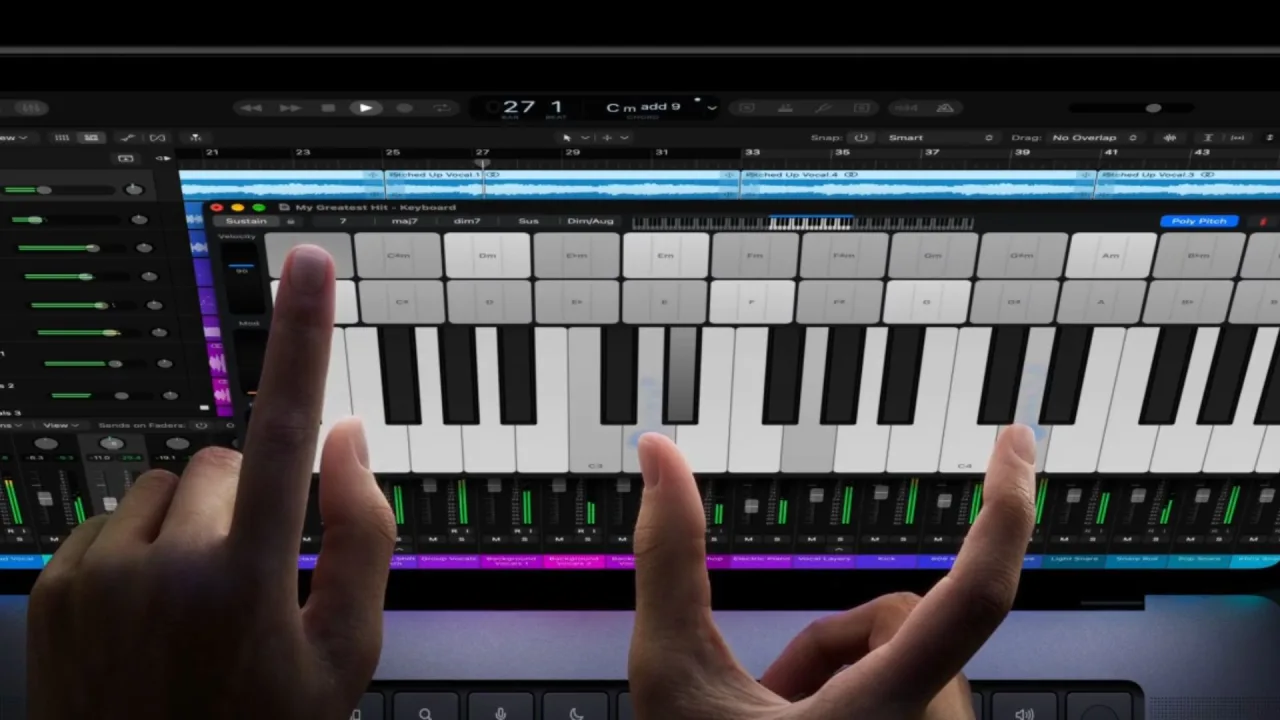
Apple has expanded the regional rollout for its first touchscreen MacBook Pro, setting a Japanese release date of November 6, 2026, with reservations opening on October 29, 2026, and standard pricing starting at 499,800 yen. Announced on October 28, 2026, the lineup brings tandem OLED technology and direct touch interaction to macOS for the first time, reversing nearly two decades of corporate policy once defended by co-founder Steve Jobs and former CEO Tim Cook. Under current chief executive John Ternus and chief hardware officer Johny Srouji — who called the machine a monumental step forward for the Mac — Apple is giving creative professionals a touch-enabled portable workstation. This pivot arrives alongside a turbulent market where global PC shipments tumbled 20 per cent in the third quarter, according to researcher IDC, driven higher by ongoing memory chip prices that increased computer prices and hurt demand.
The tension at the launch centers on a stark paradox: Apple is introducing a revolutionary hardware interface at a time when memory and processing power dictate the real work of professional computing, particularly for local artificial intelligence tasks. While the touchscreen MacBook Pro targets photographers, software developers, and video editors, its premium pricing and positioning alongside a standard MacBook Pro powered by its newer M6 chip launched earlier in the week create a complex purchasing landscape. Buyers must now weigh whether a touch-interactive display justifies a steep financial premium over raw processing gains, especially as the industry navigates a downward spiral in demand.
Hardware Architecture and the PROLED XDR Display
The new MacBook Pro is available in 14-inch and 16-inch sizes, built around Apple's PROLED XDR display utilizing tandem OLED technology with a two-layer light-emitting structure. According to the company, the screen delivers peak HDR and SDR brightness of up to 2,000 nits, a contrast ratio of 10,000,000:1, and adaptive refresh rates of up to 120Hz. The display supports P3 and Adobe RGB colour spaces, alongside more than 80% coverage of the Rec. 2020 colour space for HDR video editing and colour grading. A nano-texture glass option is available to reduce glare and reflections in bright environments. Apple has redesigned the laptop hinge to provide greater stability when users interact directly with the screen, addressing the practical physics of touching a vertical display.Video: Apple’s First Touchscreen MacBook Pro Is Coming?! OLED + Thinner Design, AI Tech Insights (YouTube)
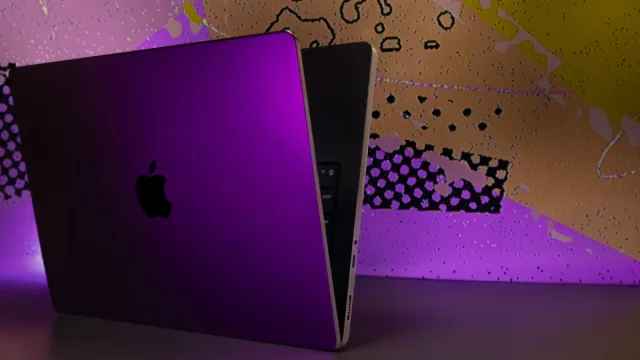
Beneath the display, the laptops feature Apple's M5 Pro and M5 Max chips, offering up to 128GB of unified memory and storage options reaching 16TB. Apple states that the M5 Max can support large language models containing hundreds of billions of parameters entirely on the device. Other upgrades include a six-speaker sound system with 50% deeper bass, Wi-Fi 7, Bluetooth 6, Thunderbolt 5 connectivity, a 12-megapixel Center Stage camera, and the return of the glowing Apple logo on the back. The physical chassis is also thinner and lighter: the 14-inch model weighs 3 pounds down from 3.5 on the non-touch model, while the 16-inch version weighs 4 pounds down from 4.7 pounds on the prior generation.
The introduction of the M5 Pro and M5 Max chips creates an interesting strategic tension when compared to the standard 14-inch MacBook Pro powered by the newer M6 chip that Apple launched earlier in the week starting at $1,999. Technology observers note that buyers focused on local AI workloads and raw computational power may prioritize generational processor upgrades over touch interaction. That hardware divergence means the touchscreen models are not simply performance updates, but specialized workstations engineered around a distinct method of human-computer interaction.
Software Integration and Touch Mechanics in macOS 27
Running macOS 27, the new laptops introduce an interface specifically redesigned for touch input. Apple has incorporated the Dynamic Island at the top of the display to serve as a home for Spotlight search, Live Activities, and Siri AI, allowing users to accept an AirDrop request or pause a song with a tap of a finger. Siri AI arrives in beta in macOS 27.2 according to Apple's footnotes. The touch sensor is built directly into the display panel rather than layered on top, and Apple emphasizes that the system works in tandem with traditional keyboard shortcuts and trackpad gestures rather than replacing them.
Users can swipe through webpages, pinch to zoom into photographs, and drag content between applications without waiting for developers to rewrite their software. Apple states that many existing apps work with touch right away because macOS automatically translates touches into clicks. Furthermore, Apple has named specific third-party applications optimized for touch:
- Adobe Lightroom
- DaVinci Resolve
- Blender
- Maxon Cinema 4D
- Maxon ZBrush
- Shapr3D
- Algoriddim djay Pro
- Notion
- Canva
- Zoom
- Microsoft Word, Excel, PowerPoint, and Outlook
A footnote from Apple indicates that these listed third-party applications will become available later in the year. For developers, updated system gesture APIs allow the creation of touch-specific experiences, alongside the ability to test iOS and iPadOS apps directly on the MacBook Pro screen. Notably, Apple's release does not mention Apple Pencil support, meaning users cannot use a stylus for precision drawing on the display.
Pricing Extremes and the Cost of Fully Specced Configurations
The base models establish a high entry point for touch-enabled Macs, but fully configuring the hardware pushes prices into unprecedented territory. The 14-inch M5 Pro model starts at $2,899, while the 16-inch version starts at $3,399. M5 Max configurations begin at $4,499 for the 14-inch model and $4,799 for the 16-inch version. However, upgrading these machines with every premium hardware option creates a dramatic financial leap.
| Configuration Level | 14-Inch MacBook Pro | 16-Inch MacBook Pro | Key Upgrades Included |
|---|---|---|---|
| Base Starting Price | $2,899 | $3,399 | M5 Pro, standard memory and storage |
| Fully Specced Price | $14,249 | $14,549 | M5 Max (18-core CPU, 40-core GPU), 128GB memory ($2,000), 16TB storage ($7,000), nano-texture glass ($150) |
| Previous Generation Maximum | Not listed | $10,149 | Prior generation top-tier configuration without 16TB storage option |
The maximum configuration for the 16-inch model reaches $14,549, making it $4,400 more expensive than a fully specced version of the previous MacBook Pro generation. The primary driver of this massive price escalation is the 16TB storage option, which adds an extra $7,000 to the new MacBook Pro’s price thanks to the ongoing memory shortage. Opting for an 8TB storage option instead (a $3,000 option) reduces the fully specced 16-inch price to $10,549, which is $400 more expensive than its predecessor.
Launch Timeline and Market Availability
Apple opened pre-orders for the new touchscreen MacBook Pro models on October 28, 2026, with devices scheduled to reach customers and stores starting from November 6, 2026. Regional availability details indicate that online orders are being processed through Apple's online store and the Apple Store app. Retail platforms such as Amazon do not list the new touch models yet, though Amazon continues to offer discounts of up to $610 on M5 Pro and M5 Max models it sits beside. For power delivery, accessories such as Apple’s 96W USB-C Power Adapter sell for $79 and the 140W adapter for $99.
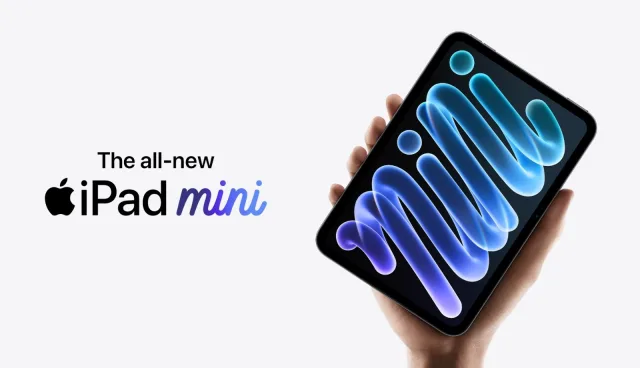
The broader ecosystem context reveals a busy product cadence for the manufacturer. Alongside the touchscreen MacBook Pros, Apple recently launched a new low-end MacBook Pro with an M6 chip and 14-inch screen, an updated iMac, and an overhauled iPad mini with an OLED screen and higher price, following the release of the iPhone Duo. Whether these swift product rollouts can counteract tumbling global PC demand and convince professionals to embrace a touchscreen laptop remains the central question facing John Ternus as he establishes his early leadership.
Apple has successfully dismantled its own historical prohibitions to deliver a technologically advanced workstation, but the commercial success of the touchscreen MacBook Pro will ultimately be decided by whether everyday software workflows benefit from direct finger interaction enough to justify a $2,899 starting price and a $14,549 ceiling.
Updated 1 time since publication; last update 28 October 2026, 22:52.