Kemi Badenoch condemns Chancellor John Healey's first Budget
Conservative leader Kemi Badenoch criticized Chancellor John Healey's inaugural Budget as borrowing forecasts for the current financial year were revised upwards.
- Headline: Kemi Badenoch condemns Chancellor John Healey's first Budget
- Dispatch Summary: Conservative leader Kemi Badenoch criticized Chancellor John Healey's inaugural Budget as borrowing forecasts for the current financial year were revised upwards.
- Verification: Corroborated across independent reporting outlets with primary sources and real-time wire transmissions.
Why did Kemi Badenoch say the Budget was not good enough, not strong enough, and not bold enough?
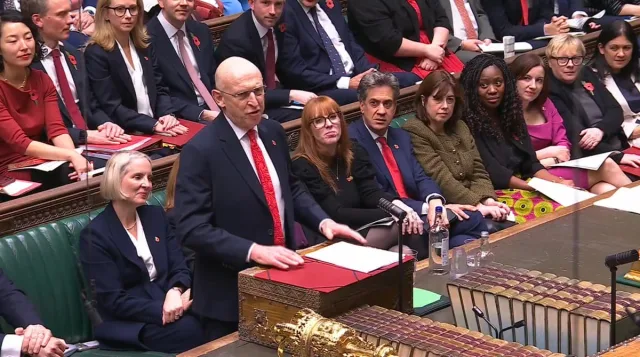
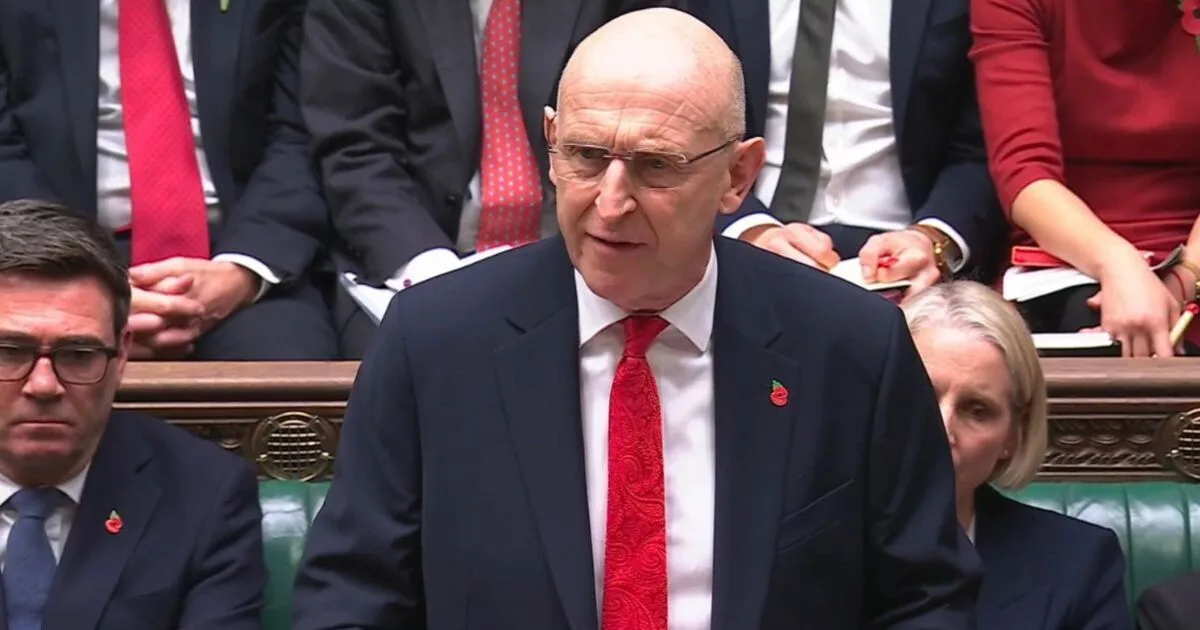
Chancellor John Healey delivered his first Budget in the House of Commons on October 28, warning that Britain faces global economic storms as the war in Iran drives up oil prices. Delivering a speech lasting 56 minutes — shorter than the 77-minute and 64-minute addresses of his predecessor Rachel Reeves — Mr. Healey announced a package centered on energy cost relief, a £100 payment for 20 million households in council tax bands A to D, and an increase in the national minimum wage and national living wage by 3.9%. Yet the response from the Opposition benches was immediate and severe.
Conservative leader Kemi Badenoch attacked the Chancellor with a nine-word rebuke, blasting the economic plan as not good enough, not strong enough, not bold enough
during her reply in Parliament. She argued that the government is overspent, overborrowed, overtaxed, and drowning in an out-of-control welfare system
under Prime Minister Andy Burnham. Painting the inheritance left to the new Chancellor as a hospital pass, Mrs. Badenoch told MPs that Britain is about to collapse under the weight of welfare spending. She pointed out that government borrowing for the current financial year has been revised upwards by nearly £18 billion according to Office for Budget Responsibility figures, moving from a March forecast of £115.5 billion to £133.2 billion in 2026/27. The Conservative leader added that Britain is spending more on debt interest than on the army and schools combined, and that the rate of interest paid on national debt is higher than Greece, Latvia, Slovakia, and Vietnam.
That leaves the administration facing mounting criticism that its measures amount to temporary sweeteners rather than structural reform. Mrs. Badenoch also criticized the government over its failure to set out a clear path to reach 3% defence spending, noting that if war comes, the country needs serious leadership because national security must precede social security. Mr. Healey countered that he is getting work under way to reach spending of 3% of GDP on defence by 2030 and will set out the mechanics at next year’s spending review, alongside £10 billion of additional economic and military support for Ukraine and half a billion in urgent winter military funding.
How will households and motorists feel the impact of the new energy and tax measures?
For millions of households grappling with the cost of living, the Chancellor unveiled direct interventions aimed at easing winter bills, though outside groups questioned their long-term efficacy. Around 20 million households in council tax bands A to D will receive a £100 energy payment paid directly into their bank accounts through a £2.6 billion scheme designed to take the pressure off during the coldest months. Additionally, the cut to VAT on electricity has been extended to July, taking £50 off the annual price cap. The Treasury also confirmed that standing charges on gas bills will be scrapped from 2027 or as soon as possible after.
Motorists received relief as the 5p cut to fuel duty was extended through the winter and spring to July. Drivers relying on their vehicles for work, such as care workers and engineers, will see their higher mileage rate increase from 25p to 35p per mile, alongside a permanent increase to the standard mileage rate. Savers gained clarity when Mr. Healey confirmed that the cash ISA allowance will remain at £20,000 per year tax-free for all ages, with plans to work with the sector to create a new Starter ISA to reward first-time investors. In the property market, the Chancellor said he is dealing with the Lifetime ISA penalty so that if the home you want costs more than the limit, you will get back at least what you put in, and announced that a new First Time Buyer ISA will replace the Lifetime ISA.
Will the tax burden hit a record high under the new fiscal plans?
Independent forecasts released alongside the statement indicate that the tax take across the economy is climbing significantly. The OBR forecasts the tax burden to rise from the equivalent of 36.0% of GDP in 2025/26 to a new record of 37.9% in 2027/28, continuing upward to reach a peak of 38.6% of GDP in 2031/32, nearly six percentage points above the pre-pandemic level of 32.9% in 2019/20. Mrs.
To fund support packages and energy measures, the Chancellor announced specific targeted tax hikes. Banks will face an extra 3% on the Bank Surcharge for a time-limited period of 15 months starting in January. Machine Games Duty on higher-stakes gambling machines will increase from 20% to 25%, while pubs and seaside arcades are protected. Small businesses received relief as the threshold for small business rate relief for retail, hospitality, and leisure businesses was raised to £18,000. All business rates will be retained locally by the end of the decade, with 20% of revenue going to mayors from next year. Yet John O’Connell, chief executive of the TaxPayers' Alliance, argued that the Chancellor has driven the tax burden to another record high to pay for gimmicks and giveaways while sidestepping the ticking fiscal time bomb of runaway benefits spending
.
- October 28, 2026: Chancellor John Healey delivers his first Autumn Budget in the House of Commons.
- October 28, 2026: The Treasury confirms standing charges on gas bills will be scrapped from 2027 or as soon as possible after.
- October 28, 2026: The government announces a £100 energy payment for 20 million households in council tax bands A to D.
What are the timeline and milestones for the major reforms?
The implementation of these fiscal and structural policies spans several years, creating a lengthy window before all measures take full effect. Sickness benefit spending is forecast to exceed £100 billion by the end of the decade, with 6.7 million people on out-of-work benefits, prompting Joe Shalam, policy director at the Centre for Social Justice, to describe the fiscal statement as the fudge-it Budget
that avoids hard choices until the next review. Reviews led by Alan Milburn on young people not in education, employment, or training and by Sir Stephen Timms on disability benefits are scheduled for publication in November, with government responses due by the end of the year. For older generations, Mr. Healey confirmed that Prime Minister Andy Burnham's adjustment to the state pension triple lock, rising every year and keeping pace with earnings and inflation from 2030, will save £15 billion a year by the end of the 2030s and £50 billion by 2050.
That leaves critics warning that the delay in tackling foundational structural problems leaves the public finances vulnerable. Dr. Valentin Boboc, chief economist at the IEA think tank, stated that the package takes one step forward and two steps back, noting that higher taxes on banks risk discouraging investment while minimum wage increases make hiring more expensive when youth unemployment is already above 15%. Meanwhile, political rivals are looking ahead to the electoral calendar. Reform UK leader Nigel Farage predicted that the fiscal statement was a retail Budget designed to lay the groundwork for an early general election next spring, pointing out that nearly every place receiving funding is a marginal Labour-held seat. Robert Jenrick added that taxes will rise by £36 billion a year, calling it the most significant tax increase in parliamentary history and warning that working people are going to pay the price. Liberal Democrats leader Sir Ed Davey pressed the Chancellor to create a real growth plan with Europe at its heart, arguing that the economy continues to be held back by Conservative Brexit red tape and Labour's red lines.
As the debate concluded, Unite general secretary Sharon Graham offered a conditional assessment from the trade union movement, stating that while relief on energy bills and investment in jobs are welcome, these are baby steps rather than a decisive leap forward
and warning that frozen tax thresholds continue to drag workers into unfair tax bands.