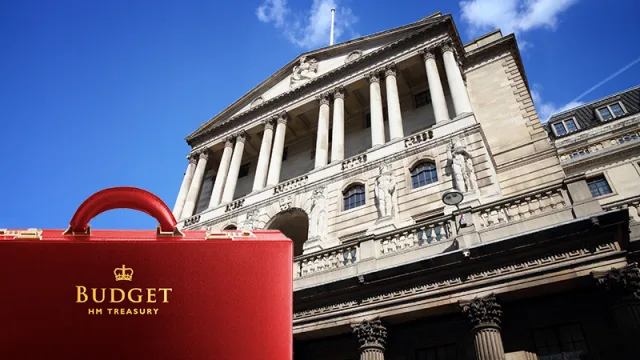
Fed holds interest rates steady despite surging inflation
The Federal Reserve voted 10-2 to hold interest rates steady despite September consumer inflation accelerating to 3.7 per cent, sparking internal dissent.
- Headline: Fed holds interest rates steady despite surging inflation
- Dispatch Summary: The Federal Reserve voted 10-2 to hold interest rates steady despite September consumer inflation accelerating to 3.7 per cent, sparking internal dissent.
- Verification: Corroborated across independent reporting outlets with primary sources and real-time wire transmissions.
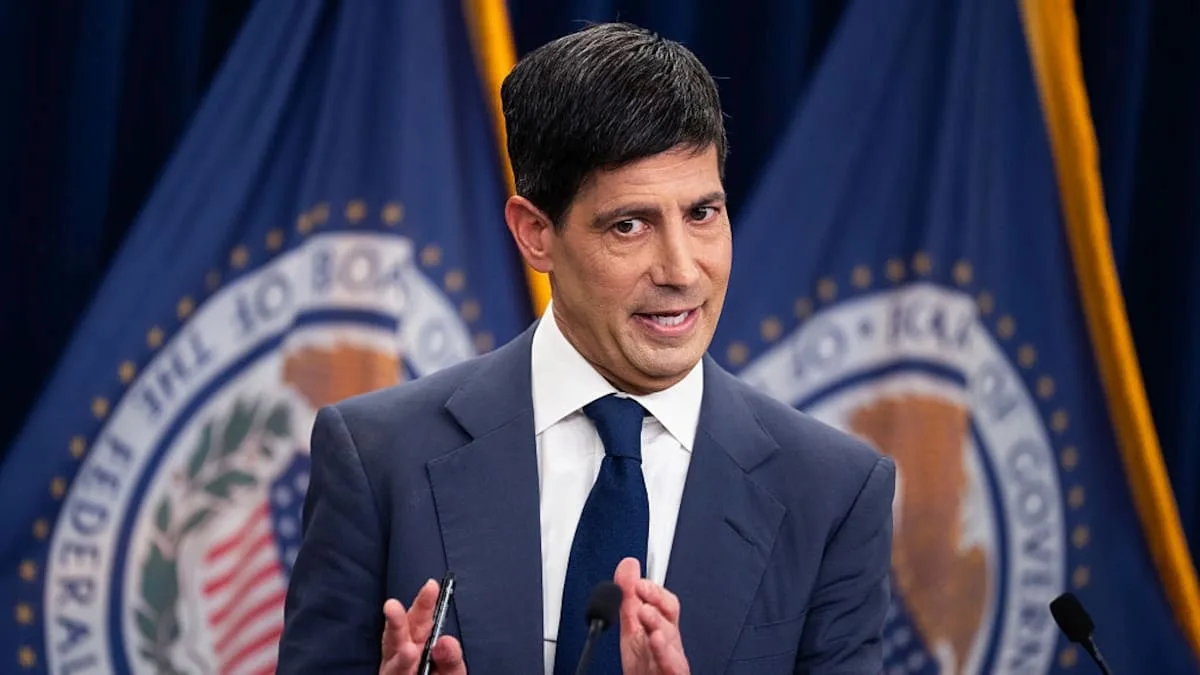
The United States Federal Reserve on Wednesday held interest rates steady at a target range between 3.75 to 4.00 per cent, right before the upcoming US midterm elections and just ahead of Thursday’s release of the Personal Consumption Expenditures (PCE) Price Index report, which is used by the central bank to assess inflation and inform its decisions. CME FedWatch indicated that there was more than a 90 percent chance rates would remain unchanged.
Leaving borrowing costs at one of the highest pre-election levels seen in over 20 years, the decision arrived alongside government data showing consumer prices in September climbed to 3.7 per cent from a year ago, up from 3.4 per cent in August, with energy prices largely accounting for the monthly surge. That acceleration pushed inflation further away from the central bank's long-term two per cent goal and prompted two top officials to demand an immediate rate increase.
The Federal Reserve is the central bank of the United States, charged with a dual mandate to maintain maximum employment and keep inflation stable. It uses its benchmark interest rate to influence the broader economy, where raising rates cools price growth and lowering rates stimulates activity.
Who is pushing for higher rates and who is holding back?
The 12-member Federal Open Market Committee voted 10-2 to pause after having hiked rates in September for the first time in three years. Two members dissented from the majority: Federal Reserve Governor Lisa Cook and Cleveland Fed President Beth Hammack, who called instead for an immediate 0.25-percentage-point rate hike. That minority argued for faster action against persistent price pressures, aligning with external analysts who viewed a pause as contradictory given that consumer inflation accelerated.
There were signs earlier this month that the central bank would maintain benchmark interest rates, with the Fed’s chair for supervision, Michelle Bowman, advocating a wait and see
approach. At this month’s International Monetary Fund-World Bank meetings in Bangkok, Thailand, Bowman stated,
Michelle Bowman, via Al Jazeera
I don’t feel any urgency for taking further action at this point. We really need to take some time and understand how things will evolve.
Dan North, senior economist at Allianz Trade, called the rising trajectory wrong way and noted that that inflation line is going up, not down. He suggested that moving before the midterms would have appeared suspicious, telling NPR that it would be suspicious if there were a hike before the midterm. Wendy Edelberg, senior fellow at the Brookings Institution, questioned the economic logic of pausing while the labour market remained stable, pointing out that if there was a reason to raise interest rates at the last meeting, I think that there's just as compelling of an economic reason to raise interest rates at this meeting.
Describing current economic conditions in its press release announcing the decision on Wednesday, the Fed stated,
Federal Reserve, via Al Jazeera
Economic activity is expanding at a strong pace. While uncertainty remains elevated owing, in part, to geopolitical developments, domestic spending has been resilient. Productivity growth is strong, and capital investment is robust. Job gains have kept pace with the workforce, and the unemployment rate has changed little.
The central bank also added,
Federal Reserve, via Al Jazeera
The accumulation of more information will help the Committee determine the policy stance appropriate to ensure a timely return of inflation to the Committee’s 2 percent goal.
How are voters and politicians caught in the squeeze?
The timing of the decision places monetary policy squarely in the middle of a high-stakes political battle. The November 3 midterms will determine whether the Democratic Party can wrest control of both houses of Congress from Republicans, with voters across the country citing the economy as their top issue. U.S. President Donald Trump, who returned to power last year, has waged an aggressive campaign demanding lower interest rates. Following the central bank's rate increase last month, Trump wrote on Truth Social that interest rates in the United States should be 1% or less.
His administration has also pursued criminal charges against former Fed chair Jay Powell and attempted to fire Governor Cook.
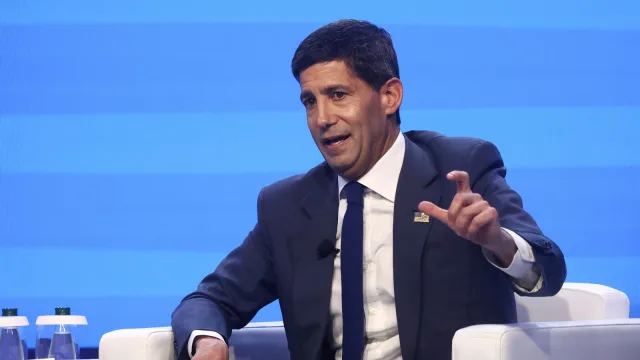
Despite political crosswinds, Fed chair Kevin Warsh told reporters during a Wednesday afternoon press conference that politics played no role in the outcome. Politics played no role in the decision, Warsh said, adding, I didn't hear an utterance about politics. When asked about Trump's remarks that the board is full of Democratic-appointed members who would like to see the country do badly, Warsh declined to comment directly on the claim but characterized the internal debate as a heck of a family fight. Loretta Mester, former head of the Cleveland Fed, insisted that the committee does not take political issues into account, though she acknowledged that Trump's pressure on the central bank is unlikely to cease.
Why are prices surging despite tight monetary policy?
The central bank's struggle to control inflation stems from a mix of supply shocks and sector-specific booms that higher borrowing costs alone cannot easily fix. U.S. President Donald Trump's war on Iran, launched in late February, has closed the Strait of Hormuz, sent oil prices skyrocketing above $117 a barrel, and fuelled domestic inflation alongside wide-ranging tariff policies. At the same time, an investment boom in artificial intelligence technology and the construction of huge data centres have driven up prices for construction materials and electronic equipment. Nicholas Economides, a professor of economics at the NYU Stern Business School, noted that raising rates makes little sense when inflation is driven by supply factors because it slows down the economy without curing the underlying shortage. If inflation is caused by supply factors, it doesn't make sense to try to cure it by increasing interest rates because it won't work, Economides said.
What does this mean for household budgets and borrowing costs?
For ordinary Americans, the divergence between macroeconomic growth and household reality remains stark. While overall economic activity was described by the Fed on Wednesday as expanding at a strong pace, lower and middle-income families are experiencing declining purchasing power. Average wages rose just 3 per cent for the 12 months ending in September, lagging behind the 3.7 per cent annual increase in consumer prices. Mark Zandi, chief economist at Moody's Analytics, explained that lower and middle-income Americans are having a real struggle, noting that their purchasing power is actually declining. And that's a pretty uncomfortable place to be.
Borrowing costs remain punishing for consumers trying to make large purchases. Mortgage rates climbed to a three-year high of 7.4 per cent earlier this month before easing slightly, prolonging a four-year slump in the housing market. Meanwhile, wealthier households benefiting from a rising stock market continue to fuel resilient consumer spending, and artificial intelligence firms keep borrowing and building regardless of monetary tightening. The Fed’s next monetary policy meeting is scheduled for December 8-9, when it will give its final rate decision of the year, and current forecasts point to a quarter-point interest rate increase. Warsh previously announced structural changes to the calendar that will reduce rate-setting meetings to seven in fall 2027 and six in 2028.
As the central bank navigates conflicting mandates, Nicholas Economides of the NYU Stern Business School observed that the proximity of the election made radical action unlikely because even if the Fed were to do something radically different, the economy would not have time to adjust before the elections.
Updated 1 time since publication; last update 28 October 2026, 21:52.