‘Cockroach’ party leader released as Delhi braces for second day of prot…
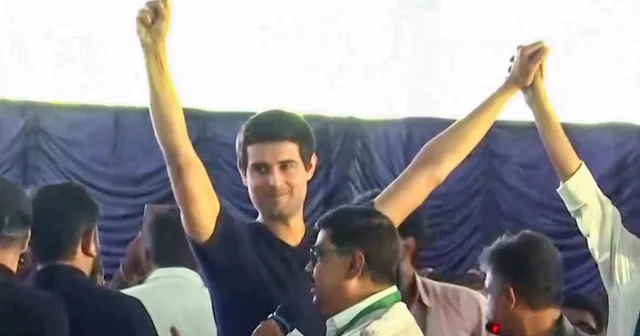
New Delhi faces a second day of youth protests demanding the resignation of India's election chief following the court release of Cockroach Janta Party founder Abhijeet Dipke.
- Headline: ‘Cockroach’ party leader released as Delhi braces for second day of prot…
- Dispatch Summary: New Delhi faces a second day of youth protests demanding the resignation of India's election chief following the court release of Cockroach Janta Party founder Abhijeet Dipke.
- Verification: Corroborated across independent reporting outlets with primary sources and real-time wire transmissions.
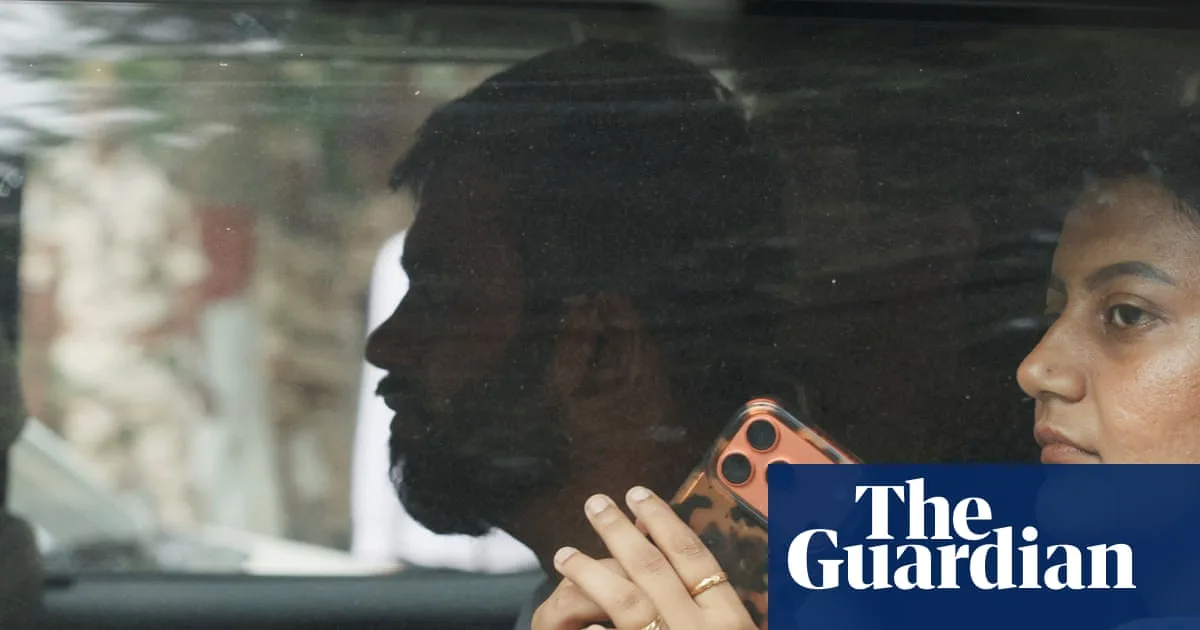
New Delhi braced for a second day of youth protests demanding the resignation of India’s election chief on Sunday, as a court ordered the release of the “cockroach” movement founder, Abhijeet Dipke, and two other senior leaders.
Dipke, the founder of the Cockroach Janta party (CJP), and the other leaders were detained when their plane landed in Delhi on Saturday, as the movement planned to gather thousands of people at Jantar Mantar in central Delhi. A surety bond of Rs 50,000 was filed as Abhijeet Dipke, Saurav Das, and Ashutosh Ranka were released by an executive magistrate's court in Delhi, the police said. The high-stakes standoff stems from an escalating nationwide campaign against a contentious voter list revision that critics argue disproportionately benefits Prime Minister Narendra Modi’s Hindu nationalist government.
Court Release and Scalding Attacks on Modi
The morning after a massive security lockdown in Delhi, released leaders immediately resumed their offensive. In a post on X, Dipke wrote, Modi, as PM, is an embarrassment to India. Never has this country seen a bigger coward and bully.
CJP national spokesperson Ashutosh Ranka announced a press conference at 2 pm, while party handles posted messages declaring that Cockroaches never die.
Legal battles accompanied the physical confrontations. CJP's Ratna Singh said in a post on X announcing their release: Condition - no breach of peace for one year.
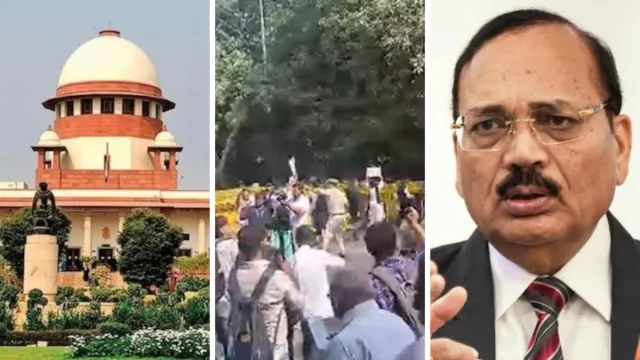
Concurrently, a transport association moved the Supreme Court over road closures in Delhi, citing their impact on transport operations and business services amid the ongoing protests. Opposition figures moved swiftly to capitalize on the public anger, with Congress president Mallikarjun Kharge saying INDIA bloc leaders will meet the Chief Justice of India on Monday after writing to him about the situation. Rahul Gandhi has accused the government of suppressing democracy and vowed to bring PM Modi and other senior officials to justice. Meanwhile, Bihar BJP president Sanjay Saraogi accused Rahul Gandhi, and CJP of acting as “villains” and claimed that the opposition leaders were using the party’s platform to advance their political interests.
Mass Detentions and the Lockdown of the Capital
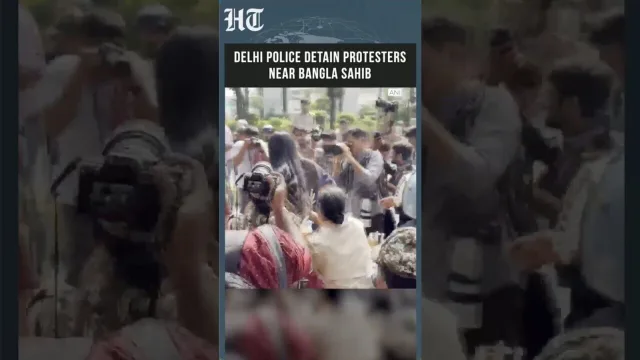
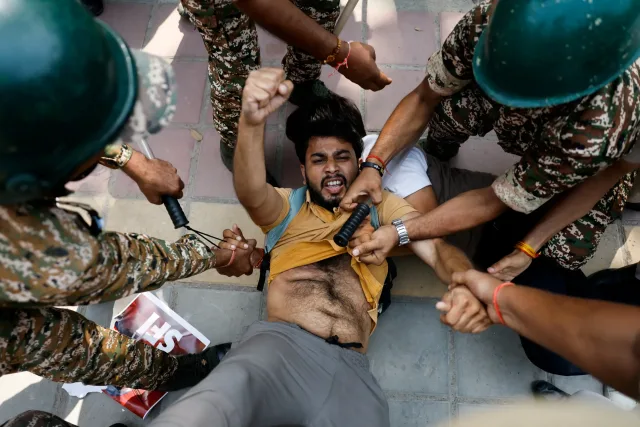
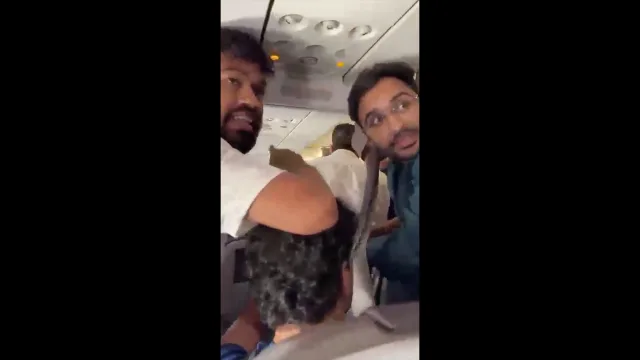
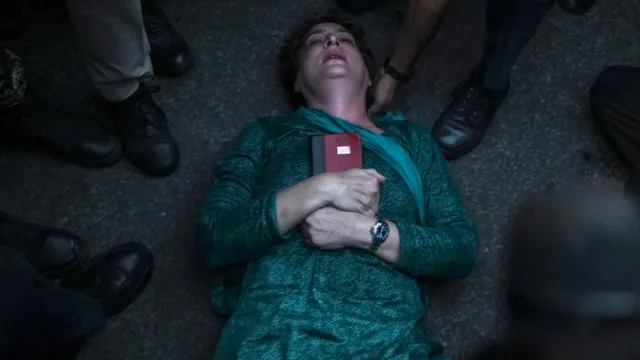
The friction began when Indian authorities on Saturday deployed a sweeping crackdown across Delhi and detained thousands of protesters. Reuters reported police detained more than 2,000 people to thwart Saturday’s protest. Thousands of police and paramilitary personnel continued to be deployed across the city on Sunday although metro stations reopened and mobile internet services were back up. YouTuber Dhruv Rathee, in his first reaction after being released from detention, accused authorities of forcibly taking him from his home, holding him for nearly 23 hours and denying him access to his phone and lawyer. By Sunday, a joint contingent of the Delhi Police and the CRPF conducted a flag march in New Delhi's Connaught Place. Delhi Police has registered more than 20 FIRs over Saturday’s protest related incidents, citing allegations including obstruction of government work and assaults on police personnel, while Delhi Police said it has identified and traced all four men allegedly involved in assaulting a male protester in a video circulating on social media.
| Authority / Group | Reported Figures & Actions | Stated Position |
|---|---|---|
| Delhi Police / Authorities | Detained more than 2,000 people on Saturday; registered more than 20 FIRs; deployed thousands of personnel. | Maintained that law and order remains under control and traffic is running smoothly. |
| Cockroach Janta Party (CJP) | Leaders Abhijeet Dipke, Saurav Das, and Ashutosh Ranka released on a Rs 50,000 surety bond requiring peace for one year. | Demanding the resignation of Chief Election Commissioner Gyanesh Kumar over electoral roll revisions; vowed protests will continue. |
| Election Commission & BJP | Citing data showing about 130 million names deleted, including 63 million relocated and 30 million untraced. | Denying allegations of manipulation, stating differing views are normal in internal deliberations and accusing opponents of undermining legitimate electoral processes. |
Electoral Roll Deletions at the Heart of the Crisis
The protests trace back to late September reports in the Indian Express revealing that Kumar's two deputies raised several concerns internally about voter list revisions, registration procedures and digital systems. Election Commission data cited by the party shows about 130 million names, more than the population of Japan, have been deleted from electoral rolls during the verification exercise, including 63 million people who had relocated and 30 million who could not be traced. Opposition parties say Muslim voters and other minorities, who are unlikely to support the Hindu nationalist ruling party, are disproportionately affected by the deletions. The Election Commission says differing views are normal in internal deliberations, and has denied favouring any party.
- Movement origin: The “cockroach” movement began as an online satire, rapidly evolved into a pressure group.
- Previous mobilization: Street protests against exam paper leaks culminating in the resignation of Modi’s education minister.
- Current scope: Protests spreading beyond the capital, with CJP organisational in charge Ajinkya Shinde announcing a demonstration at Mumbai’s T Junction near Shivaji Park at 4 pm, while student organisations have called a joint protest in Lucknow demanding Gyanesh Kumar’s resignation.
- International reaction: The UN human rights office expressed concerns over mass detentions before and during the protests. India's foreign ministry said the UN’s approach was “selective” and its statement constituted
an unwarranted interference in the internal affairs of India
.
The Wening Tensions and Broader Fallout
The geographic spread of the demonstrations indicates that the movement has successfully transitioned from a localized internet satire into a coordinated national pressure group. While traffic was running smoothly, according to the police update, political friction reached new heights with Punjab Chief Minister Bhagwant Mann strongly condemned the Delhi Police’s alleged forced entry into Gurdwara Sri Bangla Sahib during Saturday’s protests, accusing the force of disrespecting the sanctity of the Sikh shrine. As the CJP prepares its press conference and opposition leaders approach the Supreme Court, the government faces a deepening political crisis over the credibility of its election administration.
That leaves the ruling administration caught between enforcing strict public order and managing an expanding youth movement that refuses to stand down. With state elections approaching, the street agitation has transformed a technical dispute over voter rolls into a profound test of state authority and democratic accountability.