Dolores Huerta, influential labor leader, feminist and civil rights icon…
Dolores Huerta, who co-founded the United Farm Workers and spent decades fighting for labor and civil rights, has died at the age of 96.
- Headline: Dolores Huerta, influential labor leader, feminist and civil rights icon…
- Dispatch Summary: Dolores Huerta, who co-founded the United Farm Workers and spent decades fighting for labor and civil rights, has died at the age of 96.
- Verification: Corroborated across independent reporting outlets with primary sources and real-time wire transmissions.
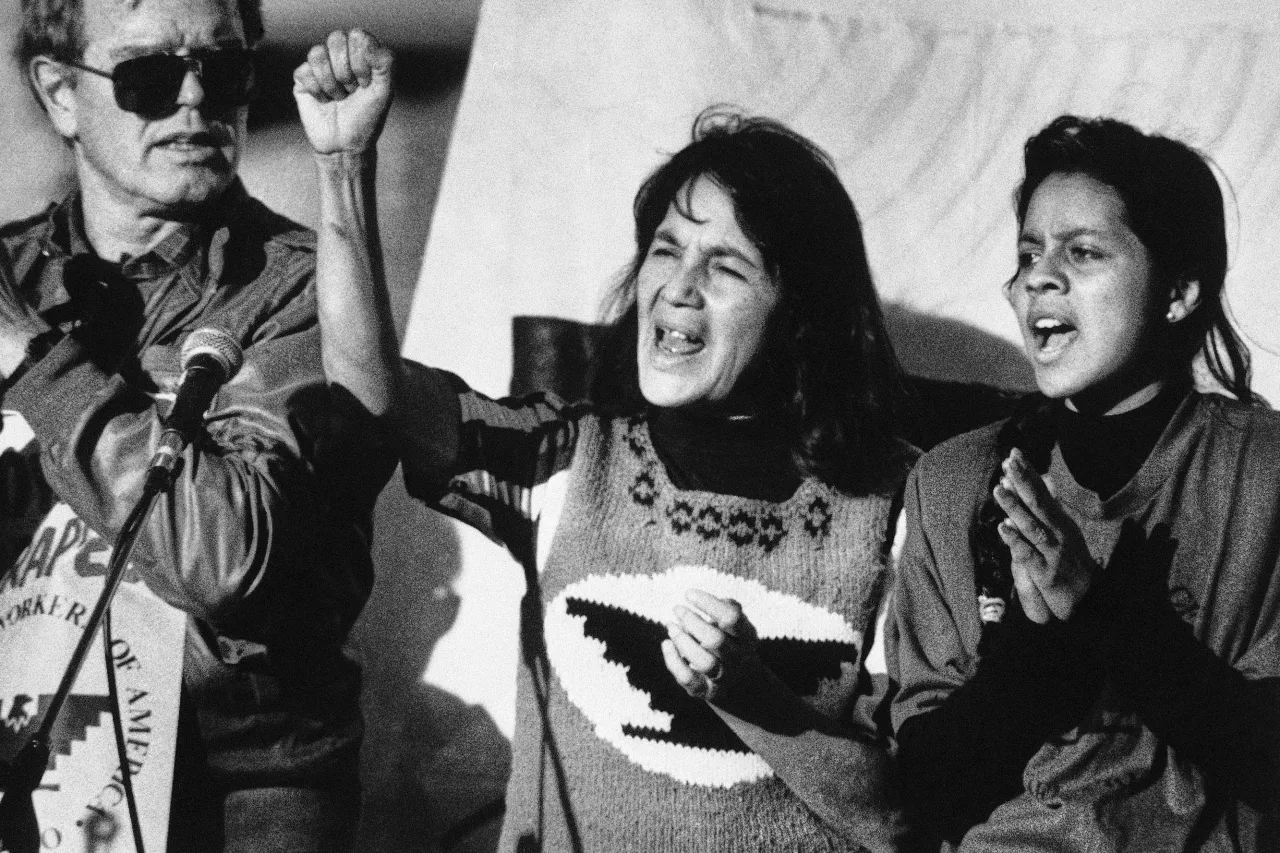
Dolores Huerta, who spent nine decades organizing workers, marching in protests, and securing historic protections for the nation's most vulnerable laborers, has died at the age of 96. Her family announced that she passed away Wednesday at her home in Bakersfield, California, surrounded by relatives. Family spokesperson Erik Olvera confirmed her cause of death was cancer.
Huerta left an indelible mark on American public life as the co-founder of the organization that became the United Farm Workers of America alongside Cesar Chavez. She coined the enduring rallying cry Sí, se puede!
— translated as Yes, it can be done
— which later inspired political campaigns and social justice movements across the globe. Her tireless activism earned her numerous honors, including the Presidential Medal of Freedom, which was presented by President Barack Obama in 2012.
That towering legacy was complicated earlier this year when Huerta revealed in an investigation published by The New York Times that she was sexually abused in the 1960s by Chavez, resulting in the birth of two children whose existence she kept secret for six decades. While the disclosure immediately tarnished Chavez's reputation, his name removed from streets and buildings and the holiday that had been a point of Hispanic pride, Huerta maintained until her final days that the heavy silence was a personal burden she bore to protect the farmworker movement.
How did a young teacher become a labor pioneer?
Born Dolores Clara Fernandez on April 10, 1930, in the mining town of Dawson, New Mexico, Huerta moved to Stockton, California, with her mother and brothers after her parents divorced when she was three. Her mother, who owned a hotel and restaurant, instilled in her an early sense of independence and community compassion. Huerta was a young, energetic elementary school teacher in the agricultural San Joaquin Valley when she decided to answer another calling after growing frustrated by her students’ poor living conditions.
I couldn't stand seeing kids come to class hungry and needing shoes,
she said in a 2017 PBS Independent Lens documentary on her life. I thought I could do more by organizing farmworkers than by trying to teach their hungry children.
That calling led her to join a grassroots group called the Community Service Organization in Stockton, where she met Chavez and her mentor Fred Ross Sr., whom she called the godfather of the farmworkers movement.
In 1962, Huerta, Chavez, and Gilbert Padilla established the National Farm Workers Association, which later merged to become the United Farm Workers of America. Working in the fields alongside Filipino grape pickers, Huerta played a central role in the five-year Delano Grape Strike. Without prior negotiating experience, she spearheaded nationwide boycotts of grapes and lettuce in the early 1970s that pressured major growers into signing the first collective bargaining agreements and health benefit plans in agricultural history.
What barriers did she break beyond the fields?
Huerta’s activism extended far beyond agricultural wages into voting rights, environmental justice, LGBTQ+ equality, and women's rights. She was arrested 22 times for nonviolent union demonstrations over the course of her life. In 2019, at 89 years old, she was arrested while participating in a union protest for better pay for home health care workers. Her commitment to direct action also brought physical peril; during a 1988 protest in San Francisco against Republican presidential candidate George H.W. Bush's opposition to the UFW grape boycott, she was struck by a police officer's baton. The blow broke three ribs, pulverized her spleen, and required blood transfusions before she ultimately reached a legal settlement with the city.
Her political reach influenced generations of leaders. In 1968, she campaigned for Senator Robert Kennedy and stood on stage with him moments before his assassination following his California primary victory. Decades later, she campaigned for Democratic Presidents Bill Clinton, Barack Obama, and Joe Biden, while founding the Dolores Huerta Foundation in 2003 to foster civic engagement in low-income communities. Tributes poured in from across the political spectrum upon news of her passing.
Her work with farm workers changed our state and our nation. The movement she helped lead was about securing basic human rights for some of the hardest working people among us.
Karen Bass, Los Angeles Mayor, via Los Angeles Magazine
California Governor Gavin Newsom declared that the state would not be where it is without her passion for justice and fairness. Former President Bill Clinton and former Secretary of State Hillary Rodham Clinton released a joint statement calling her a stalwart champion of working Americans who never stopped pushing for progress.
How did she navigate her final years and personal reckoning?
In her later decades, Huerta embraced feminism, campaigning for reproductive rights, encouraging Latinas to run for political office, and serving as an honorary co-chair of the 2017 Women's March in Washington, D.C. She credited the 1970s women's movement with giving her the validation to take her place alongside male labor leaders.
That lifelong advocacy for gender equality stood in stark relief against her revelations earlier this year regarding Cesar Chavez. Prompted by an investigative report by The New York Times that detailed allegations of abuse against multiple women and minors, Huerta spoke publicly about her own painful history with the late union leader. In interviews with outlets including ABC News and Latino USA, she stated that Chavez had manipulated, pressured, and on one occasion forced her into sexual encounters in the 1960s. The resulting two pregnancies were kept secret, with one child raised by her brother and the other raised by a family friend because abortion was illegal at the time and she viewed it as a sin.
When asked why she stayed silent for six decades, Huerta explained that she feared coming forward would derail the farmworker movement and undo hard-won progress. It was my personal pain, it was my personal problem and, you know, I think it was worth it because it was my cross to bear. I’ll say it that way,
she told Latino USA. Despite the devastating personal betrayal by a man she once regarded as a hero, Huerta continued her schedule of public appearances and political activism well into her mid-90s.
How can supporters and communities honor her legacy today?
For those looking to engage with the ongoing work of the civil rights icon, the family and the organizations she built outlined specific channels for participation and remembrance:
- Follow official announcements and memorial updates posted by the family and the Dolores Huerta Foundation on their official social media channels, including Instagram.
- Support the continued organizing efforts of the United Farm Workers union, which represents agricultural workers across California, Oregon, Washington, and New York.
- Plan a visit to the Central Valley for 2027, when the Dolores Huerta Foundation plans to open the Dolores Huerta Peace and Justice Cultural Center as a permanent home for her seven decades of organizing tradition.
Huerta is survived by her 11 children: two daughters she had with her first husband, Ralph Head; five children she had with her second husband, Venturo Huerta; and four she had with her longtime partner, Richard Chavez (brother of Cesar), who died in 2011.
Dolores Huerta demonstrated that structural change belongs to those willing to bear immense personal costs to ensure dignity for the marginalized. That unyielding demand for justice remains her defining monument.