Voyager 1 becomes first human-made object to reach one light-day from Earth
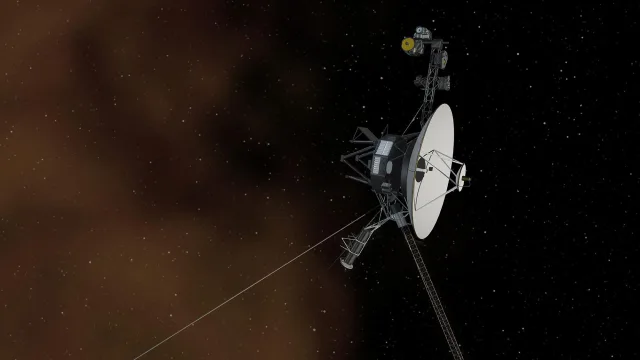
NASA's historic Voyager 1 spacecraft has crossed a distance of one light-day from Earth, making it the furthest human-made object in history at 16 billion miles away.
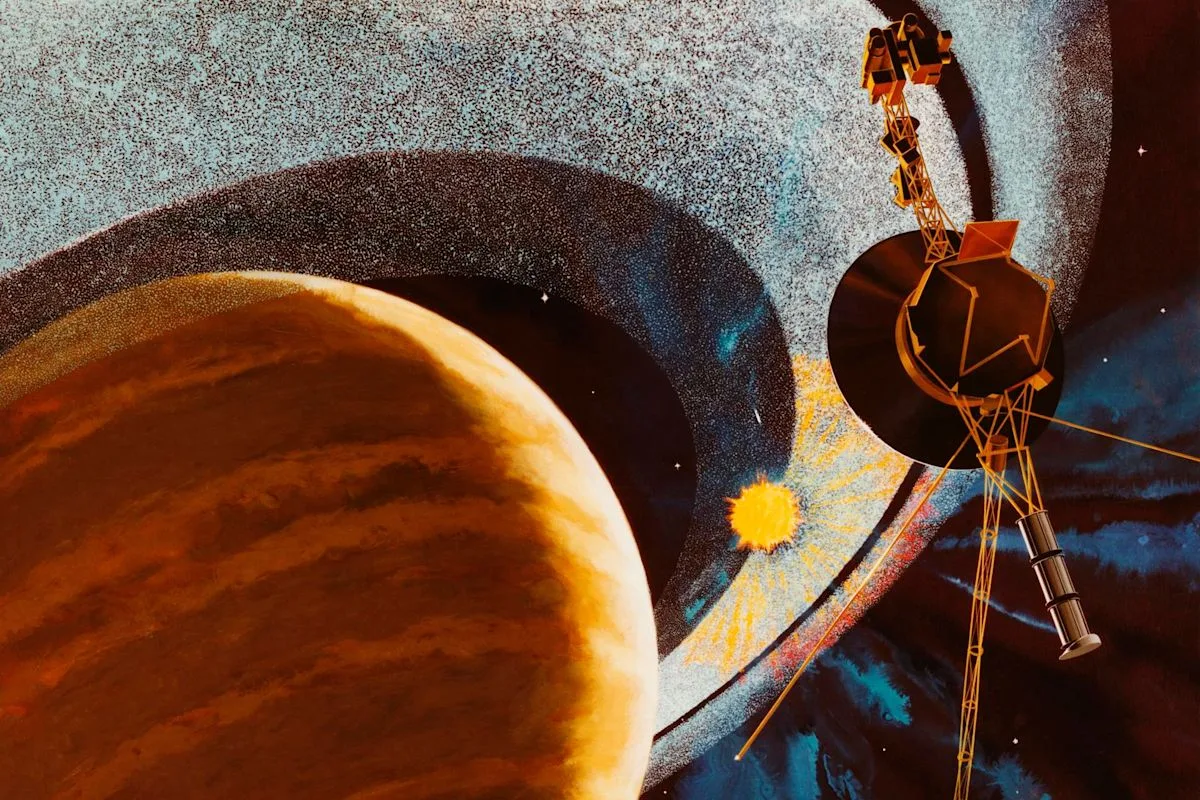
That stark reality arrived on Wednesday as NASA's Voyager 1 officially crossed a distance of one light-day from Earth, becoming the first human-made object in history to reach that mark. Built in the 1970s at JPL in Southern California and originally intended to last just five years to study Jupiter and Saturn, the spacecraft reached the milestone at 2:16 a.m. Wednesday, according to MyNewsLA.com, or at 4:16 a.m. CST according to KWBU, and 10:16 a.m. UK time according to the Mirror. At that moment, the probe sat 16.094 billion miles, or 25.902 billion kilometers, from Earth. Because radio signals travel at the speed of light—roughly 186,000 miles per second—any communication now takes a full 24 hours to reach the craft, with another 24 hours required for a reply to return home.
How did a 1970s spacecraft outlast its creators and reach the stars?
The journey began on Sept. 5, 1977, when Voyager 1 launched from NASA's Cape Canaveral launch complex in Florida, taking off 16 days after its identical twin, Voyager 2. Though Voyager 2 launched first, Voyager 1 overtook it by taking a trajectory designed to fly within 4,034 miles (6,492 km) of Saturn's largest moon, Titan, on November 12, 1980. That close encounter revealed a world shrouded in a dense and substantial atmosphere, but it also flung Voyager 1 up and away from the plane of the planets' orbits. It has been traveling in that direction ever since, crossing the orbit of Pluto in 1989 and capturing a historic 64-image family portrait of the solar system before turning off its cameras.
In December 2004, Voyager 1 crossed the termination shock, marking the outer boundary of the Sun's high-energy solar wind particles. On August 15, 2012, it left the protection of the Sun's magnetic field entirely, entering interstellar space and passing through a sparse layer of superheated plasma nicknamed the Wall of Fire. Today, it is speeding through the void at nearly 38,000 mph, according to NASA. Its survival relies not on solar panels, which would be useless this far from the Sun, but on radioisotope thermoelectric generators that convert radioactive decay into electricity. Eight of its original 10 instruments are no longer operating, and NASA engineers have systematically powered down or substituted devices to keep the engineering data flowing.
What does a two-day conversation like for mission operators?
Operating a probe at a distance of 16 billion miles requires immense patience and constant engineering vigilance from the team at JPL, managed by Caltech in Pasadena. The laboratory also manages NASA's Deep Space Network, the global array of antennas that maintains the sole communications lifeline to the outer solar system. Maintaining that lifeline has grown increasingly precarious as the mission enters its fifth decade. JPL engineers briefly lost contact with Voyager 1 on October 18 and 19, though its radio signal returned on October 20 and the team remained in contact with the spacecraft while investigating the interruption.
Voyager mission manager Kareem Badaruddin put the rarity of the achievement into perspective, stating in a statement reported by CNN and MyNewsLA.com: It's never happened before, and it may never happen again - it's that kind of extraordinary.
Badaruddin also addressed the recent communication glitch by noting, This is the first time we’ve seen the spacecraft do something like this, but we are also at a point in the mission where we have to expect the unexpected. We’re relieved to be back in contact with Voyager 1 and are eager to understand what happened.
How are space agencies and cities celebrating the cosmic milestone?
To mark the historic date, NASA called on the public to participate in Shine Bright for Voyager's Light-Day
by displaying golden lights and flashing the spacecraft's call sign, VGR, in Morse code. Landmarks around the globe answered the call on Tuesday night. The Empire State Building in New York City illuminated in gold, while the Lotte World Tower in Seoul, South Korea, lit up gold and flashed VGR in Morse code. In Southern California, the 90-foot Pacific Wheel Ferris wheel at Pacific Park in Santa Monica joined the observance by alternating gold lighting patterns with the Morse code message.
The color gold pays direct tribute to the Voyager Golden Record, a 12-inch gold-plated copper phonograph record bolted to the side of each spacecraft. Curated by a commission led by astronomer Carl Sagan, the discs were conceived as a message in a bottle to any advanced spacefaring civilization that might intercept them in the distant future. Each record carries:
- 115 images depicting life and science on Earth
- Natural sounds
- Musical selections
- Spoken greetings recorded in 55 different languages
- Printed messages from then-U.S. President Jimmy Carter and U.N. Secretary General Kurt Waldheim
As Sagan noted of the interstellar message: The spacecraft will be encountered and the record played only if there are advanced spacefaring civilizations in interstellar space.
How much longer can the historic probes keep running?
While Voyager 1 has reached the one light-day mark after 49 years, two months, and 11 days of flight, its twin is trailing on a different trajectory. Voyager 2 is currently about 21.6 billion kilometers away from Earth, with signals taking roughly 20 hours to reach it. Voyager 2 is estimated to reach the one light-day milestone in November 2035. Both spacecraft remain the only human-built objects operating beyond the heliosphere.
Despite the severe degradation of their power sources, project scientists remain optimistic about the final years of operation. Dr. Linda Spilker, NASA Voyager project scientist who has worked on the programme for 12 years from launch and re-joined in 2020, noted the surprising resilience of the hardware. If we talked to anybody from headquarters, it was 'Oh… it could go any day,' but here we are coming up on the 50th,
Dr. Spilker told the Mirror. They are well past the nine lives of your typical cat. It just keeps going.
Dr. Spilker added that NASA expects enough power and thermal capability to sustain the mission until the early 2030s. NASA projects that Voyager 1 could remain within the telemetry range of the Deep Space Network through about 2036.
Suzanne Dodd, NASA project manager, described the spacecraft in an interview with the Mirror as Earth's ambassador hurtling between stars while providing a sense of wonder on the home front, calling it a national treasure. Really extraordinary.
Space exploration enthusiasts looking to watch what comes next can tune in to a public discussion hosted by the JPL team with Voyager mission members and agency leaders scheduled for 9 a.m. Thursday in the von Kármán Auditorium. The event will be streamed online and will include a preview of a NASA+ Voyager documentary planned for 2027, the mission's upcoming 50th anniversary year.