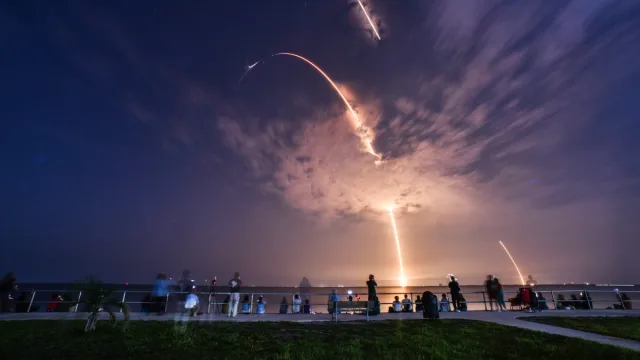
Four astronauts return to Earth after eight months in space
Four astronauts safely returned to Earth aboard a SpaceX capsule after completing a 237-day mission aboard the International Space Station.
- Headline: Four astronauts return to Earth after eight months in space
- Dispatch Summary: Four astronauts safely returned to Earth aboard a SpaceX capsule after completing a 237-day mission aboard the International Space Station.
- Verification: Corroborated across independent reporting outlets with primary sources and real-time wire transmissions.
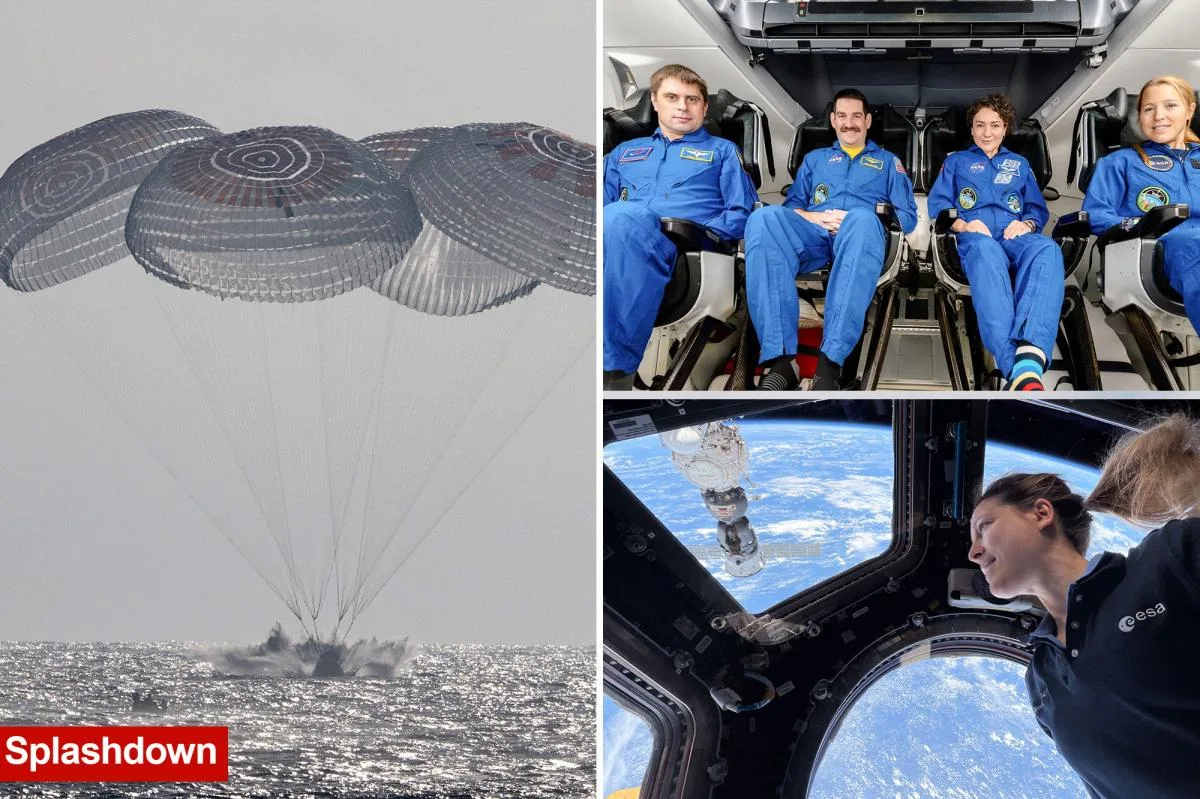
Four spacefarers are breathing earthly air again after a long deployment aboard the International Space Station, though their homecoming was delayed by three weeks while engineers wrestled with capsule repairs. NASA astronauts Jessica Meir and Jack Hathaway, the European Space Agency's Sophie Adenot of France, and Roscosmos cosmonaut Andrey Fedyaev touched down in the Pacific Ocean off the coast of California and Los Angeles on Thursday, Oct. 8, 2026, inside SpaceX's Dragon Freedom spacecraft. Their parachute-assisted splashdown at 11:34 a.m. EDT concluded 237 days in orbit.
That return brings to an end an eight-month mission that began in February when Meir and her colleagues hurried into space to replace four station occupants sent home early after NASA's Mike Fincke fell ill in what marked the first medical evacuation in 65 years of human spaceflight. Once aboard the 28-year-old orbiting laboratory, the incoming team found themselves caught up in a demanding schedule of station maintenance, scientific experiments testing stem cell production for cell-based therapies, and research showing that IV fluids can be made on demand for future missions to the Moon and Mars. They also watched as the Artemis II crew flew around the moon two months into their deployment, and celebrated the United States' 250th birthday by joining the Boston Pops with a piccolo for a Fourth of July concert.
Life off Earth had its lighter moments, too. The astronauts threw a dance party last month and hosted cooking demonstrations featuring aprons and a chef's toque, while Hathaway maintained a bushy naval aviator-style mustache that inspired ground controllers to grow facial hair in solidarity. It's kind of become a little bit of my brand up here, so I don't know if it'll go away right away or I'll end up keeping it for a while,
Hathaway said in August. Behind the routine lay historic milestones, particularly for Adenot, who completed the longest continuous stay ever by an ESA astronaut at 237 days without a break. On August 18, she also became the first French woman to walk in space, later joining Meir for an outing that marked only the sixth spacewalk in station history carried out entirely by women. Meir herself completed four spacewalks during the mission, bringing her career total to seven and ranking her third among women at NASA behind former astronauts Peggy Whitson and Suni Williams.
Splashdown and Recovery Operations
The journey back to gravity required precise timing and seamless coordination between teams in orbit and recovery personnel stationed at sea. The SpaceX recovery ship Shannon, carrying the craft inside what mission teams call the Dragon nest, hoisted the capsule aboard after two fast boats secured the area and checked the spacecraft. All four flyers emerged from the capsule within an hour, smiling, waving, and pumping their fists before boarding the ship. Bill Spetch, deputy manager of commercial for NASA's Low Earth Orbit Program, addressed reporters after the recovery: The crew is doing well. They were all smiles exiting the capsule.
Dana Weigel, manager of NASA's Low Earth Orbit Program at Johnson Space Center, noted in an official statement: NASA's activities supporting the International Space Station — transporting crew, conducting impactful research, and maintaining critical national assets — enable the science, engineering, and risk-reduction needed for future missions across the solar system. We're grateful for the dedication across the human spaceflight team that makes this possible, and we're thrilled to welcome Jessica, Jack, Sophie, and Andrey home.
That homecoming was initially stalled because their replacements, the four-person Crew-13, arrived three weeks late while technicians repaired their craft. Crew-13 eventually reached the station on October 1 in less than eight hours, setting a record for the quickest trip ever by an American spacecraft. Following standard medical screenings, Meir, Hathaway, Adenot, and Fedyaev took a helicopter to shore and prepared for a flight to the Johnson Space Center in Houston.
| Astronaut | Nationality | Space Agency | Key Milestone |
|---|---|---|---|
| Jessica Meir | United States | NASA | Completed 4 spacewalks on this mission, bringing career total to 7 |
| Sophie Adenot | France | ESA | Longest continuous stay by an ESA astronaut (237 days); first French woman to walk in space |
| Jack Hathaway | United States | NASA | Grew a naval aviator-style mustache that inspired ground controller solidarity |
| Andrey Fedyaev | Russia | Roscosmos | Participated in the 8-month Pacific splashdown return aboard Dragon Freedom |
Timeline of the Mission
- February 2026: Jessica Meir, Jack Hathaway, Sophie Adenot, and Andrey Fedyaev launch to the International Space Station to replace a crew evacuated due to a medical issue.
- April 2026: The Crew-12 astronauts watch with pride as the Artemis II crew flies around the moon.
- July 4, 2026: The crew celebrates the United States' 250th birthday, with Meir playing piccolo alongside the Boston Pops in a concert from orbit.
- August 18, 2026: Sophie Adenot becomes the first French woman to walk in space.
- September 2026: The astronauts host a dance party and regular cooking demonstrations aboard the station.
- October 1, 2026: Replacement Crew-13 astronauts dock with the station in a record-setting trip, though capsule repair delays had stalled the departure of Crew-12.
- October 8, 2026: Dragon Freedom splashes down in the Pacific Ocean at 11:34 a.m. EDT, completing a 237-day mission.
That handover leaves seven astronauts representing the United States, Russia, and Canada aboard the station, which has hosted 298 visitors from 26 countries since opening its doors in 2000. For the returning quartet, getting back to normality requires navigating a strict physical transition. They are set to begin a 45-day postflight conditioning program designed to help their bodies readjust to life with gravity. Spacefarers and medical observers alike can watch for their next public appearance at a news conference scheduled for 3:30 p.m. EDT on Thursday, October 15, 2026, where the four astronauts will discuss their mission.