Japan launches spacecraft to collect samples from Mars moon Phobos
Japan launched an ambitious spacecraft toward the Martian moon Phobos to collect samples, embarking on an unprecedented international mission.
- Headline: Japan launches spacecraft to collect samples from Mars moon Phobos
- Dispatch Summary: Japan launched an ambitious spacecraft toward the Martian moon Phobos to collect samples, embarking on an unprecedented international mission.
- Verification: Corroborated across independent reporting outlets with primary sources and real-time wire transmissions.
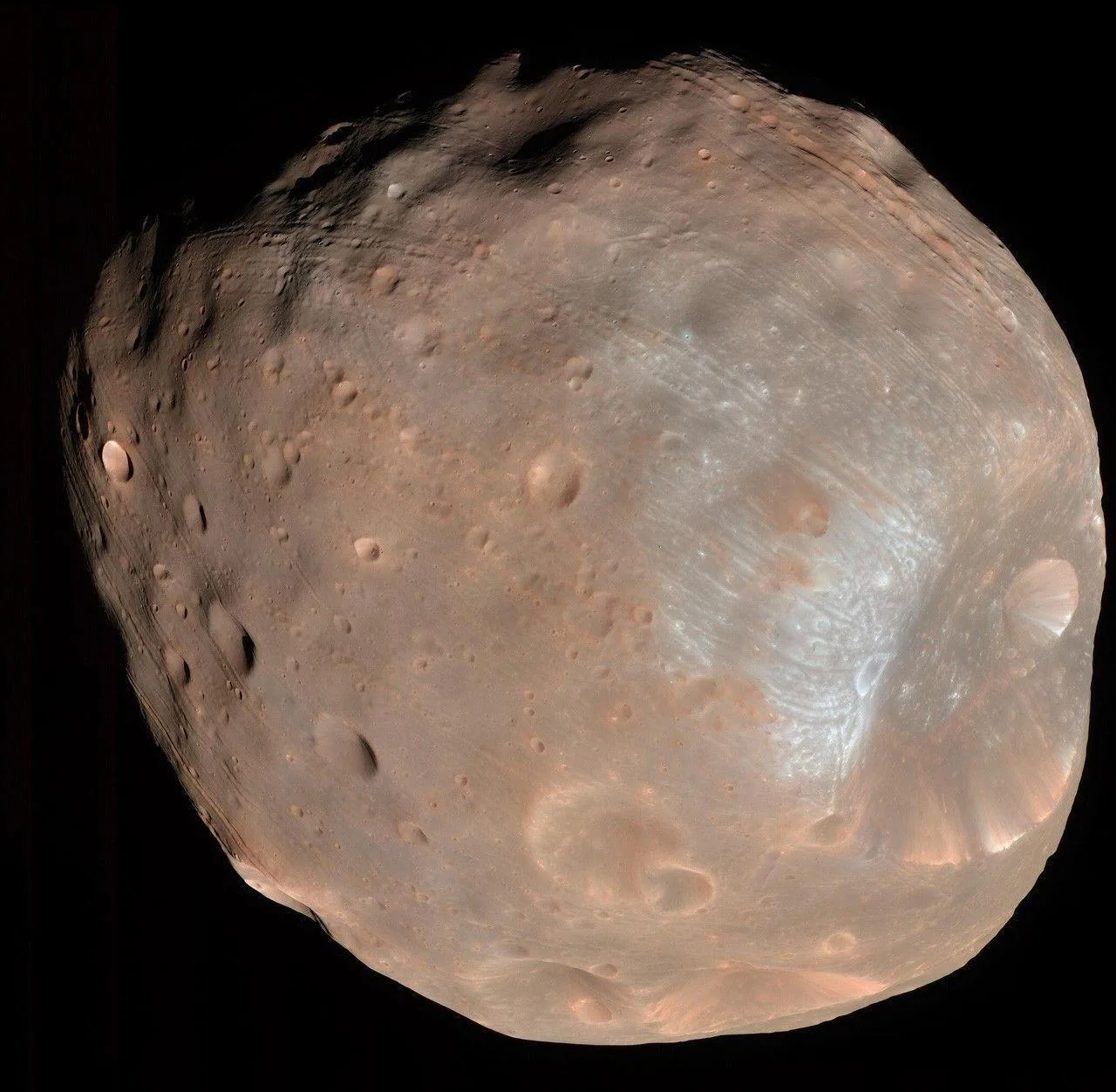
A Japanese spacecraft rocketed toward Mars on Tuesday on an unprecedented quest to explore its mysterious moons and bring back samples. What makes the endeavor most striking is that while NASA has successfully landed nine spacecraft on Mars over the past 50 years and China scored a 2021 touchdown, no one has ever ventured onto Phobos or its sidekick Deimos, let alone managed to fetch samples from Mars, let alone its moons.
The Japan Aerospace Exploration Agency launched the unmanned Martian Moons eXploration probe before dawn aboard a flagship H3 rocket from the Tanegashima Space Centre on Tanegashima Island. Five of the world’s space agencies joined forces for the five-year project, which carries a total cost of $578 million. Japan is investing $350 million, while international partners are contributing significantly: NASA is chipping in $87 million, the French Space Agency about $68 million, the German Space Agency about $56 million, and the European Space Agency some $17 million. Dignitaries including Australia's ambassador to Japan, Andrew Shearer, alongside French and German ambassadors and the deputy ambassador from the United States, traveled to the remote island to witness the liftoff.
That funding backs a 5-ton spacecraft designed to reach Mars by late next summer. Once there, it will sync up with the tight orbit of Phobos, the larger and closer of Mars's two potato-shaped moons. Measuring just 14 miles or 22 kilometers across, Phobos is named after the Greek word for fear, as the twin son of the god of war Ares. Russia stumbled in all three of its historical Phobos attempts, and Japan previously failed to place a spacecraft into orbit around the red planet, showing the treacherous nature of an undertaking where past wreckage litters the path.
How Will the Idefix Rover Navigate Extraordinary Low Gravity?
Before the main mothership attempts its own touchdown, the spacecraft will eject a French-German rover named Idefix, modeled after the white terrier in the Asterix comics. No bigger than a microwave oven, the four-wheeled robot will plop onto Phobos by itself, bouncing for several minutes before coming to a halt in the moon's extraordinarily low gravity. The rover is designed to right itself if it lands upside down, but French Space Agency representative Julien Baroukh warned that all bets are off if it sinks into soft soil or gets wedged between rocks. Once its solar panels deploy, the vehicle can no longer right itself, which is why it will crawl at a glacial 1 millimeter per second or 0.04 inches per second.
Idefix will spend 100 days serving as a scout for safety, helping Japanese flight controllers avoid powdery soil and rough terrain. That reconnaissance is vital because the mothership—a four-legged stationary lander—will descend to the surface in late 2028 or 2029 to gather samples. The lander will spend just two hours on the surface, drilling and vacuuming up at least 10 grams
of material, according to project details. Yaji Kentaro from the MMX project team explained the extreme engineering hurdles, noting that one reason why collecting samples from Phobos is extremely difficult is that its gravity is very weak.
The mission has a high emotional toll on the teams watching from Earth and mission control. There’s a lot of adrenaline and a lot of excitement and a lot of wow,
said NASA astrophysicist Tom Statler, who is involved with the project. Japan enters the fray with a distinct advantage, having already successfully completed two asteroid sample return missions.
Can Phobos Unlock the Origins of the Solar System and Water?
Scientists hope examining pieces of Phobos will explain how Mars's moons and potentially other moons formed. Two competing theories dominate: the giant impact hypothesis suggests the moons formed after a massive celestial body collided with Mars, while the capture hypothesis posits they are stray asteroids pulled in by Martian gravity. Resolving this debate will help researchers understand how a habitable environment for life might have arisen on terrestrial planets like Mercury, Venus, Earth, and Mars. Furthermore, the mission will investigate whether Phobos contains evidence of ancient life ejected from the surface of Mars, potentially solving long-standing mysteries regarding where water and organic matter necessary for life originated.
Beyond pure science, JAXA intends to assess whether Phobos can serve as a natural space station. Proving these round-trip capabilities is considered essential for crewed Mars exploration, helping shape future missions by astronauts, according to NASA acting planetary science director Lindsay Hays. It is a once-in-a-lifetime chance. We are part of the first sample return mission from the Martian system,
said German Space Agency rover chief Markus Grebenstein.
Who Are Japan's Rivals in the Martian Sample Race?
Japan is not alone in the race to bring home riches from the Martian system. NASA's Perseverance rover has been roaming Mars since 2021, collecting more than 30 sample tubes as the new champion for off-Earth driving. However, the return mission for those samples was effectively cancelled by the administration of US President Donald Trump following a congressional vote in January, leaving NASA debating alternative retrieval strategies. Meanwhile, China plans to launch its sample return mission to Mars in 2028, aiming to return Martian samples to Earth as early as 2031, putting Beijing and Tokyo in a tight neck-and-neck race.
If Japan's mission proceeds without major disruption, the mothership will study Mars's second moon, Deimos, during a series of flybys before leaving the Martian neighborhood in 2030. It will then hustle back to Earth for a 2031 sample delivery in the Australian desert. Australia will play an essential role in these final stages, as the re-entry capsule containing the sand, dust, and rock samples separates and lands in Woomera in remote South Australia, bringing an unprecedented interplanetary round trip to a close.
Japan's bold gamble rests on a delicate 100-day robotic scout and a treacherous two-hour drilling window, but if successful, the 2031 return in the Australian desert will rewrite our understanding of planetary formation.