SpaceX’s Starship returns to launch pad from orbit for first time
SpaceX achieved a historic milestone during its 15th test flight by catching the Starship upper stage with launch pad arms, while the booster exploded.
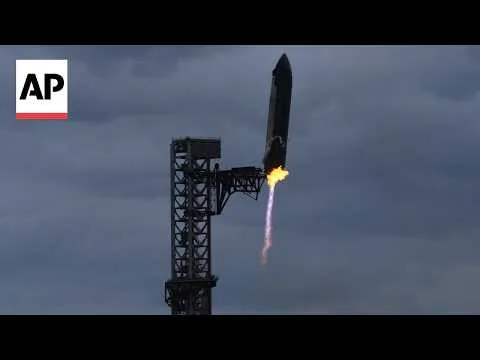
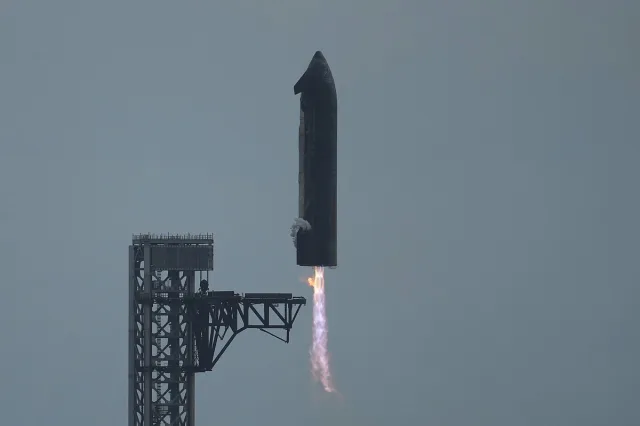
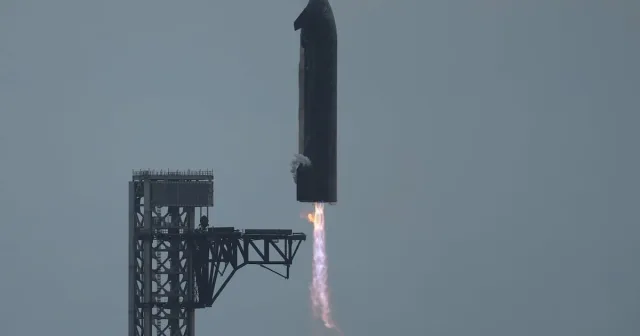
If you are watching the skies for the future of space travel, you just witnessed a major turning point. SpaceX’s stainless steel, bullet-shaped Starship descended through the atmosphere on Saturday and was caught in midair by giant mechanical arms at its Texas launch pad, 22 hours after lifting off on its 15th test flight.
The dramatic maneuver marked the first time a Starship returning from space has been snatched from the air by the tower's chopstick arms. While the upper-stage spacecraft triumphed after completing 14 laps around Earth and releasing 26 advanced Starlink satellites, the mission fell short of its grander ambitions when the first-stage Super Heavy booster experienced a low-fuel alarm and exploded over the Gulf of Mexico.
How the Historic Catch Unfolded and Why the Booster Failed
The megarocket blasted off late Friday afternoon from the Starbase site near the US-Mexican border. Standing 407 feet (124 meters) tall, the vehicle represents the world’s largest and most powerful rocket. The 171-foot (52-meter) upper-stage spacecraft separated neatly from its booster, soared 165 miles (265 kilometers) up, and streamed live views back to Earth via Starlink while circling the globe 14 times.
The return trip proved significantly more complex than recovering the lower booster. Because the upper stage flies much higher and faster, plummeting through intense atmospheric friction, catching it was what SpaceX spokesperson Dan Huot called the holy grail of spaceflight, plummeting through fire to be snatched out of the air by steel
during the landing webcast. SpaceX commentator Dan Huot shouted, Can you believe it?
while CEO Elon Musk later ascended the launch tower to record up-close video, reporting via X, Looks great.
Things did not go as smoothly for the lower stage. SpaceX’s Kate Tice explained that the booster’s engines stopped firing too soon on the way back down. The guidance, navigation and control system detected that the booster was out of position and automatically triggered a watery detour, while Musk noted the vehicle was slightly low on fuel. Debris from the explosion remained cordoned off by buoys in the Gulf of Mexico, and engineers are still investigating the exact cause.
What the Success Means for NASA, Artemis, and Future Refueling Hurdles
NASA is paying billions of dollars for Starship to land Artemis astronauts on the moon later this decade and help build a permanent lunar base. NASA Administrator Jared Isaacman praised the mission via X, writing, Making more believers by the day ... one step closer to (emojis of the moon and the US flag).
Musk’s ambitions stretch even further, encompassing a fleet of Starships to build a city on Mars and launch massive megaconstellations.
Despite Saturday’s victory, formidable hurdles remain before humans can board the craft. On deep-space missions, Starship cannot launch with full fuel tanks because it would be too heavy, meaning it must refuel at an orbital depot using tanker variants of the spacecraft. Outside experts have estimated that up to 22 tanker visits may be required per mission, while Musk has cited six to eight as a probable range. Furthermore, the spacecraft's engines run on liquid oxygen and liquid methane, requiring propellants to be kept extremely cold during rendezvous and off-Earth refueling.
SpaceX is also working to install a crew cabin and life-support system in Ship. According to NASA presentations from last month, the company is on target to finish building Cabin 1,
a full-scale ground prototype of Ship’s crew cabin, by the end of the year. Time is of the essence, as NASA is targeting Artemis IV for humanity’s first moon landing since the Apollo era, aiming for as soon as 2028. If SpaceX fails to ready Starship in time, NASA may go with another private lander — Blue Origin’s Blue Moon, which the agency also contracted for Artemis missions.
What to Check and Watch for Next
Space fans and industry observers have a packed schedule of milestones ahead as SpaceX works toward rapid reflight and its target of 10,000 Starship launches per year by 2030. SpaceX expects to begin launching Starships from Florida’s Kennedy Space Center within the next few months. That Florida site will serve as the starting point for NASA’s upcoming Artemis mission, which will skip the moon and remain in orbit around Earth for lunar lander practice, where four astronauts will attempt to dock their capsule with both Starship and Blue Origin’s Blue Moon.
For those tracking the program, keep a close eye on upcoming test flights for the first demonstration of orbital refueling, updates on the completion of the Cabin 1
prototype by the end of the year, and engineering findings regarding the Super Heavy booster guidance anomaly. The next benchmark for human spaceflight arrives as Artemis milestones approach toward the 2028 target.