Mary Peltola defeats incumbent Republican Dan Sullivan in Alaska Senate …
Mary Peltola has defeated incumbent Republican Senator Dan Sullivan in Alaska, becoming the first Democrat elected to the Senate in the state since 2008.
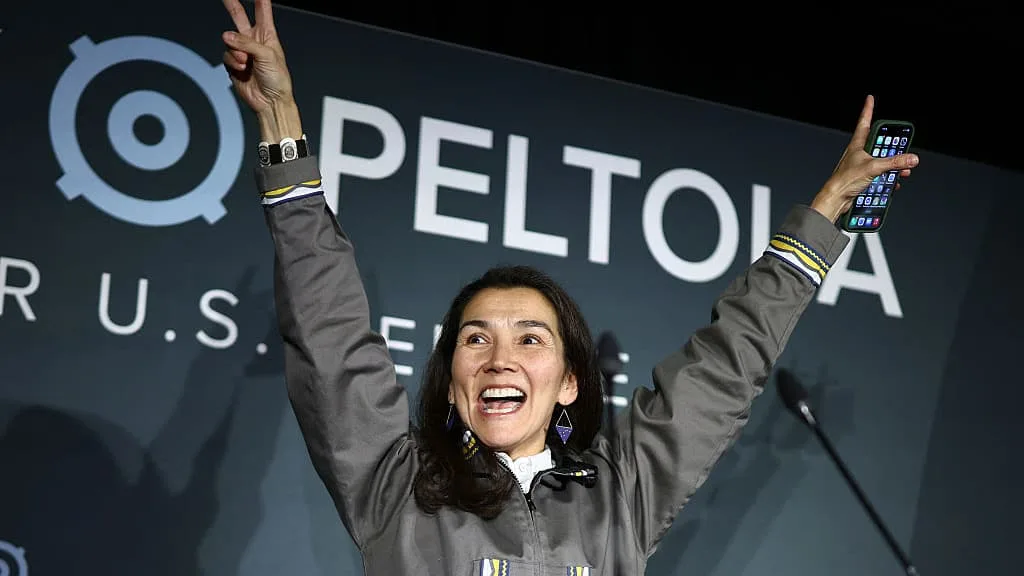
Democratic challenger Mary Peltola has defeated incumbent Republican Senator Dan S. Sullivan in Alaska, rounding out one of the tightest and most controversial races of the midterm elections and marking another notable GOP loss in what is typically a reliably red state.
The Associated Press called the race on Tuesday evening, two weeks after Election Day, after an update from Alaska’s Division of Elections put Peltola above 50% of the vote with 50.1% against Sullivan’s 45.8%. Peltola is the first Democrat elected to the Senate in Alaska since Mark Begich in 2008, overcoming a state where President Donald Trump won by 13 percentage points in the 2024 presidential election.
The outcome delivers Democrats a 56-44 majority after they flipped nine Republican-held seats to retake the chamber, marking the party's largest midterm gain in nearly 70 years.
How Peltola Toppled a Two-Term GOP Incumbent in Alaska
The Alaska race was the last U.S. Senate contest to be resolved in this year’s midterm elections, partly due to the razor-thin margin between the candidates and Alaska’s 15-day grace period after Election Day for mailed ballots to be returned and counted. Peltola, a Yup'ik Alaska Native who served one term in the House of Representatives from 2022 to 2025 as the first Alaska Native member of Congress, will now join Minnesota senator-elect Peggy Flanagan, a member of the White Earth band of Ojibwe, as the first two Native American women to serve in the U.S. Senate.
Her campaign tapped into Alaskans’ frustrations with high fuel prices and other costs, hitting especially hard in remote communities that rely on diesel for electricity and heat and are often only accessible by air or water. Peltola also hit out at Sullivan for continuing to support Trump’s war with Iran, which caused disruptions that led to record high diesel prices.
Adopting the slogan fish, family, freedom, Peltola cast herself as an advocate for expanding oil production in the state and addressing bycatch, the accidental fishing of unwanted species that some Alaskans blame for declining salmon runs. Alaska Native voters backed Peltola over Sullivan 2 to 1, while white voters split evenly.
From Juneau to Utqiagvik, the message from Alaskans is clear: the status quo in D.C. is not working for Alaska.
Mary Peltola, via The Guardian
She added in a statement, As a lifelong Alaskan who has dedicated my life to serving our state, there is no greater honor than having Alaskans’ support in our fight to take on corporate greed, lower costs, and put Alaska first. As our next United States Senator, I will stand up to anyone to take on the rigged system in DC and deliver results for Alaska’s working families.
Sullivan, a Marine Corps veteran elected to the Senate in 2014 who previously served as Alaska's attorney general, defended his record and pushed to bring data centers onto Alaska’s Air Force and joint military installations. Trump made a trip to the state in the month before the election in support of the incumbent, but voter angst over high prices and the Iran war created a powerful headwind. Trump’s job rating in Alaska went underwater, and two-thirds of voters said the GOP-controlled Congress had not done enough to put checks and balances on the presidency.
Did the Double Dan Sullivan Controversy Decide the Election?
The final stretch of the campaign was dominated by controversy over allegations that independent runner Dan J. Sullivan, a retired teacher from Petersburg, was a spoiler candidate intended to confuse Alaskans and draw votes away from the incumbent Republican Senator with the same first and last name. The New York Times reported on Oct. 28 that operatives aligned with Peltola had spent months recruiting candidates to peel votes from Senator Dan Sullivan. Peltola vehemently denied the claims, telling supporters in Juneau days before the election, I knew nothing about any other candidates on the ballot except for me and the incumbent.
Despite protests from Trump, who called for Peltola to be prosecuted, Republicans were unsuccessful in trying to remove the second Sullivan from the ballot, which Alaska's supreme court ruled in June should be allowed to appear. Alaska Governor Mike Dunleavy, a Republican, launched a probe into the matter to investigate what he alleged to be an organized effort to manipulate Alaska’s elections. The U.S. Justice Department also confirmed the existence of a criminal investigation, and FBI agents sent subpoenas to his campaign. The Trump administration filed an Oct. 22 lawsuit seeking to block certification of the race if the incumbent Republican lost. A federal judge on Nov. 1 dismissed the lawsuit. District Judge Sharon Gleason ruled, The United States provides no workable plan as to how it proposes to segregate ballots cast for Daniel J. Sullivan on Election Day and then conduct a court-ordered unspecified 'investigation' of those ballots in a manner that would preserve voter secrecy.
The Justice Department plans to appeal the dismissal.
On Election Day, Sen. Sullivan said people are disgusted by what has gone down in Alaska and alleged that America was witnessing the biggest election cheating scandal in the history of the state of Alaska. Peltola described the noise around the controversy as just another distraction, dismissing it as stuff to sell newspapers, stuff to get subscriptions. Ultimately, preliminary race results showed Peltola won a majority of first-place votes with 50.1% against Sullivan's 45.8%, while the other Sullivan received 1.7% and a third Republican, Gerald Heikes, received 2.1%. Peltola cleared the 50% threshold under Alaska's ranked-choice voting system, securing enough votes that no ranked-choice tabulation was needed.
What Does a 56-44 Democratic Senate Majority Mean for Washington?
Peltola's victory gives Democrats a 56-44 majority when the new Congress begins in January, marking the party’s largest advantage in the Senate in 16 years.
The gains continued a historical trend of midterm losses for the president’s party, as Democrats also reclaimed the House by picking up control of the chamber. In addition to Alaska, Democrats won races in conservative states including South Carolina, Texas, Kansas, and Mississippi.
With control of both chambers of Congress, Democrats are positioned to challenge President Donald Trump's agenda over his remaining term, setting up two years of possible deadlock between Capitol Hill and the White House. Trump accused Peltola of perpetrating such a terrible scheme regarding the ballot controversy and insisted that votes for Dan J. Sullivan and fourth candidate Gerald Heikes should be combined to declare the incumbent the winner.
What Comes Next in Alaska's Election Fallout?
As the legal and political battles over the election recede, attention turns to the formal seating of the new Congress on January 3, 2027. Before then, the U.S. Justice Department is moving forward with an appeal of the federal court's dismissal of its lawsuit attempting to block certification, while Governor Mike Dunleavy's state-level probe into the ballot recruitment allegations continues.
Observers will watch whether federal appellate courts take up the Justice Department's appeal and how state investigators handle inquiries into ballot composition efforts before the new Senate is sworn in on January 3, 2027.
Updated 1 time since publication; last update 18 November 2026, 08:07.