Spain Workers Launch First General Strike in 14 Years Over Housing Crisis
Spanish workers launched a 24-hour nationwide general strike over soaring housing costs and rental crises, disrupting transport and industry ahead of snap elections.
Spain Workers Launch First General Strike in 14 Years Over Housing Crisis
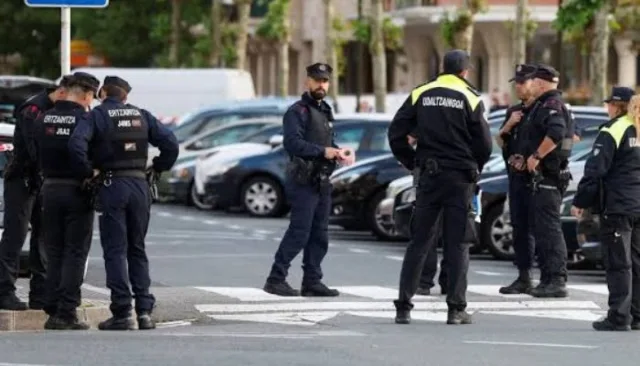
Transport and other public services across Spain faced serious disruption on Wednesday as workers launched the country's first general strike in 14 years. Called by the main unions over housing and the high cost of living, the nationwide stoppage took place little more than two weeks ahead of national elections on November 29. Demonstrations were planned for later in the day, with the biggest protests expected in Madrid and Barcelona.
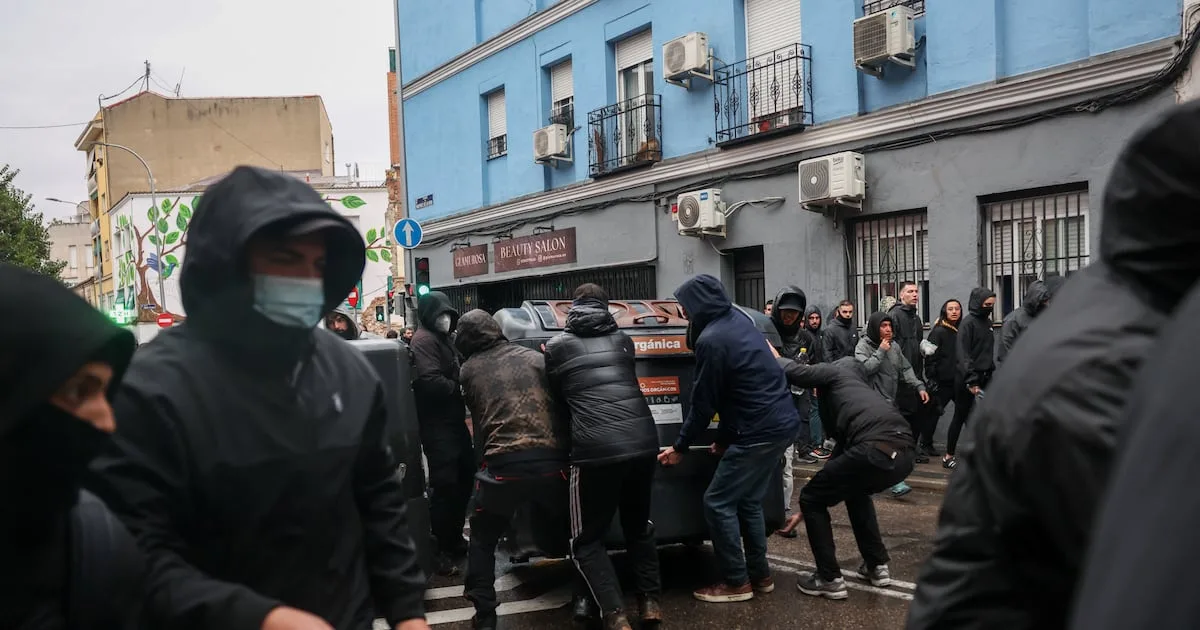
We won’t stop until we transform this country’s housing model from top to bottom so that houses are for living instead of being at the service of the rentier minority, said Alicia del Rio, spokesperson for the Madrid Tenants’ Union, as the strike began at midnight. Her words captured the anger that brought workers onto the streets. The 24-hour nationwide stoppage disrupted public transport, forced factories and shops to scale back or close entirely, and set up picket lines despite stormy weather.
The strike, jointly backed by Spain’s largest labour organisations UGT and CCOO alongside tenants’ associations, targets an affordability crisis driven by soaring rents and evictions. Properties are increasingly used as tourist lets, speculative assets, and short-term rentals, leaving the country facing a deficit of about 750,000 homes that the central bank warns will grow past a million by 2028. Government officials reported dozens of arrests for a variety of incidents across the country, and Spanish reports noted attacks on estate agency offices, while unions and police traded accusations regarding clashes at Madrid’s Mercamadrid wholesale market.
How the 24-Hour Stoppage Unfolded Across Sectors
The walkout began at midnight, immediately hitting transport networks, ports, and heavy industry across the eurozone’s fourth-largest economy. According to UGT and CCOO, early participation reached 90% at ports and in the automotive sector, with total stoppages reported at Volkswagen’s plant in Navarre and SEAT’s facility in Barcelona. Labour leaders also reported early turnout at 85% in the meat industry, 82% in waste collection, and 75% in the energy sector, though participation dipped to 38% in healthcare and social services and 35% in the postal service.
Pepe Álvarez, head of the UGT labour union, said the strike was a success with "massive" participation, while Unai Sordo of the CC OO union said turnout was "very significant."
Power usage in Spain fell by 7.5% during the early hours of Wednesday, according to data from operator Red Eléctrica. During the last general strike 14 years ago, equivalent consumption was down by more than 15%.
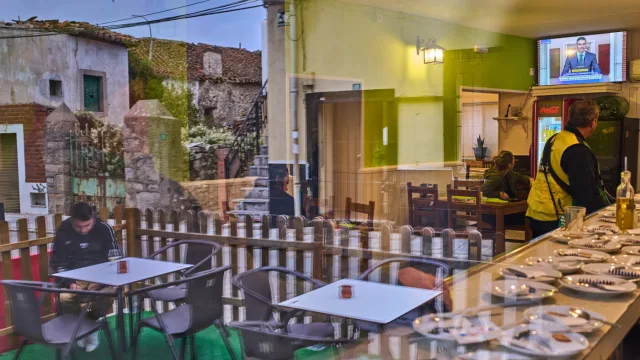
Schools and universities were reportedly closed or working at minimal capacity, compounding an ongoing strike by teachers in Madrid that began nearly a month ago to demand better working conditions. In Barcelona, workers set up roadblocks with burning tyres as public transport came to a near-standstill, while traffic was halted on several main roads in the main industrial hubs of Madrid and Catalonia. In Granada, housing campaigners targeted about 300 lockboxes belonging to short-term rentals, vandalising them with the message, No to capitalists, no to rent-seekers, no to their accomplices, as posted on social media. Meanwhile, the Spanish Confederation of Business Organisations (CEOE) disputed the unions' turnout figures, stating that participation was low and uneven depending on the areas and sectors involved.
What Sparked the Breaking Point in September and October?
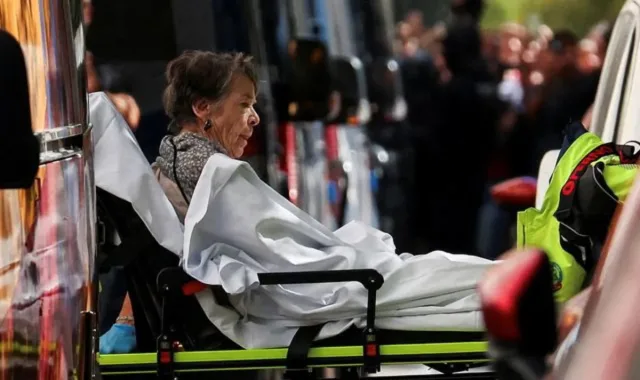
Long-simmering frustrations boiled over following the eviction and subsequent death of Maricarmen Abascal, an 87-year-old pensioner in Madrid who had lived in her home for more than seven decades. That tragedy ignited a wave of nationwide protests and encampments, including a five-week occupation of Madrid’s central Puerta del Sol square, where hundreds of tents were pitched, sparking imitations in other cities. Among those taking part in the general strike was Gonzalo Álvarez, 27, a sales worker who volunteers for a housing union protecting tenants. He noted that the eviction of Maricarmen Abascal at the end of September was the little fire that sparked the protest, adding that he knew the 87-year-old, who had faced a tripling of her rent under new landlords, and was deeply upset by her treatment.
Rental prices in the capital have soared in recent years. The monthly cost of a 50m sq apartment in Madrid was an average of €1,170 in October, according to property portal Idealista, while Spain's average gross monthly salary is about €2,460 (£2,056). That amounts to nearly half the average gross salary, well above the 30% level of affordability often recommended by housing experts and public institutions. By comparison, the Youth Council of Spain previously reported that an average rental price of €1,176 was equivalent to about 98.7% of a young person’s average monthly salary.
Gonzalo Álvarez rents a small, one-bedroom flat with his girlfriend, a dental hygienist, in the city's southern Arganzuela district. The couple pay €1,000 between them, meaning each spends about half of their salary on housing before other bills, leading him to state: It's absolutely crazy… with the food, with the electricity, with the water, with gas. He added that buying somewhere is completely impossible due to the insane amount of money required.
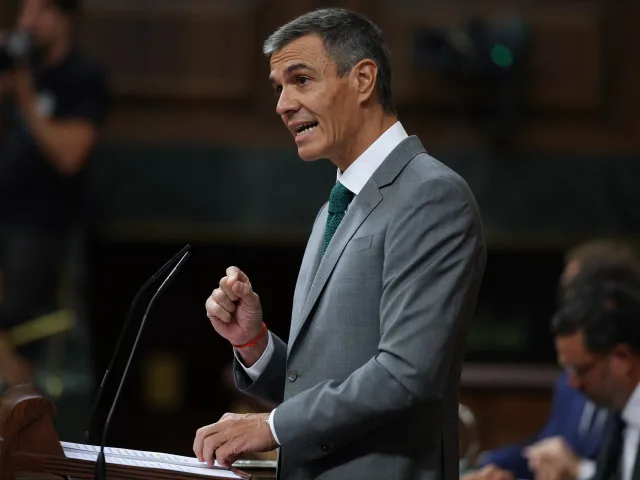
Parliament's rejection last month of government decrees aimed at curbing evictions and limiting rent pressures prompted Socialist Prime Minister Pedro Sánchez to call a snap general election for November 29. This is not a strike against anyone, but rather one in favour of a common response from all levels of government to a real problem, which is access to housing, Sánchez said in an interview published Sunday in the daily newspaper La Vanguardia. Not since 2012, under the conservative government of Mariano Rajoy, has Spain held general strikes. Unlike previous strikes that proved problematic for incumbent governments, Sánchez and his ministers have encouraged workers to down tools and demand affordable housing, with Sánchez writing on social media: Your eight-hour day. Your pension. Your public healthcare… These were collective conquests. He told Spanish TV this week: What is nonsense is to question the rights of workers to strike.
Why Are Political Tensions Flaring Ahead of November 29?
With polls suggesting the most likely outcome of the upcoming election is a right-wing coalition between the People’s Party (PP) and the far-right, anti-immigration Vox party, the strike has become a major political flashpoint. Sandra Mora of the Madrid Tenants’ Union told the broadcaster RNE: It’s extremely important to remind people that we, the workers – who are also renters or who also pay mortgages – are the ones with the power to halt production and bring the economy to a standstill. Unai Sordo told Cadena Ser radio that there is one issue that is dividing the country: the struggle to access housing.
Conservative leaders launched sharp criticisms against the labour action and accused the government of attempting to weaponise the strike for electoral gain. PP leader Alberto Núñez Feijóo called the general strike nonsense, labelling the unions mafia and trash, and arguing the strike was a serious mistake following a high-speed train collision last month in central Spain that killed 69 people. PP spokesman Miguel Tellado accused the government of exploiting the strike to warn voters against allowing a right-wing government to be formed. Isabel Díaz Ayuso, the right-wing leader of the Madrid region, accused striking workers of holding citizens hostage and told Spanish television that she complained to Feijóo, saying, Promise me this garbage will end.
Miguel Garrido, vice-president of the CEOE, criticised the strike and complained that businesses had little to do with the price of housing, stating: This is not a strike for labour-related reasons, but rather for political ones, and it is closely linked to the early calling of elections.
Where Do the Protests Go as Storms Approach?
Plans for massive afternoon protest marches faced an immediate threat from two incoming storms, Charles and Bruna, that led weather agency AEMET to issue alerts for 14 regions over strong winds, rough seas, and heavy rains. The severe weather compounds a turbulent week that also saw train drivers walk out on Tuesday to demand more investment in maintenance and safety, causing widespread travel disruption following Spain’s second fatal high-speed rail disaster this year.
As the country navigates overlapping crises in transportation, infrastructure, and housing, voters must decide whether the political landscape will shift on November 29. Whether the newly energised labour movement can force lasting structural reform on the housing market remains the central, unresolved question as the general election approaches.
Updated 1 time since publication; last update 14 November 2026, 05:27.