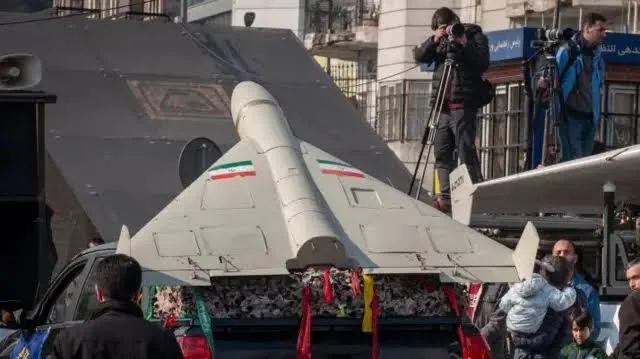
Two Italians killed in Iranian drone attack in Kuwait
An Iranian drone strike on a Kuwaiti military installation killed two Italian civilian defense technicians, drawing foreign contractors into the regional war.

Two families in Italy are mourning tonight after a drone strike on a military installation in Kuwait claimed the lives of two civilian defense technicians, underscoring how rapidly the wider regional war is dragging foreign contractors into its crossfire.
The deaths occurred on Thursday when an Iranian drone attack targeted an air-defence surveillance station where the two men were performing maintenance work on detection antennas for the Skyguard anti-aircraft defense system used by the Kuwaiti Armed Forces. Italian Foreign Minister Antonio Tajani told the Senate in Rome that both compatriots died following a powerful explosion at the site, which had been identified by Kuwaiti authorities as a vital facility. Prime Minister Giorgia Meloni posted on X that she was informed of the tragic deaths during the European Council meeting, expressing deep sorrow and extending heartfelt condolences to the victims' families on behalf of the government.
The casualty count initially reported by Kuwait's Ministry of Defence listed four wounded individuals struck by falling debris after the country's military detected and intercepted a number of hostile drones within its airspace. That initial tally was revised after the two Italian nationals succumbed to their injuries in the hospital. Two other individuals were injured in the same blast: a Pakistani national and a captain in the Kuwaiti army, according to statements from both Italian and Kuwaiti officials. Al Jazeera reported that the attack unfolded while the Kuwaiti National Guard and military were hosting a visiting Italian delegation, which included the commander general of the Italian Carabinieri, Lieutenant-General Salvatore Lungo, and the Italian ambassador to Kuwait.
The geopolitical architecture of the Gulf is cracking under the weight of these escalations, leaving host nations like Kuwait stranded between Washington and Tehran. The conflict itself began in late February when United States and Israeli forces launched military strikes against Iran. Tehran responded by firing missiles and drones at Israel as well as Gulf Arab states that host American military personnel and assets. Kuwait maintains close security ties with the United States and hosts critical infrastructure, including Camp Arifjan. Tehran has consistently accused these host nations of facilitating military operations against Iran, setting the stage for retaliatory strikes even as Kuwait insists it has no desire to be drawn into the war.
That raises the central question: Are foreign civilian contractors in the Gulf now deliberate targets in a war of attrition, or tragic collateral damage in automated air defenses? The distinction matters immensely for European defense firms operating in volatile zones. On one side, the sequence of events points to a deliberate campaign by Iran to pressure Gulf states into curtailing their cooperation with Washington. The Gulf Cooperation Council, through Secretary-General Jasem Mohamed Albudaiwi, condemned the brutal attack in unison, warning that targeting vital facilities and endangering civilians constitutes a dangerous escalation. European Commission President Ursula von der Leyen echoed this alarm on social media, writing that the bloc must step up pressure on Iran to end unacceptable attacks against neighbors and partners, calling Gulf security a security issue for Europe as a whole.
On the other side stands a total denial from Tehran. Iranian military spokesperson Sardar Shekarchi dismissed the accusations entirely through state media, asserting that no offensive or military operations had been conducted by Iranian forces in the region. Tehran characterized the accusations as a false-flag cover used by American forces and the Zionist regime to increase regional insecurity. Furthermore, Resul Serdar, reporting for Al Jazeera from Tehran, noted a deliberate policy shift among Iranian officials who argue that the status quo of no war, no peace cannot endure indefinitely, prompting new military options designed to break that deadlock.
| Official Body | Reported Casualties | Attributed Cause |
|---|---|---|
| Kuwait Ministry of Defence | 2 dead, 2 injured | Falling shrapnel from hostile Iranian drones targeting a vital site |
| Italy Foreign Ministry | 2 dead (Rheinmetall Italia technicians) | Powerful explosion from a drone attack at an air-defense surveillance station |
| Iran Military Spokesperson | None acknowledged | No offensive operations conducted; accusations described as false flags |
How did German defense giant Rheinmetall find its workers on the front lines of a Middle East standoff? The victims were employed by Rheinmetall Italia, the Italian subsidiary of the German defence group, tasked with maintaining sophisticated air-defense hardware purchased by foreign sovereign militaries. When a nation buys advanced European military electronics, the manufacturer's civilian technicians often deploy directly to local bases to calibrate and service the equipment. Thursday's tragedy marks the second reported Iranian attack on the U.S.-allied Gulf state this month, following an overnight drone strike last week on an airbase hosting American forces that broke a two-month lull in Kuwait.
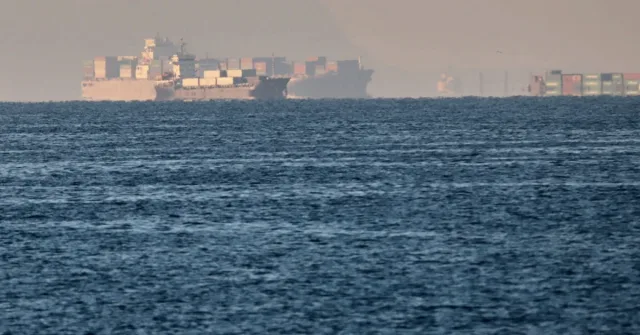
The strike in Kuwait did not occur in a vacuum, arriving amid a synchronized 24-hour surge in maritime and regional attacks. ABC News Australia reported that two commercial tankers were struck in the Strait of Hormuz, with the United Kingdom Maritime Trade Operations confirming one hit east of Oman on Wednesday afternoon and a second 93 kilometres west of Dubai early Thursday. Iran's Revolutionary Guard Corps claimed both tankers were transiting without authorization and caught fire after striking naval mines. Simultaneously, further south in the ongoing civil war, Yemen's Iran-aligned Houthi rebels launched ballistic missiles toward Riyadh—intercepted by the Saudi-led coalition—while also striking major Saudi energy installations, including the Ras Tanura refinery and a facility in Jazan.
That wider theater of conflict suggests that the rules protecting non-combatant technical specialists in allied nations have dissolved. Kuwaiti authorities stated that their armed forces will maintain readiness to protect national sovereignty, but the presence of foreign contractors at radar and surveillance hubs makes them acutely vulnerable to automated retaliation. For corporate boards in Rome, Berlin, and across Europe, the cost of servicing defense exports to the Gulf has suddenly turned fatal.
Readers and investors watching the region must monitor whether European governments enact mandatory evacuation orders for civilian defense contractors stationed across the Gulf monarchies. With oil prices near four-year highs, trade through the Strait of Hormuz heavily disrupted, and regional air defenses firing daily, the margin for error has evaporated. Foreign Minister Antonio Tajani and Prime Minister Giorgia Meloni face intense domestic pressure in Rome to account for the safety of remaining personnel as European capitals weigh Ursula von der Leyen's calls for heightened diplomatic and economic pressure on Tehran before another maintenance shift turns into a frontline casualty.