Tata Trusts to move Bombay High Court against Chandrasekaran's reappoint…
Tata Trusts is challenging N. Chandrasekaran's reappointment as Tata Sons chairman in the Bombay High Court, citing violations of voting rules under Article 121.
Why Are Tata Trusts Suing Tata Sons Over N. Chandrasekaran's Reappointment?
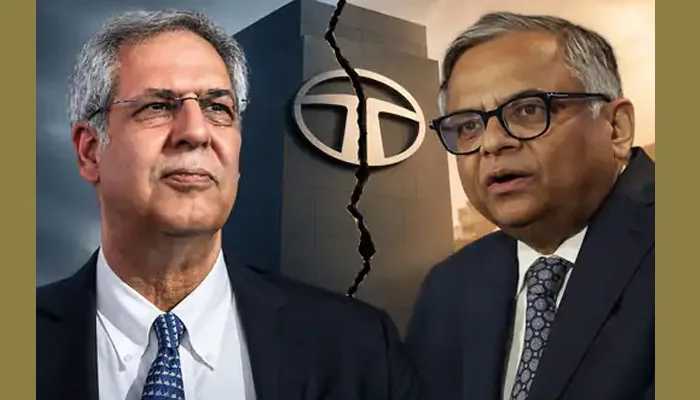
Tata Trusts has approached the Bombay High Court to challenge the September 17, 2026, board decision that reappointed N. Chandrasekaran as Chairman of Tata Sons for a second five-year term. The legal challenge was filed on Thursday, November 26, 2026, according to a PTI report. The Sir Dorabji Tata Trust (SDTT) and the R.D. Tata Trust (RDTT)—which hold around 66 per cent of Tata Sons—have filed separate suits against Tata Sons and six of its directors, seeking total damages of Rs 65 crore alongside an 18 per cent annual interest rate. Specifically, the Sir Dorabji Tata Trust claimed Rs 50 crore, while the R.D. Tata Trust sought Rs 15 crore.
At the heart of the dispute is Article 121 of Tata Sons' Articles of Association. The trusts argue that Chandrasekaran's reappointment was invalid because it lacked the required affirmative support from a majority of directors nominated by Tata Trusts. During the September 17 meeting, Noel Tata voted against the reappointment, while Venu Srinivasan supported it. Independent director Harish Manwani, who chaired the proceedings, exercised a casting vote in favour of the resolution. The trusts maintain that a casting vote could not override the affirmative voting requirement under Article 121, leaving the resolution with no legal effect.
This move marks an extraordinary escalation in governance battles at India's largest conglomerate. When a controlling shareholder holding roughly two-thirds of an unlisted holding company takes the operating board to court over a leadership contract, it shatters the image of quiet consensus that traditionally governed the Tata group. The litigation exposes deep structural ambiguities in how special voting rights interact with chairman casting votes under corporate articles.
What Led to This Legal Showdown?
The decision to approach the judiciary followed weeks of unanswered communications. After issuing a statement on September 20, 2026, maintaining that the reappointment resolution had no legal effect, the trusts sent multiple communications to Tata Sons. Receiving no satisfactory replies, the Sir Dorabji Tata Trust and the Ratan Tata Trust passed circular resolutions on November 25, 2026, authorising legal proceedings.
Tensions also deepened following an October 26, 2026, letter from Noel Tata to Tata Sons company secretary Suprakash Mukhopadhyay. In the letter, Noel questioned whether the board had been adequately informed about commercial dealings between TVS Motor Company and Hanno One Warehousing, an entity linked to Chandrasekaran's wife Lalitha and son Pranav.
That leaves the boardroom deeply fractured ahead of a critical juncture. The immediate relief sought by the trusts in their court filing is to prevent the chairman from exercising his casting vote if a split in opinion occurs among nominee directors during the upcoming November 30 meeting.
How Do the Conflicting Boardroom Rules Work?
The fundamental disagreement rests on a collision between ordinary majority rules and special protective clauses. Tata Sons argued that Chandrasekaran's reappointment for another five-year term was validly approved by a majority vote of the board on September 17. Yet the trusts contend that the Articles of Association do not leave decisions to a simple head count of directors.
According to the trusts' September statement, the governing articles dictate that no decision can be taken unless it secures the affirmative support of at least a majority of the directors nominated by Tata Trusts. With Noel Tata opposing the extension and Venu Srinivasan backing it, that required majority was absent, making the use of a casting vote by the meeting's chair legally impermissible in the view of the controlling shareholders.
This collision creates severe operational friction. When a holding company's public face and executive leadership are directly challenged by the philanthropic trusts that own a commanding majority of its equity, corporate planning and subsidiary oversight face immediate paralysis.
What Are the Next Steps in Court and the Boardroom?
The legal battle moves swiftly to the bench on Friday, November 27, 2026, when the Bombay High Court is scheduled to hear the pleas brought forward by Tata Trusts. The plaintiffs are asking the court to invalidate the board decision, restrain the company from implementing the reappointment, and block the use of the casting vote on November 30.
Investors and market watchers will monitor whether the judiciary grants an interim injunction halting the implementation of the September 17 resolution. Meanwhile, the relationship between Noel Tata, who chairs Tata Trusts, and the wider Tata Sons director board faces an unprecedented stress test as the November 30 meeting approaches.
Response from Tata Sons and its six named directors regarding the specific damage claims and the allegations of violating Article 121 remains pending as the litigation proceeds to Friday's hearing.