WhatsApp begins global rollout of message scheduling feature
WhatsApp has officially launched its global message scheduling feature, enabling users to queue texts, photos, and videos up to 14 days in advance.
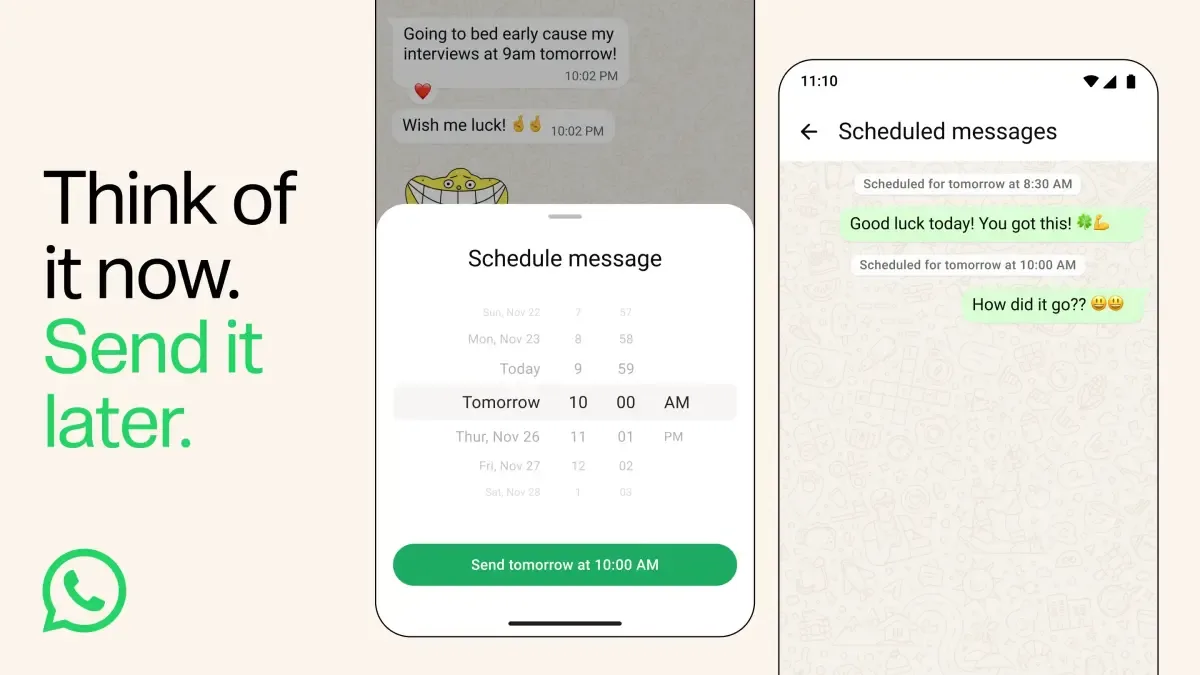
WhatsApp users around the world can finally line up text, photos, and videos to send automatically at a future hour without staying awake or watching the clock. Meta Platforms introduced the capability following extensive beta tests that began with Android beta users in October and expanded to iOS a few weeks afterward. For ordinary users, the update eliminates the need to remember midnight birthday greetings or risk disturbing contacts with late-night correspondence.
The feature allows messages to be delivered anywhere from 10 minutes to 14 days after composition in both individual and group chats. To queue a message, users simply press and hold the send button, then pick the exact date and time for arrival. The platform also permits up to 30 scheduled messages per chat, giving individuals ample room to organize upcoming digital correspondence.
Global rollout details and competitive catching up
The update arrives as Meta moves to close feature gaps with competing communication apps. Telegram introduced the feature in 2019, while Signal followed in 2023. Other platforms including Instagram, Microsoft Outlook, and Gmail have long offered similar timing controls. That leaves WhatsApp, operating across more than 180 countries, playing catch-up in functional convenience even as it defends its massive user numbers. India is WhatsApp’s largest market, with more than 500 million users, out of its global user base of over 3 billion.
The announcement comes days after Kunal Shah, the platform’s recently appointed CEO, revealed his plans to simplify the app experience, introduce more AI powered features and expand WhatsApp’s fintech ambitions. This message scheduling rollout also follows other 2026 updates, such as the ability to chat using usernames instead of phone numbers and browser based Web Calling.
Sender controls and privacy protections
For senders and recipients alike, the mechanics of scheduled texts are designed for seamless integration. Recipients will see scheduled items look just like any other message, without any notification revealing that the text was prepared in advance. Senders maintain a dedicated view to inspect all upcoming queued items, allowing them to delete them if they change their mind. Furthermore, delivery does not depend on the sender's device remaining active. Scheduled messages will deploy on time even if the sender's phone is switched off or out of battery.
Privacy advocates examining the update will find familiar protections in place. Like all personal correspondence on the service, scheduled messages remain protected by end-to-end encryption. That means no outside party can read the contents while they wait in a queued state. However, the initial announcement made no mention of support for documents or voice notes, though.
Because the feature is rolling out gradually over the coming weeks, users who do not immediately see the option on their devices will need to ensure their app is updated and wait for the global deployment to reach their accounts.