US, Russia and Ukraine begin trilateral peace talks in Abu Dhabi
Delegations from the United States, Russia, and Ukraine have convened in Abu Dhabi for their first direct trilateral talks since February, aiming to bridge stark differences over territorial claims and security guarantees.
US, Russia and Ukraine begin trilateral peace talks in Abu Dhabi
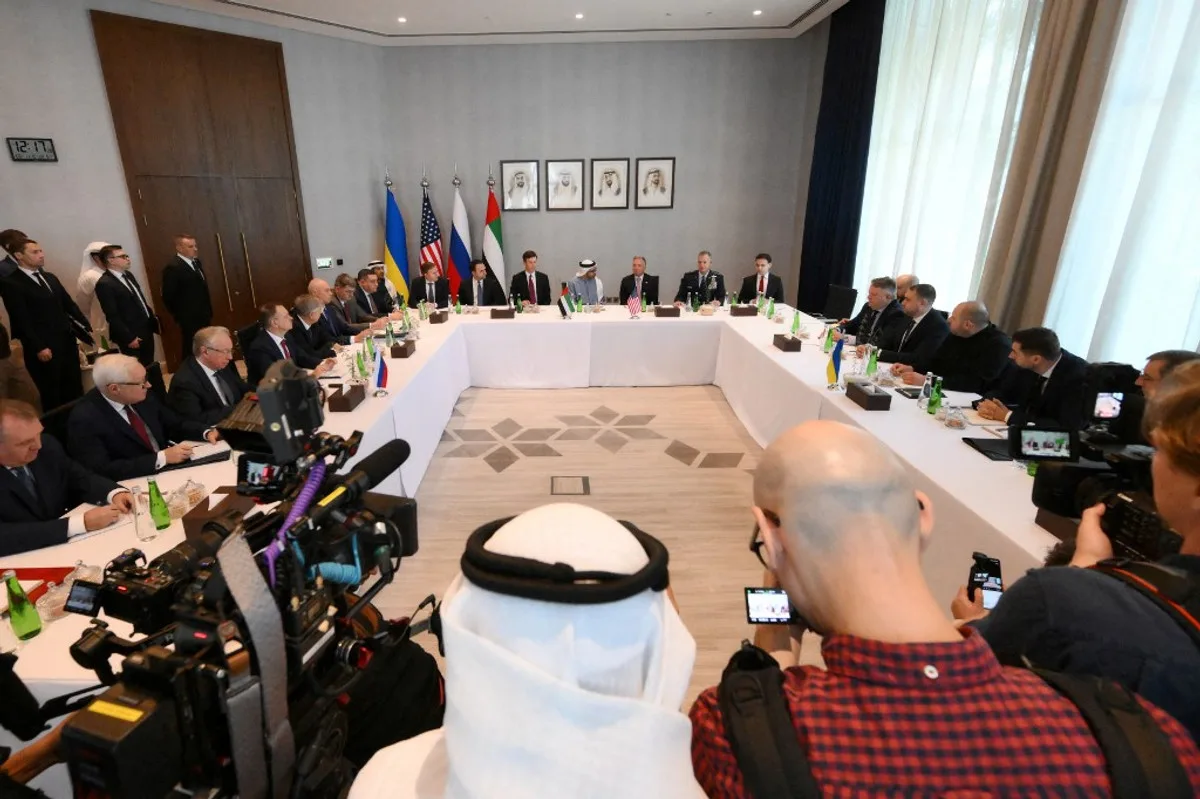
Delegations from the United States, Russia, and Ukraine gathered on Tuesday in Abu Dhabi, the capital of the United Arab Emirates, for the first direct three-way meeting since February. The sessions began at 9:50 a.m. Senior US officials told reporters in Washington on November 10 that Now we're in a position where there is a shot at trying to make serious progress to end the war.
Mediated by Washington, the two-day session follows a nine-month pause in negotiations and aims to bridge stark differences over territorial claims, future security guarantees, and an eventual cessation of hostilities. While US officials describe a real shot at a settlement, the push comes amid intense skepticism from European capitals and unyielding military demands from the front lines.
That assessment marks the opening of high-stakes trilateral peace negotiations in Abu Dhabi, a fresh test of diplomacy aimed at exploring ways to end the war and advancing efforts toward a political settlement. The talks form part of broader international efforts to bridge differences between Moscow and Kyiv, halt the military confrontation, and pave the way for a negotiated resolution.
Delegations and Delegated Roles in the UAE
The negotiations in Abu Dhabi feature senior diplomatic and military figures from all three participating nations, supported by a parallel track of European and international observers. The US delegation is led by Special Envoy Steve Witkoff and Jared Kushner, US President Donald Trump’s son-in-law and special envoy. Kushner stated that efforts were focused on reaching a negotiated solution that would establish lasting peace between Russia and Ukraine, adding that the talks were being held within a framework intended to foster a more stable security environment in Europe while creating the conditions needed to safeguard Ukraine’s sovereignty and security.
Ukraine’s delegation arrived on November 10, headed by Rustem Umerov, head of Ukraine’s Foreign Intelligence Service. The team also includes Kyrylo Budanov, head of the Presidential Office, along with Serhiy Kyslytsya, First Deputy Head of the Presidential Office, Vadym Skibitsky, Deputy Chief of the Defense Ministry’s Main Intelligence Directorate, and Davyd Arakhamia, leader of the Servant of the People parliamentary faction. Russia’s team is led by Vladimir Medinsky, an aide to Russian President Vladimir Putin who previously headed Moscow's delegations in Istanbul in 2022 and in Geneva in February. The Russian delegation also includes Deputy Foreign Ministers Sergei Ryabkov and Mikhail Galuzin, and military intelligence chief Igor Kostyukov.
Core Issues on the Table and Sharp Disagreements
The discussions center on four primary areas: ending hostilities, establishing robust post-war security guarantees, developing an economic recovery plan for Ukraine, and addressing humanitarian issues. However, the belligerents remain deeply divided over fundamental terms. Russian President Vladimir Putin demands that Ukraine withdraw its troops from the four regions of Donetsk, Luhansk, Zaporizhzhia, and Kherson, which Moscow annexed in September 2022 without fully capturing. Putin also insists that Kyiv abandon its bid to join NATO, accept strict limits on its armed forces, and drop restrictions on the Russian language and the Moscow-affiliated Orthodox Church. Furthermore, Moscow rejects an immediate cease-fire, arguing it would simply allow Ukrainian forces to rearm.
Zelenskyy has ruled out surrendering territory that Russian forces have not managed to seize on the battlefield. Kyiv demands an unconditional cease-fire as an initial step and insists on maintaining its military size and Western partnerships. US officials said Washington has asked Moscow to accept security guarantees for Ukraine modeled on NATO's Articles 4 and 5, which provide for mutual consultations and collective defense. At the same time, a separate workstream led by the World Bank is examining postwar economic reforms, and TASS reported that a source indicated the United States may help rebuild Ukraine if a successful settlement is reached.
Parallel European Consultations and Wider Regional Concerns
Ahead of the trilateral session, Ukrainian negotiators met separately with US envoys and representatives from Britain, France, Germany, Italy, NATO, and the European Commission. The Élysée Palace announced that representatives from France, the United Kingdom, Italy, Germany, and NATO were participating in the Abu Dhabi talks. These European powers are participating in auxiliary consultations regarding postwar security architecture, but they do not take part directly in the trilateral negotiations between Kyiv, Moscow, and Washington. Moscow remains distrustful of European governments and blames them for derailing an earlier agreement negotiated in Istanbul.
Representatives of the European Union, France, Germany, Italy, the United Kingdom, Ukraine, the United States, and NATO emphasized during the meeting that any future peace agreements must respect Ukraine’s sovereignty and territorial integrity, as well as its right to make decisions independently, and provide reliable security guarantees. The European Commission noted that the shared goal is to create a practical and complementary security framework that will strengthen Ukraine’s long-term security and build the trust necessary to achieve a negotiated settlement. The participants reaffirmed their shared commitment to building a robust post-war European security architecture and related arrangements, and clearly stated that a strong NATO will remain a key element of collective defense in the Euro-Atlantic area.
Meanwhile, Deputy Minister Ryabkov stated at a roundtable discussion titled Militarisation of Europe: What Next?
held under the auspices of the Organisation for Security and Co-operation in Europe (OSCE), that Russia has no intention, plans or reason to attack European countries. Ryabkov said Western countries were discussing the possibility of a military conflict in Europe as if it were almost predetermined and inevitable, adding that Moscow poses no threat to anyone and would be forced to respond if subjected to aggression. Ryabkov also asserted that some European governments had no genuine intention of ending the conflict, and that while it could have been resolved while taking into account the legitimate interests of all parties, the West pushed Ukraine to abandon reasonable solutions and choose war. On the future of Russia-Europe relations, Ryabkov said Moscow believes European countries would sooner or later be willing to engage in dialogue with Russia on the basis of equality, indivisible security, pragmatism and mutual consideration of interests.
The diplomatic push coincides with continuing violence on the ground. Humanitarian concerns also loom large as Russian strikes target energy infrastructure ahead of winter, threatening millions of people with prolonged power and water outages. At a November 9 UN Security Council meeting, UN Assistant Secretary-General for Humanitarian Affairs Mohamed Yahya cautioned that emergency assistance cannot replace an electricity grid repeatedly destroyed by attacks.
Now we're in a position where there is a shot at trying to make serious progress to end the war
senior US officials, via Washington
The participants emphasized that any future agreements must respect Ukraine’s sovereignty, territorial integrity, and independence in decision-making, as well as provide reliable security guarantees for Ukraine
European Commission, via ua.news
Russia poses no threat to anyone and has no plans to attack any country in the near, medium or long term
Sergei Ryabkov, via Russian Ministry of Foreign Affairs release
Prospects for the Two-Day Session
Neither Kyiv nor Washington expects a comprehensive final settlement to emerge from the two-day meetings in the UAE. Arakhamia noted that simply restarting negotiations after a nine-month hiatus is an achievement in itself, with Ukraine holding greater expectations for subsequent sessions. US officials maintain that territorial arrangements and postwar security guarantees must be negotiated in parallel and finalized together, noting that any final US security guarantee would ultimately depend on decisions by Trump and Zelenskyy.
As the talks proceed behind closed doors in Abu Dhabi, the discussions continue to address how to build upon existing European security institutions and agreements following the conclusion of the war.
Updated 1 time since publication; last update 10 November 2026, 15:42.