Two Firefighters Dead After Helicopters Collide in Greece Wildfires
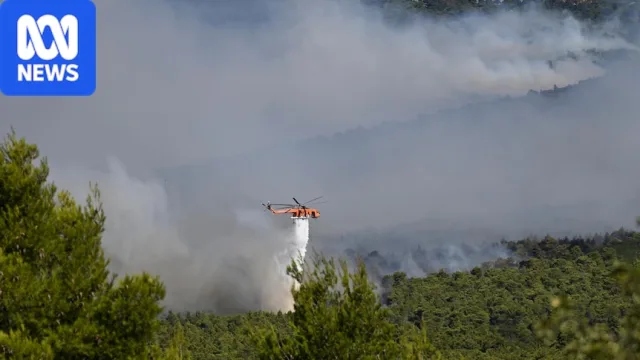
Two firefighting helicopters collided midair while battling a wildfire near Athens, resulting in two fatalities and two injuries among the crew.
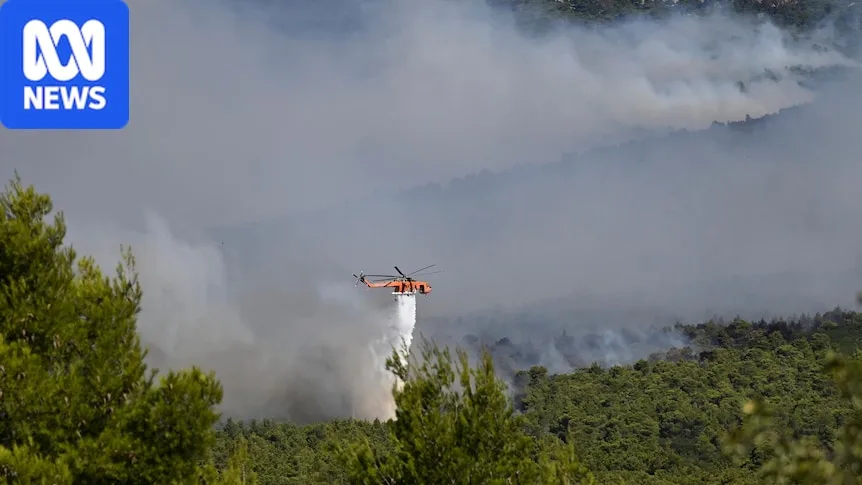
Two firefighters were killed and two others injured when two firefighting helicopters collided midair while battling a wildfire near Athens, Greece, on Sunday, August 2, 2026. The crash occurred in the Psatha area of Boeotia, northwest of the Greek capital, as strong winds fueled blazes that have engulfed multiple regions across the country. The incident underscores the escalating dangers of Europe’s wildfire crisis, which has already displaced hundreds of thousands and claimed dozens of lives this summer.
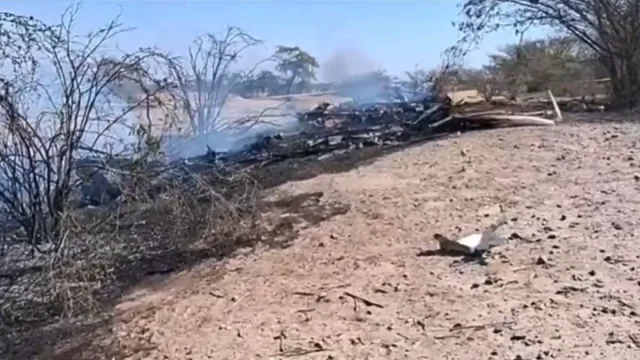
The collision involved two Bell helicopters operating over a wildfire west of Athens, each carrying a two-person crew. Officials confirmed that a Greek and a Danish national died in the crash, while a Greek and a British national survived. The surviving crew members were recovered from the wreckage, though details about their injuries remained undisclosed. The crash site, captured in video footage, showed one helicopter spiraling into the ground in flames, while the other managed to fly away. The Hellenic Fire Service, Greece’s national firefighting authority, stated the aircraft were leased for the operation, though the owning company was not immediately identified.
The wildfire near Psatha, which began on Friday, had already forced evacuations in western Attica, threatening communities and an industrial zone outside Megara. Violent gusts of up to 130 kilometers per hour, combined with drought conditions, hampered firefighting efforts, preventing aircraft from accessing water sources. Over 500 firefighters were deployed across Greece, with additional crews from foreign nations assisting in the operation. Prime Minister Kyriakos Mitsotakis expressed sorrow over the crash, calling it a “tragic accident” and pledging state support for affected families.
The collision occurred amid a broader wildfire emergency gripping Europe. In France, the Gironde megafire—burning across 420 square kilometers—remained contained but still active, having forced 224,000 people to flee. In Spain, major fires that had previously advanced rapidly were no longer spreading, though the season has already claimed at least 13 lives. The wildfires have been exacerbated by record-breaking heat and prolonged drought, with scientists linking the extreme fire weather to human-caused climate change. A rapid analysis by World Weather Attribution found that such conditions were at least twice as likely due to climate factors.
Greece’s wildfires have added to the continent’s growing crisis. The Psatha blaze, which has scorched 40 to 50 square kilometers, follows earlier incidents that claimed three firefighters in the past week. On Crete and the Peloponnese, two firefighters died earlier in the week, while a third was killed in the Peloponnese. The 2018 Mati wildfire, which killed 104 people, remains a grim reference point for the region’s vulnerability. Local farmers described the destruction as “total,” with once-pristine landscapes reduced to ash.
Emergency services across Europe have been stretched thin. In France, nearly 3,000 firefighters and 23 aircraft were deployed against the Gironde fire, while Spain mobilized over 20 ground and aerial units to guard against flare-ups. In Greece, authorities ordered evacuations in Kandili, Agia Skepi, and Toutouli, with crews particularly focused on protecting Porto Germeno, a coastal community on the Gulf of Corinth. The fire’s spread toward Megara, a town of 30,000 residents, heightened concerns about industrial and residential areas being at risk.
Climate data highlights the accelerating threat. Europe, the world’s fastest-warming continent, has seen temperatures rise more than twice the global average since the 1980s. The 2025 fire season was the worst on record, with over 10,000 square kilometers burned. Over four decades, wildfires have caused nearly 800 deaths across the region. As the 2026 season unfolds, officials warn that the combination of heat, wind, and dry vegetation will continue to challenge firefighting efforts.
With wind speeds expected to ease slightly on Monday, Greek firefighters hoped to gain control of the Psatha blaze. However, the broader wildfire emergency shows no signs of abating. In France, the Gironde fire remains a focal point, while Spain’s Fermoselle fire continues to require vigilance. For Greece, the helicopter collision serves as a stark reminder of the risks faced by those on the front lines, even as the nation grapples with a summer of unprecedented destruction.