Moscow bombing: Woman suspect carried homemade bomb, stopped by guard
An explosion outside a central Moscow restaurant killed three people and injured 21 after a security guard intercepted a woman carrying a homemade bomb.
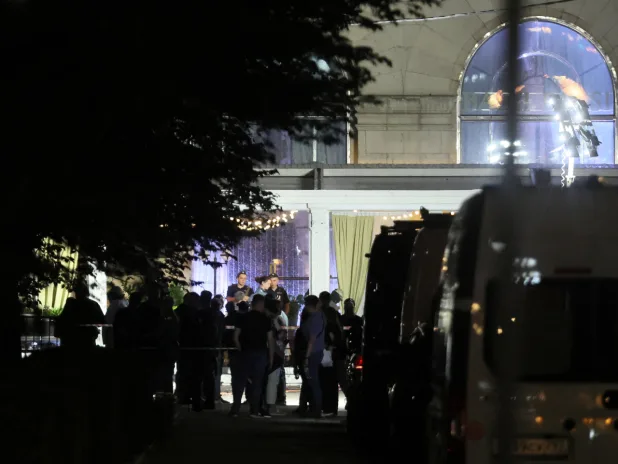
A homemade bomb detonated outside an upscale restaurant in central Moscow on Saturday evening, killing at least three people and injuring 21 others, according to multiple reports. The explosion occurred near the Balzi Rossi restaurant on Kudrinskaya Square, a site associated with one of Moscow’s Stalin-era skyscrapers, around 8 p.m. local time. Russian state media and independent outlets described the incident as an attempted attack by an unidentified woman who was stopped by a security guard before the device exploded.
The woman, described by Russian news agency Ria Novosti as attempting to smuggle an explosive device into the establishment, was killed when the bomb detonated near the restaurant’s entrance. A security guard and a patron also died in the blast, according to the National Anti-Terrorism Committee. The Moscow Investigative Committee confirmed the attack is under investigation, though no suspect has been named. Authorities have not yet disclosed the identities of the victims or the bomb’s origin.
Witness accounts and preliminary reports suggest the device was a makeshift explosive. The restaurant’s website indicated it had been closed for a private event on the night of the attack, though this claim was not independently verified. Russian media outlets, including Kommersant, cited unnamed sources suggesting the bomb may have been detonated remotely by someone other than the woman carrying it. This theory, however, remains unconfirmed, as authorities have not addressed the possibility of external coordination.
Security forces swiftly cordoned off the area following the explosion, with armed officers conducting a thorough investigation. The blast caused significant damage to the restaurant’s entrance and surrounding infrastructure. Initial reports from Russian state media cited three deaths and 15 injuries, but subsequent updates raised the injury count to 21. The exact number of casualties and the nature of the explosives remain under scrutiny.
The attack has raised concerns about security in Moscow, particularly in high-profile locations. Russia’s Anti-Terrorism Committee emphasized the homemade nature of the device, highlighting the potential for improvised explosives to bypass traditional security measures. The incident also occurs amid broader regional tensions, though no immediate claims of responsibility have been made. Russian authorities have not linked the attack to any specific group or motive, leaving the investigation in its early stages.
Local residents described the moment of the explosion as chaotic. One witness recounted hearing “one bang, then another,” though this account was attributed to a separate incident in Kyiv, underscoring the complexity of verifying details in real-time. The lack of clear evidence about the bomber’s intent or affiliations has left many questions unanswered. Kommersant’s report about the potential remote detonation adds a layer of uncertainty, suggesting the attack may have involved multiple actors or premeditated planning.
As the investigation continues, authorities have not outlined immediate changes to security protocols in Moscow. The incident underscores the persistent challenges of preventing improvised explosive device (IED) attacks, particularly in densely populated urban areas. With no official statements on the bomb’s construction or the bomber’s knowledge of its contents, the case remains a focal point for counterterrorism efforts and public safety discussions.
Dateline Wire is dedicated to independent, evidence-backed reporting. This briefing was synthesized from primary source reporting, corroborated across independent newsrooms, and verified against our Editorial Standards.