Anthropic Prices IPO at $83 a Share Ahead of Trading Debut
Anthropic priced its initial public offering at $83 per share, surpassing its projected range and valuing the artificial intelligence developer at $1.5 trillion.
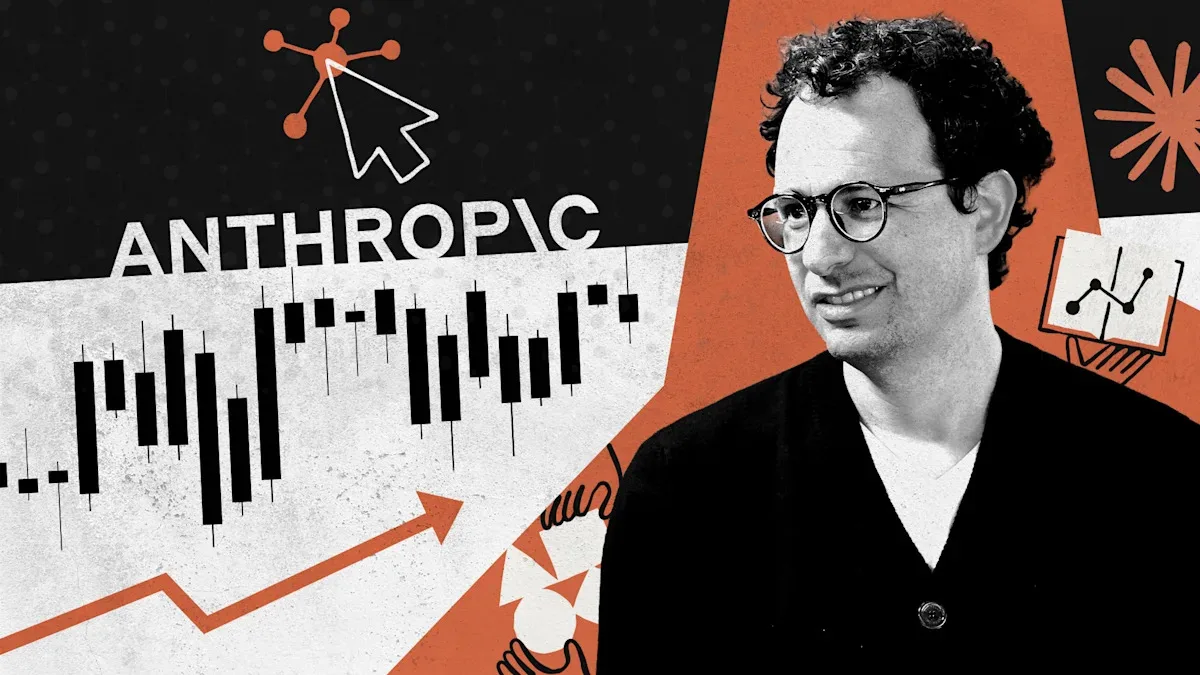
Anthropic priced its initial public offering at $83 per share on Wednesday, beating its projected range of $70 to $78 and valuing the artificial intelligence developer at $1.5 trillion on a fully diluted basis.
That pricing catapults the maker of the Claude AI tool into the public markets. The milestone arrives alongside the company's disclosure in its amended prospectus that an internal safety threshold in its Responsible Scaling Policy has imminently
been triggered because AI has already begun accelerating its own research and development.
Who are the winners, the backers, and the skeptics in Wall Street's biggest debut?
The lineup of participants spans the tech and finance worlds, each with starkly different stakes in how the company fares. Anthropic is led by CEO Dario Amodei and president Daniela Amodei, both former OpenAI executives who founded the company in 2021 alongside five colleagues. Strategic partners Amazon and Google retain massive stakes. Venture backers include Sequoia, Eric Schmidt, GIC, Iconiq, Menlo Ventures, Coatue, Sound Ventures, and Spark Ventures.
Individual retail investors also gained access through brokerages such as Charles Schwab, Fidelity, and Robinhood, which set aside up to 20% of the shares. Meanwhile, institutional heavyweights lined up on both sides of the ledger. Pershing Square Capital CEO Bill Ackman called Anthropic perhaps the most amazing business story of this century,
but declined to buy early because predicting the company's ultimate worth is very hard to nail that with any degree of precision.
DoubleLine founder Jeffrey Gundlach dismissed the prospect of buying Anthropic debt entirely, stating I wouldn't touch it,
and arguing that any rating agency granting the company an investment-grade rating should be investigated.
- Strategic partners Amazon and Google: Retain ownership of nearly 15% and nearly 14% of the company.
- Retail investors: Provided access to up to 20% of shares via Robinhood, Fidelity, and Charles Schwab.
- Wall Street skeptics: Investors like Bill Ackman and Jeffrey Gundlach warned against early buying or debt investments due to valuation and profitability hurdles.
How did Anthropic reach a $1.5 trillion valuation despite operating at a loss?
The blockbuster valuation rests on staggering revenue growth set against equally monumental spending commitments. Anthropic reported that its third-quarter revenue climbed to $17 billion, marking a 12x year-over-year increase, while sales for the nine months ending Sept. 30 eclipsed $33 billion. Consumption-based revenue tied to token usage accounts for roughly 80% of sales, and the number of customers spending more than $100,000 grew from roughly 1,500 in December 2025 to more than 11,900 by Sept. 30. NYU Stern School of Business professor Arun Sundararajan noted, There's no real historical analogy for a company that has been this successful this fast.
At the same time, the company's financial foundation rests on expensive infrastructure. Anthropic's amended IPO filing lists about $895 billion in computing and data center commitments, with approximately $70 billion coming due within a year. That total stands nearly seven times higher than the roughly $132 billion in cash and short-term investments the company held at the end of September. Following its first operating profit of $974 million in the second quarter, Anthropic swung back to a $567 million operating loss in the third quarter, driven in part by a $5 billion purchase of short-term computing capacity when demand outstripped long-term deals and a $2 billion non-cash charge for a donation-matching program. Seaport Research Partners analyst Jay Goldberg warned that while profits may briefly reappear, the company's heavy computing bill will push it back into losses.
What does Anthropic's public-benefit structure mean for shareholders?
Unlike standard corporations whose sole legal mandate is maximizing financial returns for owners, Anthropic is organized as a public-benefit corporation. The company's prospectus explicitly states that it will balance stockholder interests against the responsible development and maintenance of advanced AI for the long-term benefit of humanity.
To enforce that mission, Anthropic established a long-term benefit trust with the power to elect or remove a majority of the board of directors, though the trust does not manage daily operations. This structure means the company could prioritize safety and ethical controls over strategies that yield maximum short-term profits for investors.
The tension between public mandate and market pressure drew sharp warnings from industry analysts. Tusk Ventures founder Bradley Tusk pointed out that once public, Dario Amodei will face relentless quarterly earnings scrutiny and pressure to move faster and cut corners because he doesn't want the share price to go down.
How does the trading debut unfold on Thursday?
- November 18, 2026: Anthropic prices its initial public offering at $83 per share, valuing the firm at $1.5 trillion fully diluted.
- November 19, 2026: The company makes its market debut on the Nasdaq exchange, trading under the ticker symbol ANT.
- First 30 days of trading: Market participants monitor whether initial trading pops will hold or if lockup expirations and broader market forces will establish a lower valuation baseline.
Trading begins Thursday on the Nasdaq under the ticker symbol ANT, where market observers and retail platforms like Robinhood will track whether the stock maintains its momentum or follows the historical trajectory where early public-market trades face steep post-debut corrections.