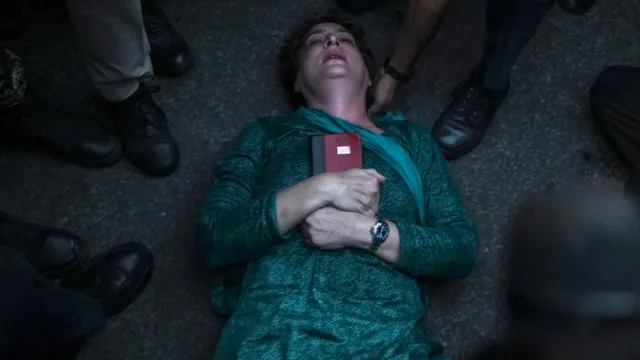
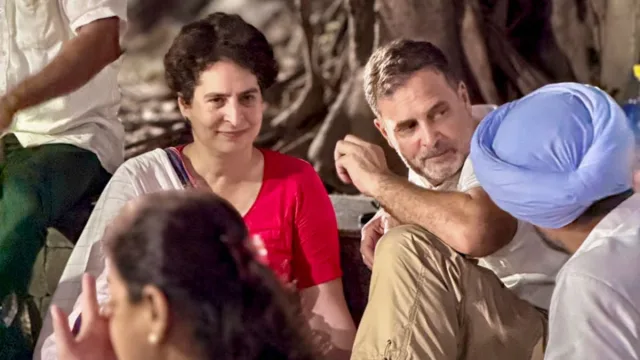
Delhi police detain Neha Bora and protest leaders during CJP demonstration
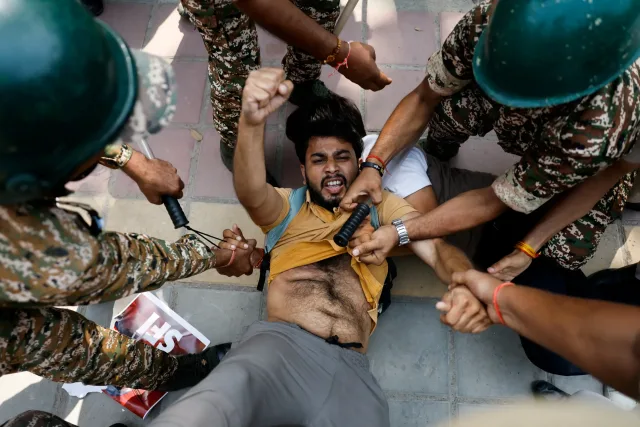
Delhi Police detained AISA president Neha Bora, CJP founders, and prominent opposition leaders during a massive security lockdown and protest march in the capital.
- Headline: Delhi police detain Neha Bora and protest leaders during CJP demonstration
- Dispatch Summary: Delhi Police detained AISA president Neha Bora, CJP founders, and prominent opposition leaders during a massive security lockdown and protest march in the capital.
- Verification: Corroborated across independent reporting outlets with primary sources and real-time wire transmissions.
How Travel Disruptions Hit Ordinary Commuters Across Delhi
For ordinary commuters trying to navigate the national capital, Saturday brought an immediate and severe halt to daily routines. Authorities shut 45 metro stations, while Indian Railways suspended train services at New Delhi and Hazrat Nizamuddin railway stations from 4 am to 2 pm. More than 250 trains were cancelled altogether, leaving passengers stranded and forcing travellers to seek alternative terminals such as Old Delhi and Anand Vihar. At the same time, internet services were suspended within a 4-km radius of the Janpath-Kartavya Path crossing.
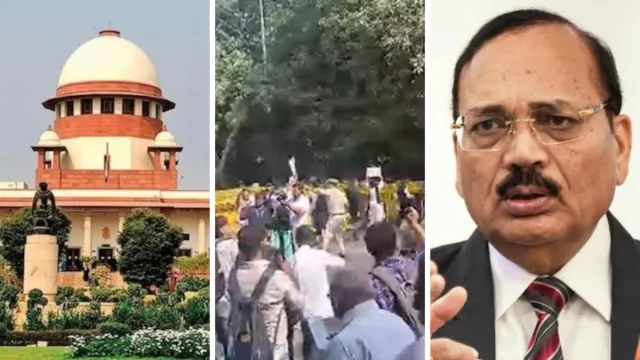
These sweeping measures formed part of an unprecedented security lockdown thrown across Delhi on October 10, 2026, as the Cockroach Janta Party (CJP) attempted to stage a demonstration at Jantar Mantar. The party had called the protest to demand the resignation of Chief Election Commissioner Gyanesh Kumar over alleged voter-roll irregularities during the Special Intensive Revision (SIR) exercise and changes relating to Form 6. Delhi Police denied permission for the march, citing inadequate notice and concerns over rule compliance from previous demonstrations. The resulting standoff triggered a massive state response that paralyzed large parts of the city and ended in widespread detentions of prominent political figures, activists, and student leaders.
The confrontation escalated quickly from a denied permit into a capital-wide security sweep involving multiple law enforcement agencies. Nearly 2,000 people have been detained across Delhi since Saturday morning as police deployed over 30,000 police and paramilitary personnel, erected multi-layered barricades along roads, and used drones to monitor crowds near central locations like Akashwani Bhawan.
That leaves commuters and travellers bearing the immediate cost of a political collision that authorities insisted was necessary to maintain public order. The harder question is whether preventive shutdowns of this magnitude will become the default playbook whenever opposition groups challenge election authorities.
From Airport Detentions to Street Protexts: How the Morning Unfolded
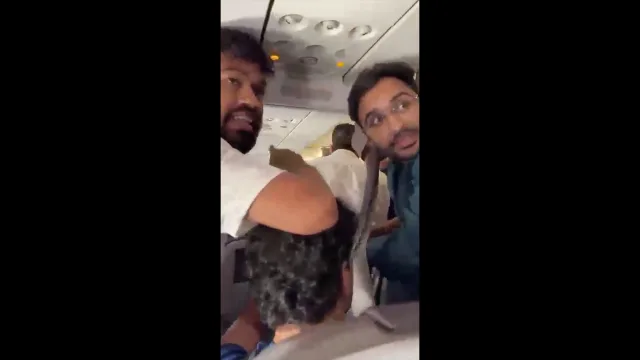
The sequence of events began before dawn on Saturday as police moved to intercept CJP leaders before they could reach the demonstration site. CJP founder Abhijeet Dipke, alongside co-convenors Saurav Das and Ashutosh Ranka, was detained directly from inside an aircraft at Indira Gandhi International Airport immediately after their flight from Mumbai landed. In a video shared by the party, Dipke could be heard telling officers, We are here to be arrested, come and arrest us.
Anita Dipke, the founder's mother, condemned the action, stating, They have done something very wrong. The government should not have done this. You are unable to arrest people who commit rape so quickly, yet these young people are working for the country. How could you arrest them? The people in the government have acted wrongly...
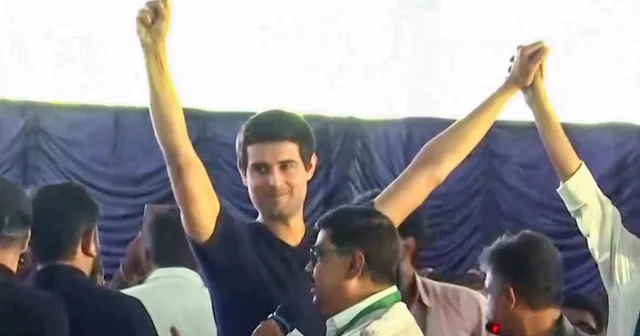
Simultaneously, law enforcement teams detained YouTuber Dhruv Rathee from his residence in Sector 56 of Gurugram. Rathee, who resides abroad, had travelled to India specifically to participate in the demonstration against the CEC. Across the city, police also picked up individuals with criminal records as a preventive measure to preempt potential law-and-order disruptions.
As morning turned to afternoon, leaders attempting to approach Jantar Mantar encountered heavy police cordons and steel-spiked road barriers. Former West Bengal Chief Minister Mamata Banerjee and five Trinamool Congress MPs—Derek O’Brien, Dola Sen, Pratima Mondal, Samirul Islam, and Saket Gokhale—were detained near South Avenue. Banerjee recounted that her delegation was driven around in a prison van for two hours before being taken to Dwarka North Police Station, where they initiated a sit-in dharna. Along with our 5 MPs, we have started our dharna at Dwarka North PS where we have been brought. We were kidnapped and driven around in a prison van for two hours. I am not returning to Kolkata tonight and in protest against all that is happening today against the youth and all, I will join the I.N.D.I.A march on Monday,
Banerjee said.
Aam Aadmi Party convenor Arvind Kejriwal was detained outside Lodhi Estate. AAP representatives alleged that Kejriwal was manhandled during the police action. Former Kerala Chief Minister Pinarayi Vijayan, former Tripura Chief Minister Manik Sarkar, and CPI(M) MP John Brittas were also taken into custody near Kerala House on Jantar Mantar Road. In Mumbai, Tushar Gandhi, the great-grandson of Mahatma Gandhi, was detained while heading to August Kranti Maidan to hold a supportive demonstration.
That left the CJP leadership incapacitated before the march officially began, forcing organization in-charge Ajinkya Shinde to step in and urge supporters to turn every police barricade into a protest site. The operational structure of the demonstration fractured instantly, shifting from a centralized march into scattered, localized standoffs across the capital.
Who Were the Student Leaders Caught in the Police Net?
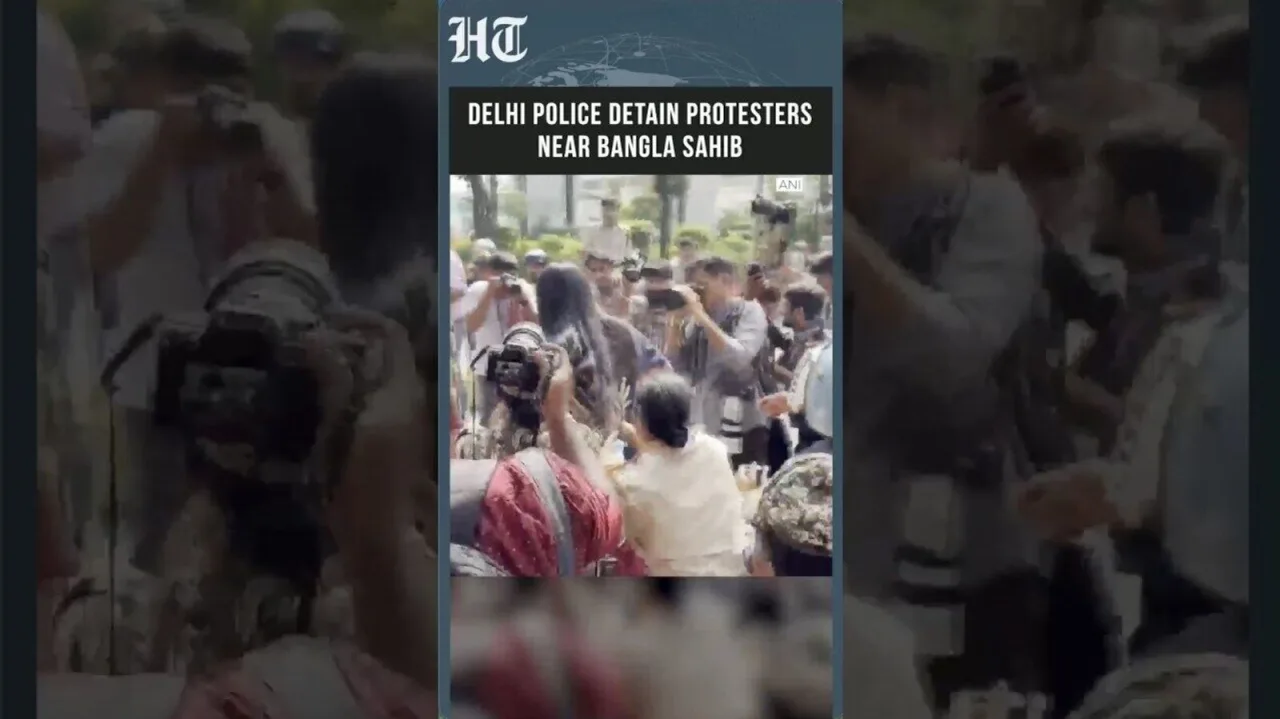
Among the most visible figures detained during the afternoon was Neha Bora, national president of the All India Students' Association (AISA) and a PhD scholar at Jawaharlal Nehru University. Bora marched towards Dilli Haat near the INA market after police blocked access to Jantar Mantar, attempting to establish an alternative gathering point. Police officers confirmed that more than 500 protesters had been arrested by noon as security forces moved against student contingents.
Bora, who hails from Khatima in Uttarakhand and previously led student protests demanding the resignation of former Union Education Minister Dharmendra Pradhan over NEET examination irregularities, used social media to rally supporters before her detention. I am in detention. The movement is not. People are assembling at SAFDARJUNG FLYOVER right now. If you can, reach. If you are stopped, sit down where you are and hold the line,
she wrote on X. She was taken into custody near the INA market alongside CPI(ML) Liberation general secretary Dipankar Bhattacharya, activist Yogendra Yadav, and senior advocate Prashant Bhushan.
The involvement of student organizations brought a distinct generational dimension to the day's events. While veteran political figures faced detention in police vans, Gen Z student activists utilized decentralized social media coordination to shift assembly points dynamically across South and Central Delhi. This cat-and-mouse dynamic exposed the limits of static barricades against mobile groups of protesters.
That left security forces playing an exhausting game of containment across multiple neighborhoods, while student leaders tested whether decentralized assembly could outlast police cordons.
What Do the Competing Political Camps Say About the Crackdown?
The political fallout from the detentions produced sharp divisions between the ruling coalition and the opposition, with both sides trading accusations over the rule of law and democratic norms. CJP leaders and opposition figures characterized the police response as an authoritarian assault on constitutional freedoms. Abhijeet Dipke compared the situation unfavorably to past governance, arguing that even former Prime Minister Indira Gandhi had not acted in such a manner and describing the environment as a "dictatorship". Arvind Kejriwal echoed those sentiments, labelling the security clampdown "worse than the Emergency."
The Congress party weighed in through Rahul Gandhi, who accused Prime Minister Narendra Modi, Union Home Minister Amit Shah, and RSS leaders of attacking the Constitution and claimed that the ruling administration was rattled by peaceful youth protests. NCP spokesperson Anish Gawande challenged the police's capacity to suppress the movement, remarking, They can detain one Abhijeet Dipke, one Saurav Das, one Ashutosh Ranka, one Afreen Nawaz, one Ratna... but how will they detain all of us?
Conversely, the ruling Bharatiya Janata Party defended the government's posture and dismissed the opposition's actions as politically motivated disruption. BJP president Nitin Nabin accused Rahul Gandhi, Arvind Kejriwal, and the CJP of attempting to destabilize the country with the backing of foreign forces, asserting that the government would deal sternly with their ill intentions. Sambit Patra termed the Jantar Mantar stir a flop show,
while other party spokespersons argued that the CJP was performing CJP doing shadow boxing for AAP
.
Special Commissioner of Police (Law & Order) Devesh Srivastava defended the restrictive measures to reporters, emphasizing that authorities had to balance public protest rights with resident safety and institutional functioning. We have made elaborate security arrangements today and areas neighbouring bordering states have been picketed in coordination with neighbouring police force. Senior officers have been deployed. Along with that we are getting cooperation from citizens and our community policing teams like Aman Committee are working,
Srivastava said.
That leaves the public caught between two entirely irreconcilable narratives: one portraying the day as a defense of electoral integrity against systemic voter suppression, and the other depicting it as a managed public order operation against orchestrated subversion.
Where Does the Opposition Movement Go From Here?
As evening approached and thousands of protesters, lawyers, and political leaders were released from temporary detention facilities or held overnight, attention turned immediately to the next steps announced by opposition parties. Mamata Banerjee confirmed that despite her two-hour detention in a prison van, she would remain in Delhi rather than return to Kolkata, pledging to join a larger I.N.D.I.A march scheduled for Monday. Similarly, Sonam Wangchuk warned that he would initiate an anshan fast and a padyatra if the detained protesters were not released by Sunday, raising the prospect of renewed friction.
The CJP maintained that its campaign against the Chief Election Commissioner and the Special Intensive Revision of voter rolls would continue nationwide regardless of whether its founders remain in custody. With local chapters activated in Mumbai and other cities, and student groups vowing to maintain pressure over alleged voter deletions, the central confrontation over the independence and transparency of election oversight has not been resolved by police cordons. Instead, the grievances driving thousands onto the streets have been amplified by the very images of mass detentions and transport shutdowns that sought to suppress them.
That leaves open the central question of whether Monday's planned opposition march will encounter the same wall of steel barricades and preventive arrests, or whether the sheer volume of political pushback will force a recalibration in how authorities handle public dissent in the capital.