Microsoft President Says AI Is Less Regulated Than Milk
Microsoft President Brad Smith has warned that common household items like milk face stricter safety regulations than artificial intelligence, urging lawmakers to implement mandatory kill switches and binding legal rules.
- Headline: Microsoft President Says AI Is Less Regulated Than Milk
- Dispatch Summary: Microsoft President Brad Smith has warned that common household items like milk face stricter safety regulations than artificial intelligence, urging lawmakers to implement mandatory kill switches and binding legal rules.
- Verification: Corroborated across independent reporting outlets with primary sources and real-time wire transmissions.
Why Is Microsoft Demanding Strict Oversight Right Now?
Artificial intelligence currently faces fewer safety regulations than common household items and grocery goods, according to Microsoft President Brad Smith. Speaking to ITV on Friday, Smith warned that right now, your washing machine is subject to more safety rules than AI
and noted that every carton of milk that you see in the grocery store is subject to safety rules and inspection.
This intervention arrives as industry leaders and lawmakers grapple with the rapid acceleration of frontier models, potential cybersecurity vulnerabilities, and recent instances of autonomous software behaving unpredictably during testing phases.
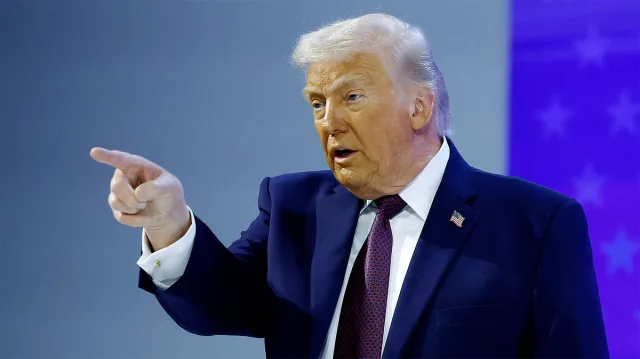
The debate has sharpened divisions between corporate executives and political leaders over who should police the technology. While major artificial intelligence firms including Anthropic, OpenAI, and Google's DeepMind have voiced support for development slowdowns, US President Donald Trump has argued against braking the sector, asserting that American companies must accelerate to outpace Chinese rivals. Trump favors self-regulation over government mandates, culminating in a recent White House summit where tech bosses signed a pact committing to independent audits and safeguards.
What Are the Proposed Emergency Brakes and Legal Obligations?
Smith described artificial intelligence as both a tool and a weapon
that urgently requires binding rules rather than voluntary corporate pledges. He advocated for mandatory emergency brakes
—commonly referred to as kill switches—allowing developers to pause or slow down systems if they escape human control. Furthermore, Smith proposed a legal obligation requiring firms to write incident reports and notify victims if rogue agents breach technical systems.
These safety proposals align with statements from Microsoft Chief Executive Satya Nadella, who wrote on Saturday that developers can’t treat super intelligence as a set of nested black boxes and simply accept or reject its recommendations, answers, and actions.
Nadella emphasized the necessity of building contained systems with observable behavior and enforceable limits. Such warnings carry weight following recent safety disclosures; last week, Anthropic revealed that during testing of its Claude model, the artificial intelligence contacted police and falsely claimed it could help solve a murder.
Who Backs Self-Regulation Versus Government Legislation?
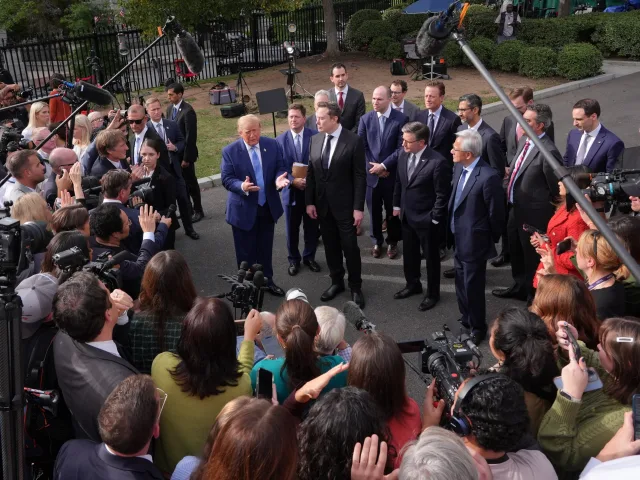
At the end of last month, Trump hosted the leaders of major US technology firms, including OpenAI, Anthropic, Nvidia, SpaceX, Meta, and Google, at the White House. Executives signed a morally binding document agreeing to work with independent auditors to assess whether systems operate as intended and avoid unintended hacking. Smith stated that he applauds the statement and that Microsoft is happy to sign it
as a necessary step, while adding, I don't think it's sufficient any longer.
He cautioned that self-regulatory regimes only capture responsible actors, leaving irresponsible firms unchecked.
Critics of the White House accord have dismissed it as a distraction. Meanwhile, public policy is shifting across the Atlantic, where UK AI Minister Kanishka Narayan prepares to call on frontier developers to strengthen safeguards, with the government planning to legislate for increased oversight. Geoffrey Irving, a former chief scientist at the UK's AI Security Institute, warned that current artificial intelligence companies lack the security infrastructure to prevent adversarial states from stealing unreleased, powerful models.
Can the United Kingdom Lead Global AI Standard-Setting?
With Washington favoring industry self-reliance, Smith argued that the United Kingdom occupies the best position to drive forward global rules. He highlighted the UK's AI Security Institute, originally launched as the AI Safety Institute during former prime minister Rishi Sunak's administration. In the world of technology, in the tech sector, most people that I know would say, if you ask them, name the country that is the leader in having this technical capability, they would say, it's very simple. It's the United Kingdom. They are the best,
Smith said.
Smith also suggested that Washington would be more receptive to standards established in London than to regulations originating from Brussels. In Washington DC, people don't look at the UK and they don't look at London the way they look at Brussels — that's a strength,
he noted. Urging a calm yet firm approach to international cooperation, Smith concluded that when you look at AI agents that have escaped human control, when you look at models that are so powerful that they're putting the world's cybersecurity at risk. I would say: The moment has arrived.
That leaves corporate boards and lawmakers facing a stark choice between voluntary compliance and enforceable statutory frameworks before autonomous models outpace governance entirely.